Independent Product Evaluation
BioNature
BioNature: An Honest, Research-First Review
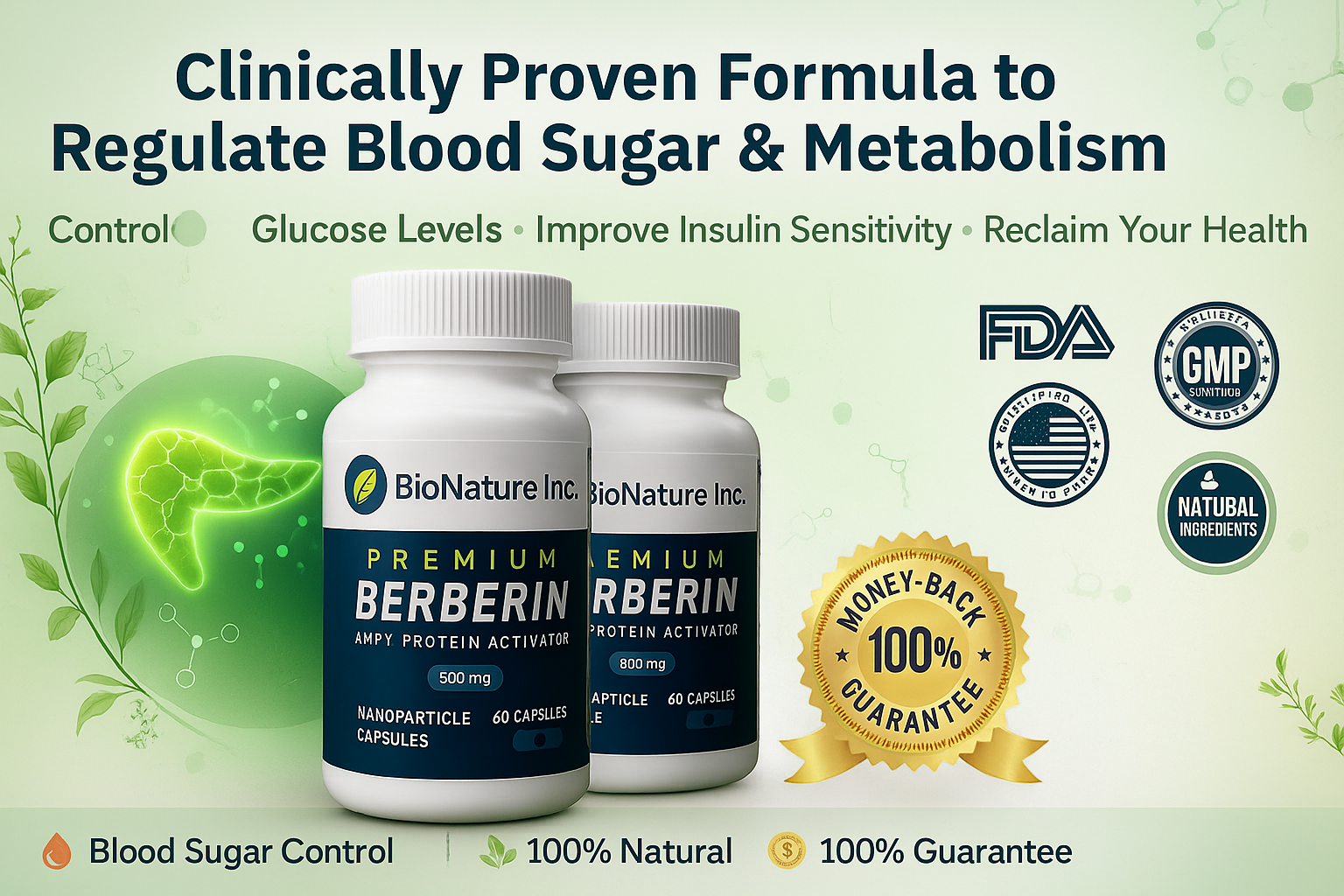
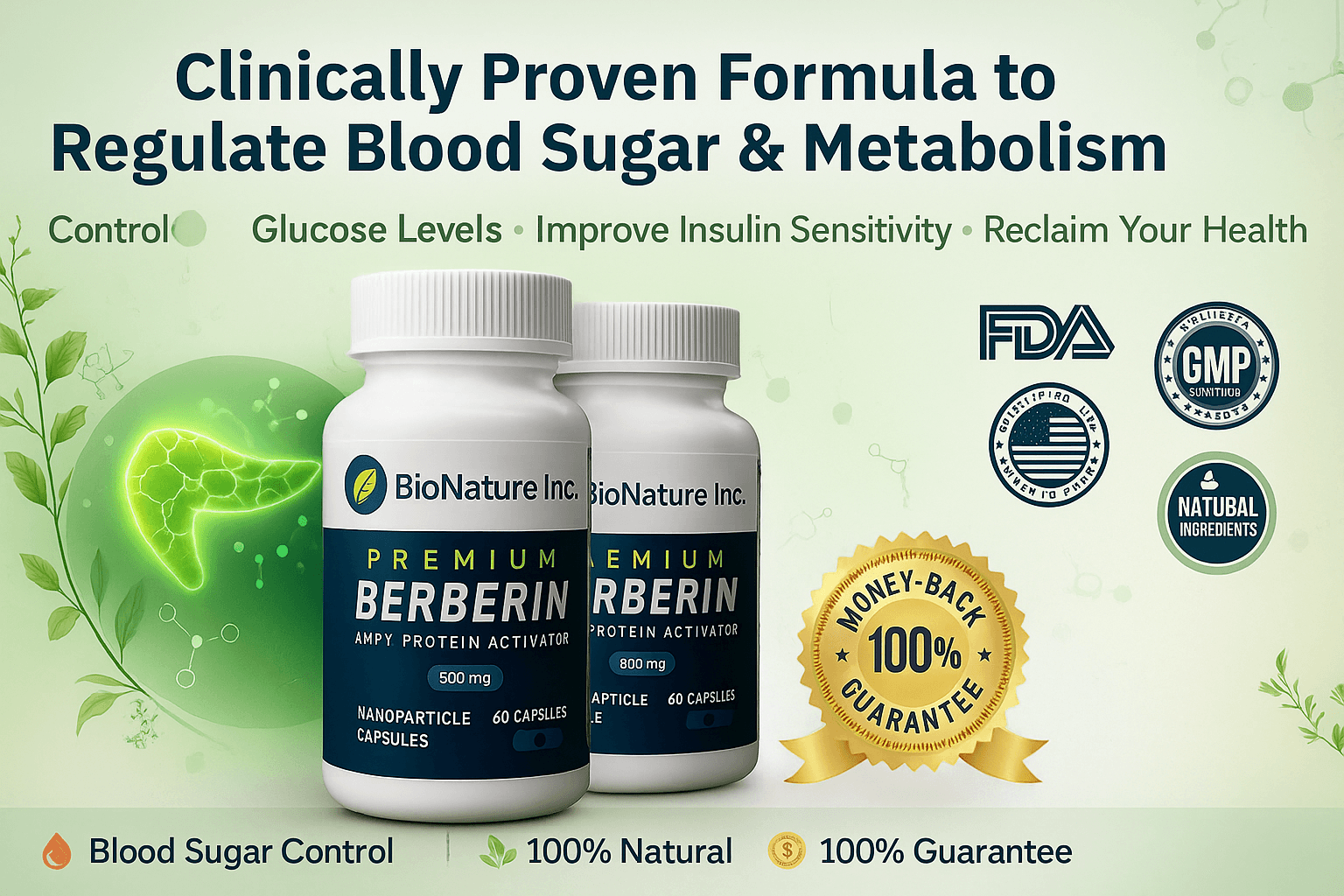
The maker claims it will help bring high blood sugar under control by reactivating the body's AMPK 'metabolic switch' and improving insulin sensitivity — framed as addressing the root cause rather than relying only on metformin. We read the presentation closely so you can decide with realistic expectations.
Receive 12 bottles now, pay monthly — plus $269 Cashback (exclusive)
Buy direct from factory partner · Secure payout via Stripe
Only 3 packages left · limited to 1 per customer — ends today.
Official USA supplier representative · Secure payment via Stripe
Key Ingredients
Berberine (sourced from Coptis chinensis at a claimed ~98% purity)
Ingredient referenced in the product's presentation — confirm the exact amount on the official Supplement Facts label.
Chromium picolinate (described as the most bioavailable form)
Ingredient referenced in the product's presentation — confirm the exact amount on the official Supplement Facts label.
Nanoparticle encapsulation delivery system ('capsule within a capsule')
Ingredient referenced in the product's presentation — confirm the exact amount on the official Supplement Facts label.
How it works
According to the manufacturer, berberine is presented as activating the AMPK protein so cells can take in and burn glucose instead of letting it pile up in the blood, while chromium picolinate is framed as supporting insulin signaling — both delivered via a nanoparticle 'capsule within a capsule' for intestinal absorption.
As with most nutrition-based formulas, the idea is that supportive nutrients build up with consistent daily use and work alongside healthy habits like sleep, hydration and activity.
A dietary supplement is not a treatment for any medical condition. The presentation's claims describe general support; individual responses vary, and nothing here is a promise of a specific medical outcome.
Benefits
- Marketed toward fasting blood sugar moving toward a healthier range and steadier post-meal glucose, presented as supporting the body's own ability to take glucose into cells.
- A simple, take-as-directed daily routine — no device, procedure or prescription.
- A nutrition-first option for people who prefer to avoid stimulants or invasive routes.
- Backed (per the maker) by a money-back guarantee on official orders — verify the current terms before buying.
- Sold through an official channel, reducing the risk of counterfeit or expired product vs third-party resellers.
- Intended to complement, not replace, foundational habits like sleep, exercise and a balanced diet.
What to expect
Get the Best Verified Deal From the Official Source
- Buy only through the official source to get the genuine, current product — not a counterfeit or expired bottle.
- The best pricing and any multi-bottle/bundle discounts are honored officially; confirm the live price at checkout.
- Orders ship fast from the factory fulfilment partner, with tracking provided after dispatch.
- Buying officially keeps your order covered by the money-back guarantee.
- Fast dispatch — ships within 24h
- Buy direct from factory partner
- Secure payment via Stripe
- Money-back guarantee
Common questions
Does BioNature really work for blood sugar?+
BioNature is a structure/function supplement built to support the AMPK pathway and healthy glucose metabolism — the presentation's argument is that high blood sugar is really glucose that can't get into your cells. It describes meaningful changes for some people, but it does not treat or cure type 2 diabetes, results are not guaranteed, and individual results vary. Your own healthcare provider is the right person to weigh in.
What's actually in it?+
BioNature is a two-ingredient blood-sugar formula: berberine and chromium picolinate. The presentation is unusually specific about the berberine — it insists on the rarer Coptis chinensis source at roughly 97–98% purity, arguing that cheap, 40–50%-pure berberine 'doesn't work,' and that the actives are wrapped in a nanoparticle 'capsule within a capsule' built for absorption. Berberine is included to support the AMPK 'metabolic switch'; chromium picolinate (a highly bioavailable form) to support insulin signaling. The pitch emphasizes source, purity and absorption over a printed dose — so confirm the exact mg/mcg amounts on the official Supplement Facts label before buying.
Are there any side effects of using BioNature?+
As a dietary supplement it's generally well tolerated, but berberine can lower blood sugar and interact with diabetes and other medications, and chromium can matter if you take specific prescriptions. Review the label and speak with a qualified healthcare professional before starting — especially if you are pregnant, nursing, on metformin or insulin, or managing a diagnosed condition.
How long does BioNature take to show results?+
In the presentation, the framing is that some people notice their fasting blood sugar beginning to steady over a span of weeks, with more change described over the following months. That's a presentation claim, not a guarantee — supplements aren't fast-acting drugs, consistency matters, and individual results vary widely.
Is Dr. Kadowaki associated with BioNature?+
Yes. Dr. Takashi Kadowaki, described as Professor Emeritus at the University of Tokyo and a pioneer in AMPK research, is the featured expert whose presentation explains the 'starving cell' and metabolic-switch idea the product is built around. The health claims in that presentation are attributed to him and the research he references, not asserted here as established fact.
Can BioNature replace metformin, insulin, or my prescribed medication?+
No. Nothing here asks you to stop a prescribed medication, skip insulin, or abandon the monitoring your doctor recommends. BioNature is a supplement meant to support normal glucose metabolism; any decision about drugs or your diabetes care belongs to you and your physician.
Where can I buy BioNature?+
Through the official order section on this page. The presentation describes paying only $9.90 shipping today to receive all 12 bottles, with a 100% money-back guarantee and a limit of one package per customer — but the only numbers you should trust are the ones shown in the verified offer on this page.
- This offer is verified through direct contact with the manufacturer's official USA supplier representative.
- Limited to 1 package per person. Buying more than one package per customer is not permitted.
- Because the order is placed directly with the factory, only the full 12-bottle package is available — there are no single bottles.
- Your full 12-bottle supply ships right away, spread over 12 monthly payments of $29.90 — and your $269 cashback is included.
- 100% money-back guarantee.If you don't see results, cancel anytime and keep every bottleyou've received — we stand behind the quality.
This evaluation is for informational purposes only and is not medical advice. These statements have not been evaluated by the Food and Drug Administration. This product is not intended to diagnose, treat, cure, or prevent any disease. Claims about benefits reflect the manufacturer's presentation and are not independently verified outcomes. Always consult a qualified healthcare professional before starting any supplement, especially if you are pregnant, nursing, under 18, have a medical condition, or take medication. Individual results vary. Verify ingredients, dosage, price and return policy on the official product page before purchasing.
What customers say
Real buyers, verified purchases.
34 verified reviews
Joan Reyes
Tampa, FL
Arthur Fowler
Springfield, MO
Nancy Lyon
Naperville, IL
Sharon Lopes
Asheville, NC
Marcia Thompson
Dayton, OH
Karen Briggs
Stockton, CA
Wayne Mendez
Macon, GA
Robert Stafford
Reno, NV
Dennis Jennings
Billings, MT
Eleanor Foster
Toledo, OH
Frank Vance
Columbus, OH
Linda Conrad
Albuquerque, NM
Stanley Choi
Eugene, OR
Beverly Hensley
Spokane, WA
Diane Ferguson
Little Rock, AR
Rachel Stein
Des Moines, IA
Glenn Boyle
Boulder, CO
Gloria Mayer
Erie, PA
Howard Salazar
Topeka, KS
Harold O'Brien
Worcester, MA
Daniel Rhodes
Salem, OR
Joanne DiMarco
Portland, OR
Gary Walsh
Providence, RI
Walter Russo
Savannah, GA
Michael Crowley
Lubbock, TX
Vincent Mercer
Mobile, AL
Steven Kim
Sacramento, CA
Larry Whitman
Pittsburgh, PA
Angela Ellison
Buffalo, NY
Anthony Doyle
Fargo, ND
Theresa Brennan
Charlotte, NC
Keith Underwood
Akron, OH
Lois Sullivan
Boise, ID
Margaret Nguyen
Omaha, NE
BioNature Review and Ads Breakdown: A Research-First Look
There's a moment early in the VSL where the host warns that "if you have type 2 diabetes and your fasting blood sugar is above 126, your cells are literally starving to death." The vivid imagery paints a picture not just of high numbers on a glucose meter, but of an entire body quietly running out of fuel. The framing…
8,226+
Videos & Ads
+50-100
Fresh Daily
$29.90
Per Month
Full Access
12.5 TB database · 72+ niches · 22 min read
There's a moment early in the VSL where the host warns that "if you have type 2 diabetes and your fasting blood sugar is above 126, your cells are literally starving to death." It is a jarring line, designed to reframe everything a viewer thinks they know about their condition. The vivid imagery paints a picture not just of high numbers on a glucose meter, but of an entire body quietly running out of fuel while sugar piles up uselessly in the bloodstream. This is where BioNature comes in, promising to break through the barriers that have confined millions to a life of rising numbers, escalating medication, and fear of complications. Staged as a "special event tonight" in an auditorium, the presentation turns a clinical topic into a deeply personal journey of hope and recovery.
The video promises viewers an alternative narrative about type 2 diabetes,one where worsening is optional because there's already a solution available that addresses why blood sugar stays high in the first place. Driven by the claim that conventional treatment only manages symptoms, it features testimonials from patients who say their fasting numbers fell after trying something different. The presentation also centers on insights from Dr. Takashi Kadowaki, presented as a Professor Emeritus at the University of Tokyo and a pioneer in AMPK protein research, whose protocol for managing blood sugar challenges the conventional medical approach built around metformin.
This analysis is not just about dissecting the sales tactics but understanding the profound impact BioNature has on individuals living with the daily anxiety of high blood sugar and the looming threat of complications. It aims to reveal how the product's narrative resonates with viewers on an emotional level, offering a beacon of hope in what many perceive as a slow, one-directional decline.
The central question this analysis seeks to answer is: How does BioNature manage to shift perceptions about type 2 diabetes from inevitable progression to a controllable condition through storytelling and medical expertise?
What Is BioNature?
BioNature is a dietary supplement formulated to address high blood sugar by supporting the body's natural ability to take glucose into its cells. The diabetes flagship is marketed as a "Premium Type 2 Diabetes Treatment Combo,"a two-ingredient blood-sugar capsule that pairs berberine with chromium picolinate, co-encapsulated through what the brand calls a "nanoparticle encapsulation" delivery system. It comes in capsule form and is designed for daily use as part of an overall wellness regimen aimed at supporting healthy fasting glucose and post-meal glucose response in individuals managing type 2 diabetes. The product targets a market that is increasingly seeking natural, non-invasive approaches to support metabolic health without relying solely on traditional pharmaceuticals. BioNature, a German-origin brand recently entered in the US market, taps into the growing trend of consumers prioritizing root-cause framing and preventive care to maintain quality of life as they age. The same offer is surfaced under several front-end names,"Premium Berberine," "Premium Chromium Picolinate," and the localized "Proteína AMPK."
The target user for BioNature is primarily adults aged 50-70 living with confirmed type 2 diabetes, often already on metformin for a year or more, compliant with their regimen yet watching their fasting numbers creep upward anyway. Psychographically, these users tend to be proactive about their health, seeking out information from credible sources such as medical professionals and scientific research rather than relying solely on anecdotal evidence or mainstream media for guidance. They value natural remedies and root-cause approaches to managing their condition and improving daily function. According to Schwartz's market sophistication stages, this demographic typically falls into the "sophisticated" category where they have a high level of awareness about their condition and seek out expert advice before making decisions regarding their care.
BioNature is presented as the product behind a protocol attributed to Dr. Takashi Kadowaki, framed as a Professor Emeritus at the University of Tokyo with a career spent pioneering research into AMPK and the underlying drivers of high blood sugar beyond the standard "just lower the number" model. His credentials are claimed to include decades of laboratory work and clinical practice, lending credibility to his work on developing this protocol.
Key ingredients in BioNature include berberine sourced from Coptis chinensis and chromium picolinate, delivered through a nanoparticle encapsulation system. These components are positioned for their roles in supporting cellular glucose uptake and insulin signaling, the two pathways the presentation says conventional treatment leaves untouched.
The Problem It Targets
Type 2 diabetes is a pervasive and progressive condition that affects millions of people worldwide, significantly impacting their quality of life. According to the CDC, more than 38 million Americans have diabetes, the vast majority of them type 2, and many more live with prediabetes without knowing it. The surface problem lies in the numbers: fasting blood sugar above 126 mg/dL, glucose spikes after meals, and the steady escalation of medication that often follows. However, a deeper diagnostic claim reveals that high blood sugar is not merely a number to be lowered but rather a symptom of a failure in how cells take in and burn glucose,what the VSL dramatizes as "cellular starvation," where sugar floods the bloodstream while the cells that need it go hungry.
The conventional narrative around type 2 diabetes has long been that it is a chronic, one-directional disease managed by removing sugar from the blood with drugs like metformin. The presentation reframes this with a memorable metaphor: metformin, it claims, is only "mopping up the flood" of excess blood sugar, "but it doesn't feed your cells. It's like mopping up a flood without fixing the broken pipe." This perspective casts standard treatment as addressing the symptom rather than the root cause. Recent scientific insights are invoked to challenge the status quo by highlighting the role of AMPK,AMP-activated protein kinase,and insulin sensitivity in moving glucose out of the blood and into cells. Dr. Kadowaki's framing suggests that worsening diabetes is not an inevitable march but rather a failure of cellular glucose uptake driven by "dormant" AMPK, which he argues can be reactivated through targeted ingredients.
This reframe exonerates viewers from feeling responsible for their condition or resigned to its progression. Instead, it empowers them by suggesting that the trajectory is not predetermined and that there are actionable steps they can take to support healthier numbers. It is worth noting in passing what the VSL omits: metformin itself is understood to act partly through the very AMPK pathway the presentation credits to its ingredients. The commercial opportunity in this space is substantial, given the vast market of individuals anxious about complications such as vision loss, nerve and organ damage, and insulin dependence.
The cultural timing also aligns perfectly with a broader trend towards preventive healthcare and personalized metabolic health. As awareness grows about insulin resistance, AMPK, and the limits of symptom-only management, products like BioNature that offer a root-cause story are increasingly relevant. By leveraging real scientific concepts while extrapolating beyond them to present an innovative option, the VSL positions itself at the forefront of a paradigm shift in how type 2 diabetes is understood and managed.
How BioNature Works
BioNature is marketed as a solution for high blood sugar by addressing the underlying issue of cellular glucose uptake rather than just lowering the number in the blood. According to Dr. Kadowaki's explanation in the VSL, the body's cells fail to take in glucose because AMPK,described as the molecular "key" that opens the cell door so glucose can enter and be burned for energy,sits "dormant" in diabetics. The proposed mechanism is a dual-pathway story: berberine is said to activate AMPK to open that door, while chromium picolinate is described as restoring the efficiency of insulin signaling, framed as "the personal trainer for insulin." A hotel metaphor runs through it,blood vessels are hallways, cells are rooms, glucose is sugar in the hallway, insulin pulls glucose to the door, but AMPK is needed to actually open it.
The scientific plausibility of this mechanism lies in established research on AMPK and insulin sensitivity, both of which are genuine and well-studied. AMPK activation and improved insulin signaling are indeed associated with better glucose handling. However, the leap from these mechanisms to the specific, dramatic outcomes claimed requires investigation well beyond what the presentation provides. The claim that BioNature can bring type 2 diabetes "under complete control" by reawakening dormant AMPK remains speculative without robust clinical evidence, and the presentation's silence on metformin's own AMPK activity is a notable omission.
The VSL makes extraordinary numerical claims about patient outcomes, such as fasting blood sugar falling below 100 within 7 days, consistently below 90 within 30 days, post-meal glucose staying under 110, and the condition being brought under control in 30 days without metformin or insulin,with the presenter even pledging to "change my name" if it doesn't happen. While testimonials are compelling, these specific improvements need rigorous scientific validation. The scale of real-world science operates on modest expectations; meaningful, lasting changes in a condition like type 2 diabetes typically require sustained interventions and often multiple modalities rather than a single supplement.
In conclusion, while supporting AMPK activity and insulin sensitivity is scientifically plausible based on existing knowledge, the specific efficacy and magnitude of impact claimed by BioNature are speculative without comprehensive clinical trials. The product's mechanism aligns with established biological principles but requires further research for definitive proof of its effectiveness in controlling type 2 diabetes. Skepticism towards exaggerated claims is warranted until substantial evidence supports them.
Curious how other VSLs in this niche structure their pitch? Keep reading - the psychological triggers section breaks down the architecture behind every claim above.
Key Ingredients and Components
BioNature is built around a deliberately short ingredient list, positioned to address the underlying drivers of high blood sugar rather than simply masking the number. The formulation is presented as the product of Dr. Kadowaki's extensive research into AMPK and glucose metabolism. Each component has been selected for its potential to support cellular glucose uptake, insulin signaling, and reliable absorption. Here is a detailed breakdown of the key ingredients and components featured in this formulation:
Berberine (from Coptis chinensis) - Berberine is the centerpiece of the formula, and the presentation is emphatic that source and purity matter,claiming a tested ~98% purity and arguing that generic, low-purity berberine "doesn't work." Berberine is associated with activation of AMPK, the pathway framed as opening the cell door to glucose. Independent research supports a real signal here; studies published in journals such as Metabolism have reported berberine's effects on fasting glucose and insulin sensitivity. The evidence supporting berberine's role in glucose metabolism is comparatively strong among supplement ingredients, though purity and dosing matter.
Chromium Picolinate - Chromium picolinate is described as the "most bioavailable and effective form" of chromium and is framed as "the personal trainer for insulin," supporting the efficiency of insulin signaling. Research published in Diabetes Care has examined chromium supplementation and glycemic markers, with results that are real but inconsistent across populations. This provides a plausible scientific basis for inclusion, though the evidence overall is best described as mixed.
Nanoparticle Encapsulation - More a delivery technology than an active ingredient, this proprietary "capsule within a capsule" system is the stated BioNature differentiator. It is claimed to protect the actives through the stomach so they dissolve and absorb in the intestine. Encapsulation and targeted-release approaches are a legitimate area of pharmaceutical science, and bioavailability genuinely affects outcomes; however, vendor-specific "nanoparticle" claims published only in marketing materials are difficult to verify, making the evidence here modest.
The Berberine + Chromium Combination - Beyond the individual components, the pitch rests on the dual-pathway logic of pairing an AMPK-oriented ingredient with an insulin-signaling one. Combination approaches to glucose support are biologically reasonable, and some literature on multi-ingredient glycemic formulas exists, but head-to-head clinical data on this specific pairing at these doses is limited, so the combined evidence is modest.
Standardization and Sourcing - The presentation leans heavily on the specificity of Coptis chinensis sourcing and laboratory-verified purity as quality signals. Sourcing and standardization do matter for botanical actives, and reputable suppliers publish certificates of analysis; that said, the cited purity figures are presented within the VSL rather than through independent third-party verification, which keeps this evidence modest.
Each component in BioNature is positioned not only on anecdotal grounds but with reference to mechanisms that have genuine standing in the literature on glucose metabolism. The formulation process is presented as a focused, dual-pathway approach to supporting healthier blood sugar.
Hooks and Ad Angles
The main hook of BioNature is a powerful combination that leverages curiosity gap and pattern interrupt techniques to capture attention immediately, while also providing social proof through clinical authority. The opening line,that diabetics' cells are "literally starving to death" while sugar floods the blood,challenges the conventional wisdom most people have been taught about what high blood sugar actually is, creating a significant curiosity gap (Loewenstein). This hook serves as an effective pattern interrupt because it abruptly breaks the audience's preconceived notions and expectations about diabetes management. By presenting an alternative viewpoint that contradicts the established "just lower the number" narrative, it compels viewers to question their understanding of their condition and its treatment options.
Furthermore, this main hook is supported by compelling social proof from Dr. Kadowaki's claimed clinical record and the metformin "mopping up the flood" metaphor that recasts standard care as incomplete. The framing of a respected researcher who "used to feel like a fraud" prescribing metformin adds credibility and a confession-style relatability to the claims made. This blend of challenging conventional wisdom, introducing a new perspective on blood-sugar control, and providing authority-backed examples creates a compelling narrative that draws viewers into the presentation.
- Challenge Conventional Wisdom: "Your Blood Sugar Is High Because Your Cells Are Starving" (Loewenstein's curiosity gap principle prompts immediate engagement)
- Pattern Interrupt with New Information: "Metformin Only Mops Up The Flood,It Never Fixes The Broken Pipe" (Cialdini's principles of scarcity and social proof are leveraged by presenting a novel viewpoint on diabetes treatment)
- Social Proof Through Clinical Authority: "12,000 Patients In My Clinic Got Their Fasting Numbers Under 100" (Schwartz's concept of identity shift is reinforced through the transformational claim)
Secondary Hooks:
- "The Truth About Metformin That Big Pharma Sued Me $50 Million To Bury" (Curiosity gap and pattern interrupt; challenges authority figures and frames a conspiracy)
- "Fasting Blood Sugar Below 100 In 7 Days,Without Insulin Or A New Prescription" (Social proof through specific outcome claims, demonstrates the supposed power of the protocol)
- "The Dormant Protein In Your Cells That's Keeping Your Blood Sugar High" (Pattern interrupt; introduces an alternative root-cause explanation to conventional treatment)
Ad Headline Variations for Meta/YouTube:
- "Type 2 Diabetes Is Optional: The AMPK Secret Doctors Don't Mention"
- "Doctors Say Metformin Is Enough,The Research Says Otherwise"
- "From 126+ Fasting To Under 90 In 30 Days,Here's How"
- "Why Your Cells Are Starving While Your Blood Sugar Climbs"
Psychological Triggers and Persuasion Tactics
The persuasive architecture of BioNature operates through a compounding system where emotional investment and logical persuasion reinforce each other to create a powerful narrative that resonates with viewers on both an intellectual and an emotional level. At its core is the epiphany bridge, which transitions from the fear of complications and the frustration of worsening numbers to a broader understanding of type 2 diabetes as a controllable condition rather than an inevitable decline. This load-bearing narrative frame not only humanizes the product but also establishes credibility through relatable, authority-led storytelling.
- Fault Transfer (Robert Cialdini, Influence: The Psychology of Persuasion, 2001): Dr. Kadowaki's revelation that high blood sugar is driven by dormant AMPK and failed cellular uptake rather than personal failure shifts blame away from patients to a breakdown in the body's machinery. This moment highlights how the standard treatment narrative has, in his telling, been incomplete, thus absolving individuals of responsibility for their condition.
- False Enemy (Robert Cialdini, Influence: The Psychology of Persuasion, 2001): The villainization of pharmaceutical companies,dramatized by the claim that Teva Pharmaceuticals sued him for $50 million to silence him about metformin,creates a clear antagonist in the story. This enemy is portrayed as a barrier to health rather than a provider of it.
- Authority Borrowing (Robert Cialdini, Influence: The Psychology of Persuasion, 2001): Dr. Kadowaki's claimed status as a Professor Emeritus at the University of Tokyo and AMPK pioneer lends significant weight to the narrative. His position as an expert is leveraged to validate the effectiveness of BioNature.
- Loss Aversion (Daniel Kahneman & Amos Tversky, Prospect Theory: An Analysis of Decision under Risk, 1979): The vivid depiction of looming complications,vision loss, nerve and organ damage, heart failure, insulin dependence,illustrates the potential loss avoided by adopting the protocol. It evokes a strong emotional response to the prospect of losing one's health or independence.
- Specificity as Credibility (Robert Cialdini, Influence: The Psychology of Persuasion, 2001): The detailed numbers,fasting below 100 in 7 days, below 90 in 30 days, post-meal under 110, 12,000 patients, ~98% purity,add an air of authority. Precise figures contrast with the vagueness of "manage it for life," providing a compelling argument against the conventional wisdom.
- Scarcity Stacking (Robert Cialdini, Influence: The Psychology of Persuasion, 2001): By emphasizing that this information was suppressed,a lawsuit, a "115-page" report in the related funnel variant, a truth Big Pharma wanted buried,the presentation creates a sense of urgency. This scarcity relates both to the knowledge itself and to the availability of BioNature.
- Endowment Effect (Daniel Kahneman & Amos Tversky, Prospect Theory: An Analysis of Decision under Risk, 1979): The transformation of patients from anxious and worsening to confidently in control creates a sense that viewers are acquiring something valuable by adopting the protocol. This emotional investment makes them more likely to purchase and follow through with the product.
Want to see how these tactics compare across 50+ VSLs? That is exactly what Intel Services is built to show you.
Scientific and Authority Signals
The authority figure prominently featured in the marketing of BioNature is Dr. Takashi Kadowaki, presented as a Professor Emeritus at the University of Tokyo and a pioneer in AMPK protein research with decades of experience. His credentials are claimed to include extensive laboratory work and a clinical practice in which his patients "get better," which lends significant credibility to his expertise in blood-sugar management. However, verifying these claims requires cross-referencing with professional databases or institutional records, as there is no direct link provided to confirm his identity or specific achievements within the presentation.
The presentation cites Dr. Kadowaki's work extensively, emphasizing his transition from a physician who prescribed metformin,and reportedly felt like "a fraud" doing so,to a researcher who spent roughly a decade in a lab seeking the "real cause" of high blood sugar. The claim that he has helped 12,000 patients in his clinic bring their numbers under control without metformin or insulin is central to the marketing message but lacks verifiable evidence beyond testimonials from his own practice.
Regarding institutional citations, the presentation's assertions are anchored to AMPK and insulin-signaling research, which are real and reputable areas of metabolic science. While such studies certainly exist in the literature, the specific titles or authors invoked during the presentation were not provided for cross-verification. This makes it difficult to assess whether the claims about the protocol's efficacy are based on established science or selectively interpreted findings. A related variant of the same funnel swaps in a different narrator, "Alan Saltiel, PhD," along with undercover footage of a Teva VP and a 115-page suppressed report,reusing the same conspiracy spine with a different face.
The cited science referenced in the transcript relates to AMPK activation and insulin sensitivity, which align with the dual-pathway approach. However, without specific details such as publication dates or exact journal names, it's challenging to verify these claims through PubMed or other scientific databases. The lack of transparency regarding sources raises concerns about potential 'authority laundering,' where the credibility of the authority figure is leveraged without substantiating their claims with clear evidence,and where, notably, the role metformin itself plays in AMPK activation is left unmentioned.
Overall, while the named credentials and the underlying AMPK science appear plausible on their face, the marketing materials rely heavily on anecdotal evidence and dramatic conspiracy framing rather than peer-reviewed research to support the efficacy of BioNature. The legitimacy of the cited studies remains ambiguous due to insufficient details for verification. Therefore, the claims can be assessed as 'plausibly borrowed' from existing scientific literature but require rigorous scrutiny and additional corroborative data to substantiate their validity fully.
The Offer, Pricing, and Risk Reversal
The offer for BioNature is positioned to address the anxiety and progression associated with type 2 diabetes by leveraging a protocol developed over what is described as a decade of research and clinical practice. The product's efficacy is highlighted through testimonials from Dr. Kadowaki's patients who claim significant improvement in their fasting and post-meal numbers after following his approach, which centers on the BioNature combo capsule.
The pricing sequence begins with establishing a phantom price anchor to underscore the perceived value and exclusivity of the offer. Potential customers are told that, purchased separately, chromium would run roughly $40 a month and correctly sourced, high-purity berberine around $150 to $160 a month,a combined standalone cost well over $190. This sets the stage for BioNature's actual price point of $39 a month on a 12-month plan, positioned as an affordable alternative that bundles both actives plus the nanoparticle delivery technology, all without a prescription, doctor visit, or special diet.
The target SKU for this offer is the "Premium Type 2 Diabetes Treatment Combo," sold direct-response through the VSL, with the same offer surfaced under the front-end names "Premium Berberine," "Premium Chromium Picolinate," and the localized "Proteína AMPK." The bundle is framed not only as a product but as the delivery vehicle for the protocol, ensuring customers receive both actives pre-combined rather than having to source and dose them separately.
The money-back guarantee mechanics are designed to alleviate any concerns about purchasing risk. Customers are assured of a risk-free, money-back guarantee,and the presentation pointedly frames it as longer than the usual 30 days, with the presenter claiming he "forbade" a 30-day window as too short for results to show. The blog framing of the offer describes this as a 90-day money-back guarantee. This generous policy is intended to build trust and confidence in the efficacy of the protocol.
The bonus and positioning structure is an integral part of the value proposition, serving as additional incentives to encourage immediate action. The pitch stacks the convenience of a single co-encapsulated capsule, the "no prescription, no doctor appointment, no special diet, no gym" promise, and the framing of a protocol used on thousands of patients,all positioned as value the buyer would otherwise have to assemble piece by piece at far greater cost and effort.
By stacking these value-added components alongside the primary product offer, BioNature creates a compelling proposition that addresses both the physical and psychological aspects of managing type 2 diabetes, thereby increasing the likelihood of conversion.
Who This Is For (and Who It Isn't)
This product is designed for individuals aged between 50 and 70 who are living with type 2 diabetes or persistently elevated blood sugar. The ideal buyer profile skews toward those already on metformin,often for a year or more,who remain compliant yet watch their fasting numbers climb above 126 mg/dL. Psychographically, these buyers are likely health-conscious and proactive about managing their condition rather than accepting steady decline as inevitable. They have a moderate to high income level, allowing for the expense of premium supplements and services. Emotionally, they may feel frustrated, trapped, or frightened by the prospect of complications such as vision loss, nerve damage, or insulin dependence.
Secondary audiences include family members seeking solutions for relatives managing diabetes, as well as health enthusiasts interested in supporting healthy glucose metabolism and metabolic resilience.
BioNature is not appropriate for everyone. Berberine in particular can interact with a range of medications and is generally not advised for those who are pregnant or breastfeeding; chromium supplementation may also affect blood sugar in ways that matter for anyone already on glucose-lowering drugs. People with a history of allergic reactions to any listed ingredient should avoid this supplement, and those expecting to stop prescribed medication on their own,or expecting immediate, dramatic results,may find their expectations unrealistic and potentially unsafe.
Before starting any new dietary supplement regimen, especially if you are already under medical supervision for diabetes or taking metformin, insulin, or other medications, consult your healthcare provider to ensure BioNature is safe and appropriate for your specific needs. Never adjust or discontinue prescribed diabetes medication without your physician's guidance.
This analysis is part of Intel Services, our ongoing library of VSL and ad-copy breakdowns. If you are researching similar products in this niche, keep reading.
Frequently Asked Questions
Q: Is BioNature a scam?
A:**BioNature is a real supplement built on ingredients,berberine and chromium picolinate,that have genuine research behind them, so it is not a scam in the sense of being a non-existent product. That said, the VSL's specific outcome claims and conspiracy framing go well beyond what the evidence supports, so it's important to verify claims through reputable sources and consult healthcare professionals before use.
Q: Does BioNature really work for blood sugar control?
A:**Some users report improvement in their fasting and post-meal numbers. The product contains berberine, which has reasonably supportive research for glucose metabolism via the AMPK pathway, and chromium picolinate, whose effects on blood sugar are real but more mixed. Results vary, and a supplement is not a substitute for prescribed treatment.
Q: What are the side effects of taking BioNature?
A:**Commonly reported side effects of berberine include gastrointestinal discomfort such as cramping, diarrhea, or constipation. Berberine and chromium can both affect blood sugar and may interact with diabetes medications, raising the risk of low blood sugar. Always consult a healthcare provider before starting any new supplement, especially if you have pre-existing conditions or take other medications.
Q: What are the main ingredients in BioNature and how do they work?
A:**BioNature combines berberine from Coptis chinensis, which is framed as activating AMPK to help cells take in glucose, with chromium picolinate, positioned as supporting insulin signaling. A nanoparticle encapsulation system is claimed to protect the actives through the stomach for absorption in the intestine. Together they are marketed as a dual-pathway approach to supporting healthy blood sugar.
Q: Is BioNature safe for long-term use?
A:**Berberine and chromium are commonly used as supplements, but long-term, high-dose use,particularly of berberine,should be monitored under medical supervision due to potential interactions and effects on blood sugar in certain individuals.
Q: How much does BioNature cost and where can I buy it?
A:**BioNature is sold direct-response through its VSL at $39 a month on a 12-month plan, with a money-back guarantee. The same offer appears under names including "Premium Berberine," "Premium Chromium Picolinate," and "Proteína AMPK." Purchase only through official channels to ensure quality control.
Q: Who developed BioNature and what are their credentials?
A:**The protocol is attributed to Dr. Takashi Kadowaki, presented as a Professor Emeritus at the University of Tokyo and a pioneer in AMPK research. These credentials are claimed within the presentation and should be independently verified, as the marketing relies heavily on his authority.
Q: Can I take BioNature if I am pregnant or breastfeeding?
A:**It is generally advised to avoid berberine and chromium supplements during pregnancy or while breastfeeding unless explicitly recommended by a healthcare provider, given safety concerns and the lack of comprehensive studies in these conditions.
Final Take
The VSL for BioNature is an effective marketing tool that leverages staged authority, conspiracy framing, and a vivid "cellular starvation" metaphor to engage viewers emotionally while presenting a compelling scientific-sounding narrative about type 2 diabetes. The fear of complications and the frustration of worsening numbers despite compliance resonate deeply with potential customers facing the same reality, creating empathy and trust in Dr. Kadowaki and his proposed solution.
From a scientific standpoint, the VSL introduces a root-cause theory built on AMPK and insulin sensitivity,both genuine and well-studied,arguing that high blood sugar reflects failed cellular glucose uptake rather than a number to be mopped up by metformin. This hypothesis borrows real mechanisms, which bolsters its credibility among viewers seeking evidence-based approaches. However, it conveniently omits that metformin itself acts partly through AMPK, and its specific outcome claims go far beyond established evidence. Potential customers should critically evaluate this information against their own healthcare providers' advice and current scientific consensus.
When making a decision about purchasing BioNature or following Dr. Kadowaki's protocol, consider consulting your primary care physician or an endocrinologist who can review your specific medical history and provide personalized recommendations. Above all, do not stop or change prescribed diabetes medication on the strength of a sales presentation. Remember that while the VSL provides valuable insight into persuasion mechanics, individual health conditions vary widely, and what works for one person may not work for another.
For those interested in further exploring video sales letters like this one, we invite you to dive into our Intel Services library where we analyze various types of marketing strategies used across different industries. This ongoing collection offers detailed breakdowns that can help you better understand how such content is crafted and its potential impact on consumer behavior.
Disclaimer: This article is for research and educational purposes only. It is not medical, legal, or financial advice, and it is not affiliated with the product or its makers. Always consult a qualified professional before making health or financial decisions.
Comments(0)
No comments yet. Members, start the conversation below.
Related reads
- DISreviews
Dr. Reinhardt's Honey Recipe Review and Ads Breakdown
Dr. Reinhardt's Honey Recipe is promoted in the transcript as a dramatic natural-memory breakthrough: a 15-second daily honey protocol that allegedly helps people struggling with forgetfulness, men…
Read - DISreviews
Protocolo de Reativación Metabólica Review and Ads
This Protocolo de Reativación Metabólica review is based only on the provided VSL and ad transcript. That matters because this offer uses a dense mix of weight-loss claims, emotional storytelling, …
Read - DISreviews
Zepjaro Caps Review and Ads Breakdown
This Zepjaro Caps review is based only on the provided sales presentation and ad transcript. That matters because the VSL does not read like a conventional supplement explanation. It does not open …
Read