Bone Health Formula VSL and Ads Analysis
The video opens on a quiet suburban porch. A 53-year-old woman named Julie steps down from it, hears a snap, and collapses. By the time the story is over; fractures, surgery delays, a life-threate…
8,226+
Videos & Ads
+50-100
Fresh Daily
$29.90
Per Month
Full Access
12.5 TB database · 72+ niches · 28 min read
The video opens on a quiet suburban porch. A 53-year-old woman named Julie steps down from it, hears a snap, and collapses. By the time the story is over, fractures, surgery delays, a life-threatening blood clot, a cane she may never put down. Any viewer over the age of 50 who has ever worried about their bones is thoroughly primed to listen. This is not an accident of narrative. It is a precisely engineered emotional sequence, and it is the opening move of the Bone Health Formula Video Sales Letter produced by Pure Health Research and fronted by Dr. Holly Lucille, a licensed naturopathic doctor with television credentials from the Dr. Oz Show and The Doctors. The VSL runs long, moves fast, and makes claims that range from well-grounded nutritional science to interpretive leaps that deserve careful examination.
This analysis treats the Bone Health Formula VSL as a primary text, reading it the way a marketing strategist and a science journalist might read it together: attentively, without either credulity or reflexive dismissal. The goal is to separate the legitimate science from the rhetorical architecture built around it, to inventory the persuasion mechanics at work, and to give the reader who is actively researching this product a basis for a genuinely informed decision. The central question this piece investigates is whether the VSL's core claim. That a newly understood bone cell called the osteocyte is the real key to bone health, and that protecting it with a specific nine-nutrient blend will restore bone density; is grounded in real science, or whether the science has been selectively assembled to serve a marketing conclusion.
The answer, as this piece will show, is more nuanced than either a blanket endorsement or a flat debunking. Some of the science here is real and well-cited. Some of the authority claims are borrowed rather than earned. And the persuasion structure is sophisticated enough that understanding it is itself valuable, for buyers, for researchers, and for anyone who wants to understand how premium-tier health supplement marketing works in the current media environment.
What Is Bone Health Formula?
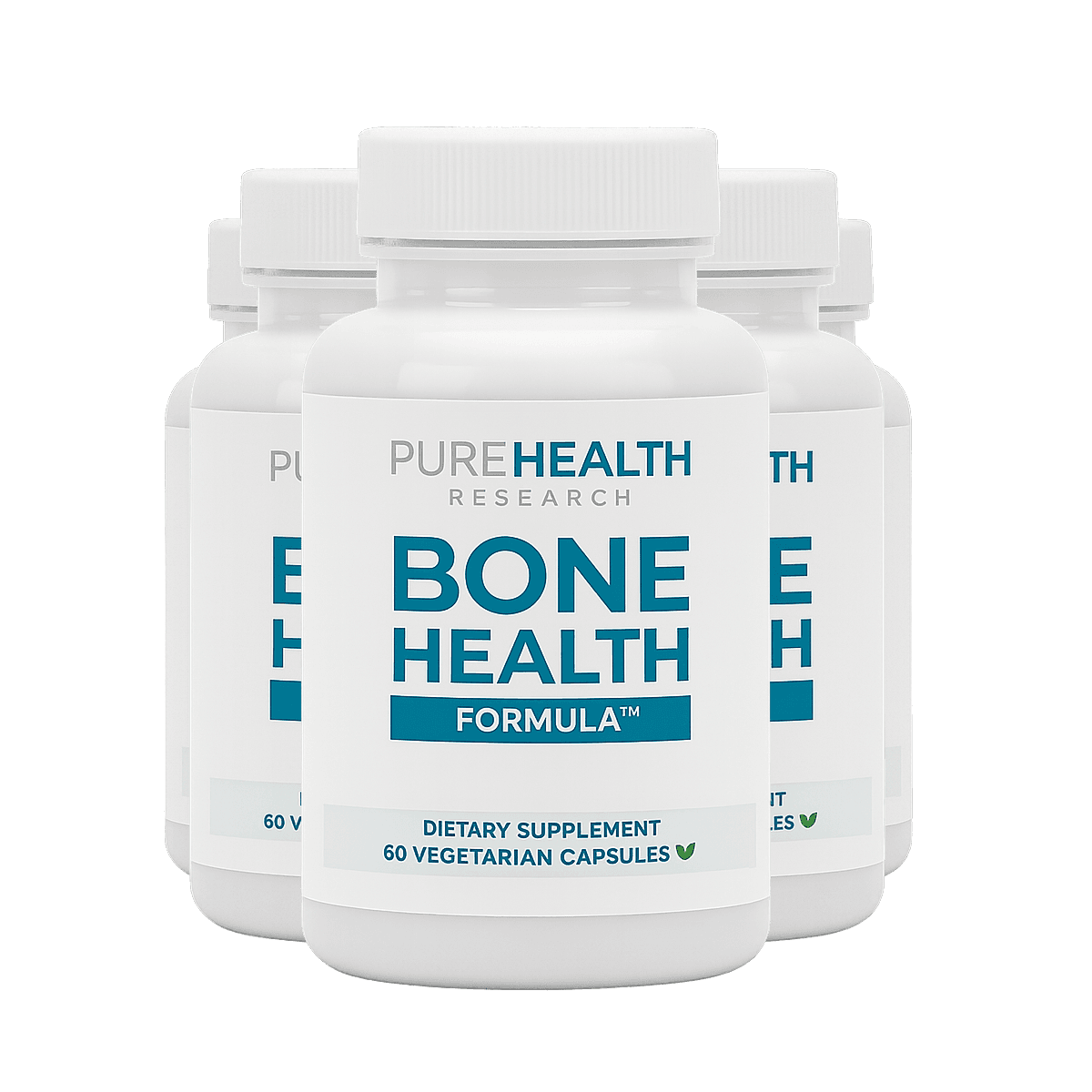
Bone Health Formula is a multi-nutrient oral supplement developed by Pure Health Research, a U.S.-based supplement formulation company. The product is positioned in the bone health category, a crowded, well-established market that includes calcium and vitamin D combinations, collagen peptides, and more specialized formulations targeting post-menopausal women and older adults. What distinguishes Bone Health Formula's positioning, at least rhetorically, is its framing around osteocytes: the VSL claims to be "the first and only formula" designed to protect and reactivate these cells, which it calls "architect cells."
The format is a standard supplement capsule or tablet (the VSL does not specify), intended for daily use. The stated target user is an adult over 50, with women, particularly post-menopausal women, as the implied primary audience, given the emphasis on fracture statistics, menopause-related bone loss, and the female protagonist of the opening narrative. The product contains nine active ingredients: vitamin C, whole-food-sourced bioavailable calcium, vitamin D, vitamin K2 (as MK-7), magnesium, zinc, copper, potassium, and manganese. It is sold direct-to-consumer via a long-form VSL funnel, priced at $49 per bottle with bulk discounts available, and backed by a 365-day money-back guarantee.
The market context matters here. The global bone health supplements market is valued at several billion dollars annually and is growing, driven primarily by aging populations in North America, Europe, and Asia. The VSL is entering a space where consumers have been taking calcium and vitamin D for decades, often with underwhelming results, a frustration the VSL explicitly exploits. Positioning the product against the perceived failures of conventional advice (calcium pills made from rock, dairy that doesn't work, vitamin D alone being insufficient) is a deliberate market-differentiation move, one that requires the VSL to first dismantle the consumer's existing beliefs before offering its replacement.
The Problem It Targets
Osteoporosis and low bone mineral density are genuine and widespread public health concerns. According to the National Osteoporosis Foundation, approximately 10 million Americans have osteoporosis and another 44 million have low bone density, placing them at increased fracture risk. The VSL's statistic that over 250,000 Americans over 65 will break their hips in a given year is consistent with published estimates; hip fractures in older adults carry significant mortality risk, with some studies suggesting one-year mortality rates of 20-30% in elderly patients, which gives the VSL's claim that women who fracture a hip are "five times more likely to die in the next 12 months" a rough epidemiological basis, though the specific multiplier varies across studies.
The problem the VSL targets is not merely physiological, it is psychological. Bone loss is largely invisible until a fracture occurs, which means the fear the VSL activates is prospective: the dread of a future catastrophe that could arrive at any ordinary moment, as Julie's story dramatizes. This is a commercially significant insight. A problem the consumer cannot yet feel is harder to sell against than a problem they are experiencing right now; the VSL compensates by making the consequence of inaction vivid, concrete, and personal through Julie's narrative, which functions as what direct-response copywriters call a surrogate testimony, a story about a third party that the target viewer is meant to inhabit emotionally.
The VSL also targets a specific frustration: the conscientious health follower who has done everything the medical mainstream recommends, exercised, taken supplements, limited alcohol. And still seen their bone density decline. This is a real population. Bone density loss in post-menopausal women is driven by estrogen decline, a hormonal mechanism that nutrition and exercise can slow but not fully counteract. The VSL's promise that there is a hidden missing piece. Not more calcium, not more exercise, but a newly understood cellular mechanism; is designed to explain this frustration and offer resolution. Whether that explanation is accurate is the scientific question this analysis turns to next.
The VSL's debunking of dairy as a bone health food is also worth noting in the context of the broader nutritional literature. The claim is grounded in a real study published in the journal Menopause (2020), which tracked over 3,000 women for 24 years and found no significant protective effect of dairy consumption on bone density or fracture rates during or after menopause. This finding is real and has been discussed in the scientific literature, though it does not mean dairy has zero nutritional value, it means dairy's role in bone health specifically may be more limited than decades of public health messaging suggested.
How Bone Health Formula Works
The VSL's proposed mechanism centers on osteocytes, which it rebrands as "architect cells." The science here is real. Osteocytes are the most abundant bone cells in the human body, they make up roughly 90-95% of all bone cells, and for much of the 20th century, they were indeed considered relatively passive structural elements. Advances in imaging technology over the past two decades have dramatically revised that understanding. Research published in journals including Bone and Journal of Bone and Mineral Research has confirmed that osteocytes serve as critical mechanosensors and signaling hubs: they detect mechanical load on bones, regulate the activity of osteoblasts (bone-building cells) and osteoclasts (bone-resorbing cells), and help control mineral metabolism, including calcium homeostasis. The VSL's characterization of osteocytes as orchestrators of bone remodeling is not fabricated, it reflects a genuine scientific development.
The VSL attributes the age-related decline in osteocyte function primarily to free-radical-driven oxidative stress. This is a plausible hypothesis with supporting evidence in the literature, though it is an incomplete picture. Osteocyte function and viability are affected by multiple factors including estrogen withdrawal (the dominant driver in post-menopausal women), glucocorticoid exposure, mechanical unloading, and inflammatory cytokines, in addition to oxidative stress. The VSL's framing, "it's all about free radicals", is a dramatic simplification that overstates the centrality of one mechanism in a complex, multi-factorial process. This does not make the antioxidant rationale false; it makes it incomplete, which is a meaningful distinction for a buyer evaluating whether this product alone will meaningfully move their bone density.
The claim that the antioxidant vitamin C is the "bone health miracle" at the center of this mechanism is partially supported by research. Vitamin C is required for collagen synthesis, which forms the organic matrix of bone, and it has antioxidant properties that could plausibly support osteocyte viability. The Indonesian gas station worker study the VSL describes, in which workers exposed to high pollution who took vitamin C reduced their free radical levels significantly. Is cited as proof of vitamin C's antioxidant potency. The VSL's extrapolation from "this antioxidant fights free radicals in polluted Indonesian workers" to "therefore it will protect your osteocytes and rebuild your bones" is a significant inferential leap. The mechanism is biologically coherent, but the chain of evidence does not run in a straight line from the study to the product claim.
Curious how other VSLs in this niche structure their pitch? The Hooks and Ad Angles section below maps the rhetorical moves in the order they appear. And explains why each one works on this particular audience.
Key Ingredients / Components
The VSL introduces nine ingredients, each with its own evidentiary justification. The formulation's logic is synergistic: each ingredient is argued to be necessary but insufficient alone, requiring the full blend to produce meaningful results. This is both a scientifically coherent claim (nutrient interactions in bone metabolism are real and well-documented) and a convenient marketing structure (it discourages ingredient substitution and positions the whole product as irreplaceable).
Vitamin C (90 mg); Presented as the lead antioxidant protecting osteocytes from free-radical damage. A review in the British Journal of Nutrition did find associations between higher vitamin C intake and greater bone density in a sample of 3,529 people. The "Goldilocks dose" framing, too little or too much is harmful, is a real consideration, as very high-dose vitamin C (multi-gram doses) has been associated with some adverse effects, though 90 mg is the standard RDA and well within the safe range for most adults.
Bioavailable Whole-Food Calcium, The VSL makes a strong argument against calcium carbonate (derived from limestone and marble), which is indeed the cheapest and most common form in mass-market supplements. Food-matrix calcium or calcium from algae (such as Aquamin) does demonstrate higher bioavailability in some research. The cardiovascular risk concern about calcium supplements is real and has been discussed in the literature, a 2010 meta-analysis in the British Medical Journal (Bolland et al.) found associations between calcium supplementation and increased cardiovascular events, though subsequent research has been mixed on this point.
Vitamin D, Well-established as essential for calcium absorption and bone mineralization. The claim that 75% of U.S. adults are deficient, sourced to Scientific American, is consistent with NHANES data showing widespread insufficiency (though "deficiency" versus "insufficiency" thresholds are debated). The meta-analysis of eight studies involving 31,000 people showing a 30% reduction in hip fracture risk with calcium plus vitamin D is consistent with findings from the DIPART Group analysis published in the British Medical Journal (2010).
Vitamin K2 as MK-7 (Menaquinone-7), One of the better-supported ingredients in this formulation. The VSL's statistic from Japanese women studies, 60% reduction in spinal fractures, 77% reduction in hip fractures, 81% reduction in non-spinal fractures. Draws from Japanese clinical trials using pharmacological doses of vitamin K2 (45 mg MK-4, a different form), which may not translate directly to lower MK-7 doses. The three-year double-blind study in 244 postmenopausal women showing improvements in bone mineral content and arterial elasticity is consistent with research published by Knapen et al. in Osteoporosis International (2013).
Magnesium. The UK study tracking 2,245 middle-aged men for 20 years and finding that higher magnesium levels correlated with a 44% lower fracture risk is consistent with published epidemiological findings. Magnesium is required for vitamin D activation and osteoblast function, and deficiency is genuinely widespread in Western populations eating processed diets.
Zinc; Has established roles in bone matrix formation and inhibiting osteoclast activity. Studies have shown associations between zinc status and bone mineral density.
Copper, Essential for lysyl oxidase activity, an enzyme required for collagen cross-linking in bone. Copper deficiency impairs bone formation, though deficiency in developed-world populations is uncommon.
Potassium, The VSL claims potassium "blocks calcium loss from bones." This is consistent with research showing that higher potassium intake (particularly from fruit and vegetables) reduces urinary calcium excretion, potentially preserving bone density, an effect associated with alkaline-forming foods.
Manganese, The combination study in post-menopausal women using manganese, zinc, copper, and calcium to stop bone loss is consistent with a study published by Strause et al. in the Journal of Nutrition (1994), which found that the mineral combination outperformed calcium alone.
Hooks and Ad Angles
The VSL's opening hook, "If you're over 50 and your bone density keeps getting worse, even when you do everything right", is a textbook pattern interrupt operating on a market that Eugene Schwartz would have classified at Stage 4 or 5 of awareness: consumers who have already tried calcium, vitamin D, and exercise, have been disappointed, and are no longer responsive to direct product pitches. At this sophistication level, the most effective hook is not a bold product claim but an identity-and-frustration mirror: the ad earns attention not by promising something new but by accurately describing the buyer's current, unresolved experience. The phrase "even when you do everything right" is particularly precise, it validates the buyer's effort and implicitly blames the medical system rather than the consumer, which simultaneously relieves guilt and activates grievance. These are powerful emotional levers deployed in a single subordinate clause.
The hook's structure is also an open loop: it names a problem (declining bone density despite correct behavior) and immediately promises a resolution ("a shocking new discovery") without delivering it, creating what screenwriting theorists call dramatic tension and what behavioral economists measure as the Zeigarnik effect. The cognitive discomfort of an unresolved narrative that compels continued engagement. The VSL sustains this loop through Julie's story, the scientific exposition of osteocytes, the debunking of calcium and dairy, and the introduction of each ingredient. Only closing the loop when the product is formally introduced. This pacing, roughly 60-70% problem and mechanism before any product mention, is characteristic of sophisticated long-form direct response copy.
Secondary hooks observed in the VSL:
- "Your bones are like an abandoned construction site with workers demolishing but no one rebuilding"
- "Most calcium supplements are made from marble and limestone; when's the last time you sat down to a meal of rocks?"
- "Harvard researchers confirm this discovery is the key to rebuilding and keeping strong bones"
- "You're only as old as your bones"
- "She stepped off her back porch and heard a snapping sound"
Ad headline variations a media buyer could test on Meta or YouTube:
- "Doctors Still Don't Know This: Harvard Scientists Found the Real Reason Your Bones Keep Weakening After 50"
- "She Did Everything Right and Still Broke Three Bones, Here's the Hidden Culprit"
- "Why Calcium Pills Are Like Eating Marble (And What Actually Builds Strong Bones)"
- "The Osteocyte Discovery That's Changing Bone Health for Women Over 50"
- "365-Day Money-Back Guarantee: Try the Formula Targeting Your Bone-Building Architect Cells"
Psychological Triggers and Persuasion Tactics
The Bone Health Formula VSL is not a simple fear-and-fix letter. Its persuasive architecture is more sophisticated: it compounds authority, loss aversion, and identity threat in a stacked sequence rather than deploying them in parallel. The narrative moves through distinct phases, emotional priming through Julie's story, intellectual credentialing through Harvard and osteocyte science, category destruction through the debunking of calcium and dairy, ingredient revelation, and then the offer, each phase designed to capture a different psychological mechanism. By the time the price is introduced, the buyer has already experienced fear, identification, relief (at the new discovery), and anticipation. The price reveal arrives when the buyer is emotionally primed to receive it as a solution rather than a transaction.
A buyer who has followed this letter to its conclusion has, in a meaningful sense, been walked through a complete belief revision: the old framework (calcium + vitamin D + exercise = strong bones) has been dismantled and replaced with a new one (osteocyte protection = bone health), and the product is the bridge between the new framework and the buyer's desired future. This is what Brunson calls an epiphany bridge, and it is one of the most durable structures in long-form direct response because it changes the buyer's mental model before it asks for their money.
Specific tactics deployed:
Surrogate loss aversion via Julie's narrative (Kahneman & Tversky, prospect theory): Julie's story is told not as a testimonial but as a cautionary tale. The losses she experiences, mobility, summer activities, safety, independence, her sense of self, are catalogued in visceral detail. Research consistently shows that the psychological weight of a loss is roughly twice that of an equivalent gain, and the VSL exploits this asymmetry by spending far more time on the cost of inaction than on the benefit of action.
Authority transfer from Harvard (Cialdini. Authority principle): Dr. Paola Pizhevic of Harvard Medical School is named and quoted. The quote itself is accurate in spirit. Osteocyte research has indeed expanded dramatically; but the implicit message, that Harvard endorses this product, is not supported by the citation. This is borrowed authority: real institution, legitimate research area, but no direct endorsement of the commercial product.
False-enemy framing (Brunson, Expert Secrets villain structure): Calcium pills, dairy, and the medical establishment's ignorance are positioned as the villains responsible for the buyer's bone loss. This move accomplishes two things simultaneously: it explains past failures in a way that removes blame from the buyer, and it creates the cognitive space for a new solution to enter. Without dismantling the old framework, the new product would be received as just another supplement.
Anchoring and price minimization (Kahneman & Tversky, anchoring heuristic; Thaler, mental accounting): The $150 anchor price is introduced with a full justification (research, quality ingredients, life-changing value) before the $49 price is revealed. The delta ($101) functions as a phantom discount. The subsequent reframe to $1.63 per day and then the comparison to "a small latte" invokes Thaler's mental accounting: the buyer evaluates the purchase against a trivial, habitual expenditure rather than against their absolute budget.
Endowment effect via visualization (Thaler, endowment effect): The VSL includes an extended guided visualization, close your eyes, imagine your next bone scan, picture your doctor's amazed expression, before the offer is made. This is a classic endowment effect trigger: by having the buyer mentally possess the outcome before purchasing, the VSL increases the psychological cost of not buying, because passing on the offer now feels like losing something already owned.
Reciprocity via free bonuses (Cialdini, reciprocity principle): Two free e-books valued at $39.95 each are offered regardless of the buyer's final decision. The framing. "these bonuses are yours to keep whatever you decide". Activates reciprocity: the buyer feels they have already received something, which increases the social pressure to complete the exchange.
Scarcity stacking (Cialdini; scarcity principle): The VSL layers multiple scarcity signals: limited inventory, brand-new formula, first-come-first-served, and the narrator's personal vouching that she will "be completely shocked" if supply lasts the day. None of these claims is verifiable, and the 365-day guarantee somewhat undermines the urgency narrative, a product the seller is confident enough to refund for a full year is unlikely to be in critical shortage.
Want to see how these tactics compare across 50+ VSLs in the health supplement space? That's exactly what Intel Services is built to show you.
Scientific and Authority Signals
The VSL's authority architecture rests on three pillars: Dr. Holly Lucille's credentials, the Harvard citation, and a collection of named studies. Dr. Lucille is a real licensed naturopathic doctor (ND) with verifiable television appearances; her credentials are legitimate for a naturopathic practitioner, though it is worth noting that NDs occupy a different regulatory and credentialing space than MDs or osteopathic physicians. Her role in the VSL is as narrator and endorser, not as the researcher who discovered the osteocyte mechanism, a distinction the VSL elides somewhat through its first-person framing.
The Harvard citation is the most consequential authority signal in the letter. Dr. Paola Pizhevic is named as a Harvard Medical School researcher whose published article on osteocyte function is quoted. The quote itself, describing osteocytes as "orchestrators of bone remodeling and mineral homeostasis", is consistent with the published scientific literature on osteocyte biology, and the characterization of osteocytes as active signaling cells rather than passive structural elements is well-supported by research published in peer-reviewed journals over the past 15-20 years. However, the VSL presents this as a "shocking new discovery" that is somehow not yet known to most doctors, a framing that overstates novelty. Osteocyte biology has been an active research area for at least a decade, and the basic architecture of how these cells regulate bone remodeling is taught in medical and dental education. The gap between "frontier research" and "unknown to your doctor" is being exploited rhetorically.
The studies cited across the VSL range from well-grounded to imprecisely attributed. The magnesium-fracture study tracking 2,245 men for 20 years is consistent with research published in the European Journal of Epidemiology. The vitamin K2 postmenopausal study is consistent with work by Knapen et al. in Osteoporosis International (2013). The calcium-plus-vitamin-D meta-analysis reducing hip fracture risk by 30% is consistent with findings from the DIPART Group. The Indonesian gas station worker study on vitamin C and free radicals has a basis in published research on antioxidants and oxidative stress in high-pollution environments, though the VSL's storytelling dramatizes the study setting considerably. No URLs are provided in the VSL itself, and several study descriptions lack enough specificity (authors, year, journal volume) to allow for independent verification without additional research. This is a common pattern in supplement VSLs: real studies, presented in ways that make citation-checking difficult.
The Offer, Pricing, and Risk Reversal
The offer structure follows the conventions of high-converting health supplement funnels closely. The stated retail price of $150 is introduced with a full value justification before being dramatically reduced to $49, a price anchor that functions rhetorically rather than competitively, since the $150 price was never publicly available for comparison. The anchor's purpose is to make $49 feel like a recovered value rather than an absolute expenditure. The reduction to a daily cost ($1.63, then $1.01 with bulk purchase) and the latte comparison invoke mental accounting, reframing the purchase as a micro-expenditure rather than a $49 outlay.
The two bonus e-books, each stated at $39.95, add a stated $79.90 in perceived value to the offer, a standard value-stack technique that inflates the apparent total package value without increasing the actual cost. Whether these e-books have meaningful independent value or serve primarily as funnel assets is not determinable from the VSL alone. The 365-day money-back guarantee. The "Bones of Steel" guarantee. Is notably long by industry standards; most supplement guarantees run 30-90 days. A one-year window genuinely does reduce purchase risk in a meaningful way, since bone density changes are slow and measurable only by scan. However, the simultaneous scarcity messaging ("we might sell out today") sits in structural tension with the guarantee's patience; a seller confident enough to offer a year of risk-free use is unlikely to have inventory measured in hours.
The urgency framing, including the narrator's real-time check with customer service and her personal shock that supply might last the day, is a well-worn direct response convention. It is effective precisely because it is emotionally plausible, the buyer cannot verify inventory, but it is not a factual claim and should be interpreted as a persuasion tool rather than information.
Who This Is For (and Who It Isn't)
The ideal buyer for Bone Health Formula is a woman between roughly 50 and 70 years old who has already been diagnosed with low bone density or osteopenia, has tried calcium and vitamin D supplementation without seeing meaningful improvement on a bone scan, is motivated by fear of fracture and loss of independence rather than by a general interest in wellness, and is comfortable purchasing health products online from direct-response video pitches. She is likely health-conscious, has a history of following medical advice, and feels let down by that advice's results. The VSL's narrative, language, and imagery are calibrated precisely to this person, Julie is her, Dr. Lucille is a trusted peer, and the Harvard citation provides the intellectual reassurance she needs to move forward.
The product may also appeal to men over 60 who have been diagnosed with low bone density (a population the VSL mentions but does not center), and to adult children purchasing supplements for aging parents, a secondary buyer persona that the VSL does not explicitly address but whose motivations (preventing a parent's fracture and its catastrophic consequences) are directly activated by the Julie narrative.
Readers who should probably approach this product with more caution include those currently on prescription osteoporosis medications (bisphosphonates, denosumab, teriparatide), where supplement interactions are a real concern requiring physician guidance; individuals with kidney disease, for whom some of these nutrients (particularly vitamin D, calcium, and potassium) require careful monitoring; and anyone expecting that a supplement alone will reverse severe osteoporosis without concurrent lifestyle, dietary, and potentially pharmaceutical intervention. The VSL's framing, that this formula alone can deliver "rock solid bones at any age", is more confident than the evidence supports for individuals with significant bone density deficits.
For a deeper look at how supplement VSLs handle the line between legitimate science and marketing extrapolation, Intel Services maintains an ongoing archive of analyses exactly like this one.
Frequently Asked Questions
Q: What is Bone Health Formula and what does it do?
A: Bone Health Formula is a nine-ingredient bone health supplement made by Pure Health Research and endorsed by Dr. Holly Lucille, a naturopathic doctor. It contains vitamin C, bioavailable calcium, vitamin D, vitamin K2 (as MK-7), magnesium, zinc, copper, potassium, and manganese. The stated purpose is to protect osteocyte cells from oxidative stress and support the full spectrum of bone-building and bone-maintenance functions.
Q: Is Bone Health Formula a scam?
A: The product is sold by Pure Health Research, a legitimate supplement company with multiple products on the market, and it comes with a 365-day money-back guarantee. The ingredients are real and have published research supporting their individual roles in bone health. The VSL's framing overstates some claims, particularly around the novelty of the osteocyte discovery and the certainty of outcomes. But the underlying formulation is not fraudulent. Buyers should have realistic expectations: this is a supplement, not a pharmaceutical, and outcomes vary.
Q: What are the ingredients in Bone Health Formula?
A: The formula contains nine nutrients: vitamin C (90 mg), bioavailable whole-food calcium, vitamin D, vitamin K2 as MK-7 (menaquinone-7), magnesium, zinc, copper, potassium, and manganese. The VSL does not disclose the full label doses for each ingredient beyond vitamin C.
Q: Does Bone Health Formula really work for bone density?
A: The individual ingredients have evidence supporting their roles in bone health. Vitamin K2 as MK-7, magnesium, and the calcium-plus-vitamin-D combination in particular have solid published research behind them. Whether this specific formulation at its specific doses will produce measurable bone density improvements in any given individual depends on their baseline status, diet, activity level, hormonal profile, and other factors. Bone density changes are slow and typically measurable only by DEXA scan over a period of 12-24 months.
Q: Are there any side effects of taking Bone Health Formula?
A: The VSL states the formula has "zero side effects," which is an overstatement. Vitamin D toxicity is possible at high doses. Calcium supplementation has been associated in some research with cardiovascular risk. Vitamin K2 can interact with blood-thinning medications including warfarin. Any individual with existing health conditions or taking prescription medications should consult a physician before adding this or any multi-nutrient supplement.
Q: Who is Dr. Holly Lucille and is she a real doctor?
A: Dr. Holly Lucille holds a Doctor of Naturopathic Medicine (ND) degree and has made verified appearances on national television health programs. She is a real credentialed professional, though it is worth noting that NDs are not medical doctors (MDs) and practice within a different scope of licensure that varies by state. Her involvement with this VSL appears to be as a paid spokesperson and endorser rather than the primary researcher behind the formula.
Q: What is the osteocyte architect cell discovery?
A: Osteocytes are the most abundant cells in bone, and research over the past two decades has established that they play a critical role in regulating bone remodeling, calcium metabolism, and the activity of both bone-building cells (osteoblasts) and bone-resorbing cells (osteoclasts). This is genuine science, published in peer-reviewed journals. The VSL's framing of it as a brand-new, doctor-unknown discovery overstates its novelty. Osteocyte biology is now part of mainstream bone science; but the core cellular mechanism is real.
Q: Is Bone Health Formula safe to take with other medications?
A: Vitamin K2 can interfere with anticoagulant medications such as warfarin. High-dose vitamin D interacts with certain diuretics and heart medications. Magnesium can interact with antibiotics and bisphosphonate osteoporosis drugs. Anyone taking prescription medications should consult their prescribing physician before starting this supplement.
Final Take
The Bone Health Formula VSL is a well-constructed piece of long-form direct response copy operating in a market defined by consumer frustration, genuine scientific complexity, and high emotional stakes. Its core scientific claim, that osteocytes are critical regulators of bone health and that protecting them from oxidative stress is a meaningful therapeutic target, is not invented. It is grounded in a real and growing body of bone biology research. The VSL's error is not fabrication; it is extrapolation. The distance between "osteocyte research is a legitimate scientific frontier" and "this specific nine-ingredient supplement will restore your bone density" is considerable, and the VSL crosses that distance with confidence it has not fully earned.
The strongest elements of this VSL are its hook and its ingredient rationale. The opening 60 seconds achieve a precise emotional and cognitive state in the target viewer, and several of the ingredients, particularly vitamin K2 as MK-7, the calcium-vitamin D pairing, and magnesium, have genuinely meaningful research behind their roles in bone health. The 365-day guarantee is also unusual and meaningful: it is one of the longer risk-reversal windows in the supplement space and does substantially reduce financial risk for a buyer willing to monitor their bone density over time.
The weakest elements are the authority claims and the certainty of outcome. Borrowing Harvard's name without a direct product endorsement is a common and well-understood marketing move, but it should be recognized as such. Describing the osteocyte discovery as news to most doctors in 2024 is a stretch. And the VSL's framing that this formula alone is sufficient, without sustained dietary change, resistance exercise, and in some cases medical intervention, is the kind of overstatement that sets up buyers for disappointment and undermines the product's legitimate strengths.
For the reader who is over 50, has documented low bone density, and is looking for a supplement to complement (not replace) a bone health program that includes weight-bearing exercise, adequate protein, and physician oversight, the ingredient profile of Bone Health Formula is reasonable and worth discussing with a healthcare provider. For the reader who arrives expecting a miracle cure based on the VSL's most dramatic promises, the product is unlikely to meet those expectations, not because the science is entirely wrong, but because bone health is a long-term, multi-factorial effort that no single supplement can fully substitute.
This breakdown is part of Intel Services, our ongoing library of VSL and ad-copy analyses. If you're researching similar products in the bone health, joint health, or longevity supplement space, keep reading.
Disclaimer: This article is for research and educational purposes only. It is not medical, legal, or financial advice, and it is not affiliated with the product or its makers. Always consult a qualified professional before making health or financial decisions.
Source-backed reader context
Additional Reviews & Reported Experiences
These statements were presented in the product's sales transcript. Daily Intel did not independently verify the speakers, purchase status, or reported outcomes, and the statements are not used in Product aggregateRating.
Julie (family friend, age 53)
Date not stated
fractured three bones stepping off a porch, developed deep vein thrombosis, now uses a cane; motivates the problem narrative
Dr. Holly Lucille's own patient population
Date not stated
patients who followed all recommendations but still saw declining bone density
Comments(0)
No comments yet. Members, start the conversation below.
Related reads
 reviews
ARMRA Colostrum Review: Evidence, Dose Gaps, Price, and Verdict
ARMRA’s 120-serving colostrum powder comes with notable manufacturer-reported survey percentages. However, the undisclosed amount per serving and a materially different ingredient trial leave the finished product’s highlighted outcomes unproven.
Read reviews
Olly Goodbye Stress Review: Label Claims vs. Evidence
OLLY Goodbye Stress combines GABA, L-theanine, and lemon balm extract in a Berry Verbena gummy aimed at occasional stress, not sleep. Here's what the label discloses, what a real L-theanine trial found, and exactly where the evidence stops.
Read reviews
Kaged Pre-Kaged Sport Review: Does the Citrulline Study Fit?
Kaged Pre-Kaged Sport provides 3.5 grams of fermented L-citrulline in each 13-gram scoop. The supplied trial tested a higher dose of isolated L-citrulline and found no performance benefit, so it cannot prove whether this finished formula works.
Read