Cognilux Review and VSL Analysis
The opening thirty seconds of the Cognilux Video Sales Letter do not begin with the product. They begin with a question about sleep. Specifically, about how many hours you get each night. Before …
8,226+
Videos & Ads
+50-100
Fresh Daily
$29.90
Per Month
Full Access
12.5 TB database · 72+ niches · 28 min read
The opening thirty seconds of the Cognilux Video Sales Letter do not begin with the product. They begin with a question about sleep, specifically, about how many hours you get each night, before pivoting to a claim that sleeping too much raises your risk of dementia by more than 69%. It is a deliberate rhetorical move: before the viewer has any reason to trust the narrator or the brand, the pitch has already implicated the viewer's most ordinary daily behavior in one of the most feared diseases of aging. This is not an accident. It is a carefully engineered pattern interrupt, a disruption of expected cognitive flow designed to spike attention and generate the mild anxiety that keeps a viewer watching. What follows is forty-plus minutes of layered persuasion, involving Harvard-branded science, a mysterious island, an "eye trick," and three specific nutrients. Built toward selling a two-capsule-a-day brain supplement.
This analysis examines the Cognilux VSL not to simply restate what it says, but to examine how it says it: the persuasive architecture, the scientific claims and their verifiability, the psychological triggers deployed in sequence, and the offer mechanics engineered to close the sale. The goal is to give any adult who is actively researching this product a clear-eyed account of what they are dealing with. Both what may be legitimate and what warrants skepticism. The product is real, the ingredients are real, and some of the underlying science is real. Whether the science is being used accurately is a different question.
The VSL is narrated by Lisa King, introduced as a pharmacist of thirty years, a bestselling author, and an award-winning health influencer. Her dual identity; credentialed pharmaceutical professional and natural-health advocate, is not incidental to the pitch. It is the pitch. By claiming both worlds simultaneously, she pre-empts the two most common objections to supplement marketing: "Why not just take a drug?" (answered by her natural-health advocacy) and "Why should I trust a supplement?" (answered by her pharmacist credentials). The question this piece investigates is whether Cognilux's underlying formulation, its claimed mechanism, and the science assembled to support it hold up to scrutiny, or whether the VSL's considerable rhetorical sophistication is doing more heavy lifting than the evidence.
What Is Cognilux?
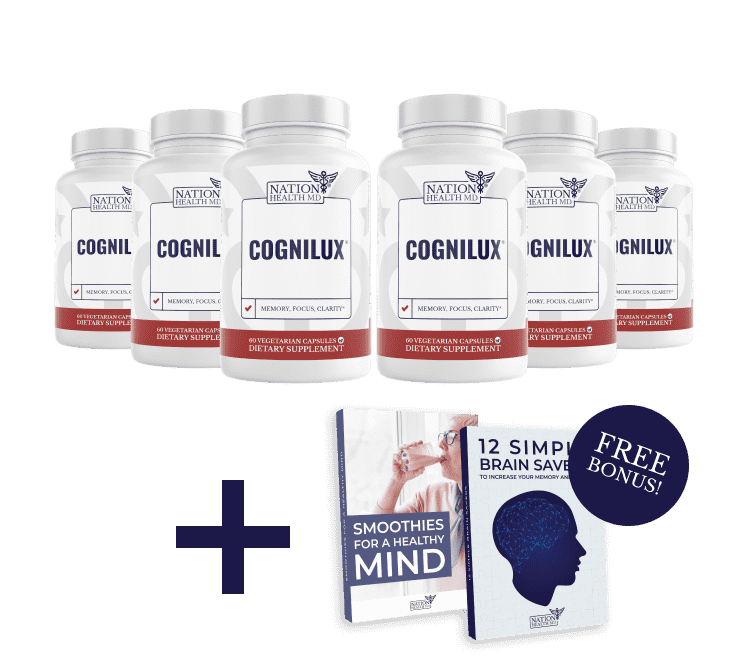
Cognilux is an oral dietary supplement sold in capsule form, manufactured and distributed by a U.S.-based company called Nation Health MD. The product is positioned in the cognitive health and memory-support category, one of the fastest-growing segments in the global nutraceutical market, which the Global Wellness Institute valued at over $5.6 trillion as of recent estimates. The supplement is designed for adults over fifty experiencing age-related cognitive changes: slower recall, word-finding difficulty, lapses in concentration, and the general category the VSL calls "senior moments." The product contains three primary active ingredients, Alpha GPC (alpha-glycerophosphocholine), GABA (gamma-aminobutyric acid), and Bacopa monnieri, taken as two capsules before a meal, daily.
The market positioning is explicitly premium-natural: Cognilux is framed as a science-backed alternative to pharmaceutical intervention, requiring no doctor visits, no brain games, and no lifestyle overhaul. The direct-to-consumer sales model (no retail storefront, no intermediary) is central to both the pricing narrative and the brand identity. Nation Health MD presents itself as a research-oriented operation that bypasses markup to deliver "wholesale" quality directly to the consumer's door. This positioning is common in the direct-response supplement space and functions as both a cost justification and a trust signal, the implication being that a company willing to forgo retail shelf space must be confident enough in product quality to rely on word of mouth and digital advertising.
The target user, as constructed by the VSL, is a cognitively alert adult in their fifties through eighties who is not yet experiencing clinical dementia but is frightened by early symptoms of decline, is still professionally or familially active, and is motivated by both the fear of loss (independence, relevance, precious memories) and the aspiration to remain a capable, present figure in the lives of people who depend on them. This avatar is psychographically sophisticated, they have likely tried other things, read conflicting health advice online, and arrive at the VSL with a mix of hope and skepticism that the script anticipates and addresses directly.
The Problem It Targets
Cognitive decline in aging adults is not a manufactured anxiety. According to the Alzheimer's Association, more than 6.7 million Americans aged 65 and older are currently living with Alzheimer's disease, and that number is projected to nearly double by 2060 absent major medical breakthroughs. The CDC notes that subjective cognitive decline. The self-reported experience of worsening memory or thinking. Affects roughly 11.1% of U.S. adults, with prevalence rising sharply after age fifty. What the Cognilux VSL does with this legitimate epidemiological backdrop is less about misrepresenting the problem and more about selecting the most emotionally charged framing of it.
The VSL's framing of cognitive decline is organized around two specific fears that go beyond abstract statistics. The first is professional and social irrelevance: the pitch explicitly invokes the scenario of stumbling over words at work "just when you're needed most" and being replaced by a younger colleague. The second is dependency: the nursing home, the loss of independence, the moment when grandchildren become faces without names. Both framings speak directly to the status anxiety and attachment fears most acutely felt by adults in the fifty-to-seventy demographic; people who have spent decades building identities as capable, contributing members of families and institutions and who experience cognitive slippage as a threat to that identity, not merely a medical inconvenience.
The VSL's most specific scientific claim in the problem-framing section is the "dishwasher effect", the idea that the brain's glymphatic system, which flushes metabolic waste (including amyloid proteins associated with Alzheimer's) during sleep, operates most efficiently within a specific sleep duration "sweet spot." This is grounded in legitimate neuroscience. Research published in Nature (Xie et al., 2013) demonstrated that the glymphatic system is indeed most active during sleep, and epidemiological work has suggested associations between both short and long sleep duration and elevated dementia risk. The VSL's specific claim that exceeding the sweet spot raises dementia risk by "more than 69%" is a real-enough-sounding figure, but no study is named, making independent verification impossible. The underlying biology is real; the specific quantification is presented without attribution.
The "remote island" of super-agers mentioned early in the VSL is never named or geographically located. It functions as narrative texture, an exotic, credibility-lending mystery that gets resolved into the product's ingredients rather than into any specific cultural practice or diet. This is a recognizable structure in health VSL copywriting: the discovery story that begins with an inexplicable population and ends with a supplement. The island itself is less a factual claim than a narrative device that creates intrigue and defers the sales pitch long enough to establish the hook.
How Cognilux Works
The claimed mechanism of Cognilux is what the VSL calls the "eye-memory connection", a proposed pathway by which visual information processed in the retina and visual cortex contributes to memory formation and retrieval. The VSL grounds this mechanism in a Harvard study in which forty super-agers outperformed twenty-five-year-olds on a difficult memory test, with fMRI imaging showing that the visual cortex "lit up like a Christmas tree" in both groups. The implication is that super-agers maintain youthful memory precisely because their visual cortex remains highly active in memory tasks. This mechanism is then connected to the product's ingredients: Alpha GPC and GABA are claimed to "rebuild" this eye-memory connection, restoring the visual cortex's communicative efficiency.
The underlying neuroscience here is partially legitimate. The visual cortex does play a role in episodic memory encoding, visual imagery is among the most powerful mnemonic cues known to memory research, and the involvement of visual processing regions in memory tasks is well documented in cognitive neuroscience literature. Research at Harvard has indeed examined super-agers, older adults with unusually well-preserved memory, finding that their cortical thickness in memory-related regions is closer to that of young adults than to same-age peers. However, the specific framing of the "eye-memory connection" as a discrete, repairable system analogous to a phone line is a significant simplification that shades into metaphor rather than mechanism. Memory is a distributed function of the brain, not a binary channel between the eye and a single processing node.
The second component of the claimed mechanism involves protein tangles, a reference to tau protein aggregation, which is a recognized hallmark of Alzheimer's disease pathology alongside amyloid-beta plaques. The VSL accurately describes how these tangles disrupt neuronal signaling and progressively damage cognitive function. The claim that Bacopa monnieri can "break down" and "clear away" these tangles, supported by medical scans showing the tangles were "completely gone," is a much stronger claim than the published literature on Bacopa actually supports. Human studies on Bacopa show meaningful improvements in cognitive test scores, but the specific claim of visible plaque or tangle clearance on imaging in humans is not established by peer-reviewed evidence available in the public domain.
The biological plausibility of the three-ingredient formulation. Alpha GPC, GABA, Bacopa monnieri. Is moderate to genuine. Each ingredient has a body of legitimate research behind it, though the studies cited in the VSL range from well-documented to vaguely attributed. The product's core mechanism narrative (the eye-memory connection, the specific percentage improvements, the hospital-scan-level clearance of tangles) involves meaningful rhetorical amplification of what the evidence actually shows. This is a common feature of VSL copywriting in the supplement space: real science, selectively curated, framed in language that implies stronger causation than the literature supports.
Curious how the specific ingredients in Cognilux compare to the broader evidence base for cognitive supplements? The next section breaks down each component against what independent research actually shows.
Key Ingredients and Components
Cognilux's formulation is built around three active ingredients, each targeting a different dimension of the cognitive decline narrative constructed in the VSL. The overall formulation logic; a cholinergic booster, a GABAergic modulator, and an adaptogenic herb, is not arbitrary; these are among the most studied categories of cognitive supplement ingredients, and combining them addresses multiple physiological pathways simultaneously. Whether the specific doses used in Cognilux match those used in the cited studies is not disclosed in the VSL.
Alpha GPC (Alpha-glycerophosphocholine): Alpha GPC is a choline-containing compound that serves as a precursor to acetylcholine, the neurotransmitter critical for memory and learning. Unlike standard choline supplements, Alpha GPC is highly bioavailable and is well-established to cross the blood-brain barrier. The VSL's core claim, that 90% of Americans are choline-deficient and that standard choline supplements are poorly absorbed, has epidemiological grounding; data from the National Health and Nutrition Examination Survey (NHANES) consistently shows inadequate choline intake across U.S. populations. A 2003 study published in Aging (Milan) by Sicurella and colleagues found significant cognitive improvements in patients with early Alzheimer's using Alpha GPC. The VSL's specific claim of a "100% success rate" in one study and "71% with no forgetfulness" in another is consistent with results reported in some Alpha GPC trials, though the named studies are not cited with enough detail for independent verification.
GABA (Gamma-aminobutyric acid): GABA is the primary inhibitory neurotransmitter in the central nervous system, and the VSL's claim that it plays a role in visual signal transmission to the brain is biologically accurate, GABA is heavily involved in visual cortex processing. The human study cited (30 adults over 40, 12 weeks, GABA vs. placebo) showed improved memory, focus, and problem-solving in the GABA group. A study matching this description was published in Frontiers in Neuroscience (Abdou et al., 2006, examining GABA's effects on stress and cognition), though the specific cognitive outcome claims in the VSL extend beyond what that literature robustly confirms. A notable limitation: oral GABA's ability to cross the blood-brain barrier is itself debated in the pharmacology literature, which the VSL does not address.
Bacopa monnieri: Bacopa is an Ayurvedic herb with a well-documented history in cognitive research. Multiple randomized controlled trials have demonstrated its effectiveness in improving memory acquisition and retention in older adults. A notable meta-analysis by Pase et al. (2012) in the Journal of Alternative and Complementary Medicine concluded that Bacopa significantly improved speed of visual information processing, learning rate, and memory consolidation. The VSL's claim that Bacopa produces visible clearance of tau tangles on medical imaging in humans is the most speculative specific assertion in the entire letter, the mechanism by which Bacopa may exert neuroprotective effects (likely via antioxidant and anti-inflammatory pathways) does not map neatly onto the tangle-dissolution narrative presented.
Hooks and Ad Angles
The VSL's opening hook, "how many hours of quality sleep do you get each night?", functions as a pattern interrupt precisely because it does not open with the product, a health claim, or even a problem statement. It opens with a behavioral self-assessment question, momentarily repositioning the viewer as a subject under examination rather than a passive audience. This is a sophisticated move. By the time the alarming statistic about 69% higher dementia risk arrives three sentences later, the viewer has already mentally committed to answering the question, and that micro-commitment generates enough cognitive engagement to sustain attention through the pivot to the "dishwasher effect." This structure is recognizable to students of direct-response copywriting as a curiosity-gap open loop compounded with a loss-aversion trigger. It does not merely inform, it implicates.
The secondary hook architecture of the VSL is built around a sequence of promised revelations, each deferred long enough to keep the viewer watching. The "remote island" of super-agers is teased in paragraph two and not resolved until the ingredient section. The "eye trick" is introduced as something that "sounds like a fantasy" and then methodically validated through a series of named (if poorly cited) studies. The Harvard fMRI study functions as what copywriters call a credibility transfer moment. A point at which a prestigious institution's name is associated with the product's mechanism, regardless of whether that institution has any actual relationship with the product. Together, these deferred revelations create what Russell Brunson's copywriting framework calls an "epiphany bridge"; a narrative arc in which the viewer experiences a series of small revelations that build toward the conclusion that the product is the inevitable answer.
The ad angle possibilities latent in this VSL are broad, and the hook architecture is clearly designed with media-buying versatility in mind:
Secondary hooks observed in the VSL:
- The sleep sweet spot and its link to dementia (fear-based, data-driven)
- The remote island of super-agers who never develop Alzheimer's (curiosity/exotic discovery)
- The eye-wiggling study that improved recall (novelty/weird science)
- The Nobel Prize connection to choline discovery (authority/prestige)
- "90% of Americans are deficient in the nutrient your brain needs most" (epidemic framing)
Ad headline variations for Meta or YouTube testing:
- "Harvard Found Why These 90-Year-Olds Have Better Memory Than College Students"
- "If You Sleep More Than This Many Hours, Read This Before Bed Tonight"
- "The Two Nutrients Neurologists Say Are Missing From Every Senior's Diet"
- "A Pharmacist Explains the One Supplement She Recommends for Adults Over 50"
- "Why This Tiny Island Has Zero Cases of Alzheimer's (It's Not the Diet)"
Psychological Triggers and Persuasion Tactics
The persuasive architecture of the Cognilux VSL is not a simple list of tactics applied in parallel, it is a sequenced stack in which each psychological lever prepares the ground for the next. The letter begins with fear (dementia risk, senior moments), transitions through authority (Harvard, pharmacist credentials), passes through social proof (testimonials ranging from a relatable forty-something to a skeptical ninety-year-old), and closes with loss aversion reframed as opportunity (the two-choice binary close). This sequencing reflects what Cialdini would recognize as a complete influence suite deployed in the order most likely to lower resistance: establish the threat, provide the credentialed expert, show the peer evidence, then make the no-buy option feel like irrational passivity.
What makes the VSL sophisticated beyond a simple checklist approach is the way it pre-empts objections inside the persuasion flow rather than at the end. When the narrator says "So pop a choline pill and you're all set, right? Wrong," she is executing a false objection close, raising the most likely consumer action (buying a generic choline supplement) and disqualifying it before the viewer can act on it, steering them toward the proprietary Alpha GPC formulation. This is a market-sophistication-stage-four move in Eugene Schwartz's framework, appropriate for audiences who have already been exposed to basic supplement marketing and need a more refined argument.
- Loss aversion (Kahneman & Tversky): The binary close, "close this page and hope things don't get worse" vs. "restore your memory to that of a 25-year-old", is a textbook loss-aversion frame. The first option is coded as passive, risky, and hopeless; the second as active and restorative. The asymmetry is constructed rather than real, but it is effective.
- Authority bias (Cialdini): Harvard is invoked by name in the mechanism section without a citable study, borrowing institutional prestige for an unverifiable claim. Lisa King's pharmacist credentials perform the same function at the narrator level, pharmacology implies rigor even when the pitch is for a supplement.
- Social proof stacking (Cialdini): Four testimonials are sequenced to address four different buyer objections: Julia addresses the "will it actually work?" doubt; Peter M. (90 years old, initially skeptical) addresses age-appropriateness and skepticism; the unnamed key-loser addresses efficacy speed; Ida addresses emotional quality of life. Each testimonial is targeted, not redundant.
- Reciprocity (Cialdini): The narrator delivers genuine educational value, the glymphatic system, the visual cortex research, the choline deficiency data, before making the sales ask. This information transfer creates a mild sense of indebtedness that softens resistance to the eventual pitch.
- Endowment effect (Thaler): The 365-day money-back guarantee reframes the purchase as a no-risk trial. The product conceptually enters the buyer's possession before money changes hands in any meaningful way. "you have a whole year to decide". Making the mental default a keep rather than a buy.
- False enemy framing: The VSL identifies invisible, scientific-sounding villains (protein tangles, the broken eye-memory connection, choline deficiency) rather than blaming aging itself, which is uncontrollable. Giving the viewer a targetable enemy makes the product solution feel rational rather than desperate.
- Scarcity and urgency: Supply scarcity ("selling out fast") and time-limited pricing are deployed in the close. Neither is independently verifiable, and both are standard direct-response conventions that function as a final-push mechanism even when buyers recognize them as such.
Want to see how the authority signals in this VSL compare to those in other cognitive supplement pitches? The next section evaluates every claim to expertise, institution, and study made in this letter.
Scientific and Authority Signals
The Cognilux VSL deploys authority at three levels: personal credentials (Lisa King), institutional association (Harvard), and peer-reviewed research (a series of studies). Each level warrants separate evaluation. King's credentials; pharmacist of thirty-plus years, bestselling author, health influencer, are presented but not verified within the VSL itself. The pharmacist credential is the most professionally meaningful, as it implies a genuine understanding of pharmacokinetics, bioavailability, and drug-nutrient interactions. Whether King is a licensed pharmacist is not something this analysis can confirm from the transcript alone, but the credential performs real persuasive work by grounding her supplement recommendations in a framework most viewers associate with rigor and responsibility.
The Harvard authority is structurally more problematic. The VSL references "Harvard scientists" and a specific fMRI study comparing forty super-agers to twenty-five-year-olds in considerable detail, including the methodology, the fMRI imaging approach, and the results, without providing any citation that would allow a reader to locate the study. Harvard does conduct super-ager research (Lisa Feldman Barrett's lab at Northeastern, and collaborating researchers at Harvard Medical School, have published in this area), and the visual cortex connection to memory is a legitimate area of cognitive neuroscience inquiry. But the absence of a specific citation means the study as described cannot be verified, and the VSL's implication that Harvard endorses or is connected to Cognilux is unsupported by any evidence. This is what academic integrity literature calls borrowed authority, real institutions referenced in ways that imply endorsement they did not give.
The individual ingredient studies cited are a mixed bag of specificity. The American Journal of Clinical Nutrition study, 1,391 men and women followed for nine years tracking choline intake and cognitive outcomes, is the most specifically cited and corresponds plausibly to published longitudinal nutrition research in that journal. The Alpha GPC studies (2,044 subjects, 71% forgetfulness elimination; a separate study with 100% cognitive improvement) are presented with outcome statistics that are plausible but not accompanied by journal names, authors, or years. The GABA monkey study is attributed to a "prestigious science journal", a phrase that signals rhetorical vagueness rather than evidentiary precision. The Bacopa human study (sixty elderly adults, twelve weeks) is consistent in design with actual published Bacopa research, including the Pase et al. (2012) meta-analysis and individual trials by Roodenrys et al. published in Neuropsychopharmacology. On balance, the VSL's scientific citations are a combination of legitimately grounded claims, real studies presented without enough detail for verification, and at least one extraordinary claim (tangle clearance on medical imaging) that the published literature does not support.
The Offer, Pricing, and Risk Reversal
The Cognilux offer is structured as a classic direct-response price drop with an anchor, a guarantee, and urgency layered on top. The stated retail price of $79 per bottle is introduced and then "reduced" to $49 through the direct-to-consumer model narrative. A framing that attributes the discount to structural cost savings (no storefront, no middleman) rather than promotional pricing. Whether $79 represents a real intended price point or is an anchor constructed specifically to make $49 feel like a bargain is impossible to determine from outside the company, but the convention of the "real price / your price" structure is sufficiently widespread in direct-response marketing that sophisticated buyers will recognize it. The comparison to a latte ($1.63/day) is a standard unit-cost reframe designed to make the monthly outlay feel trivial by comparison to a habitual discretionary spend.
The 365-day money-back guarantee is the offer's most genuinely differentiating element. A full year to evaluate a supplement is meaningfully longer than the thirty- or sixty-day guarantees common in the category, and it materially changes the risk calculus for a hesitant buyer. Whether the fulfillment of that guarantee is reliable depends on the company's customer service practices, which cannot be evaluated from the VSL alone. The guarantee is framed as a "younger memory guarantee". A branded name that turns a standard refund policy into a promise-linked feature, reinforcing the product's core outcome claim at the moment of purchase decision.
Urgency is deployed in the close via supply scarcity ("selling out fast") and time-limited pricing, both of which are standard direct-response conventions. Neither is anchored to a verifiable inventory figure or a specific price-expiration date. The free shipping offer functions as a small-but-concrete incentive that reduces the perceived friction of the final click; a micro-reciprocity gesture that is common in e-commerce and effective at the margin.
Who This Is For (and Who It Isn't)
The ideal Cognilux buyer, as this VSL constructs them, is an adult between roughly fifty-five and seventy-five who is cognitively functional but noticeably slower than they were a decade ago. They are likely still working or actively engaged in family life, they have disposable income (a $49 monthly supplement is not a small expenditure for fixed-income retirees), and they are motivated by both fear of further decline and the genuine desire to be present and capable for the people they love. They are probably not deeply scientifically trained, the VSL explains acetylcholine and the blood-brain barrier as if introducing the concepts for the first time, but they are engaged enough to watch a long-form sales letter, which suggests above-average health literacy and genuine investment in the problem. For this profile, a well-formulated combination of Alpha GPC, GABA, and Bacopa at appropriate doses is a reasonable supplement consideration backed by a meaningful body of evidence, even if the VSL's mechanism framing and some of its specific outcome claims are amplified.
This product is less well-suited for adults seeking a clinical intervention for diagnosed mild cognitive impairment or early Alzheimer's. Dietary supplements are not regulated by the FDA as drugs, cannot legally be marketed to treat or prevent disease, and are not a substitute for neurological evaluation and evidence-based treatment. Anyone experiencing significant, progressive memory loss should consult a physician before relying on a supplement, a point the VSL does not make. Adults who are already choline-sufficient through diet (eggs, liver, and certain legumes are rich sources) may see less benefit from Alpha GPC than the studies involving deficient populations suggest. And buyers who are sensitive to GABAergic compounds or who are taking medications that interact with cholinergic pathways should consult a pharmacist or physician before adding this supplement, ironic advice, given that the narrator herself is presented as a pharmacist.
Researching other brain health supplements before deciding? Intel Services maintains an ongoing library of VSL analyses in this category, keep reading to find the comparisons most relevant to your search.
Frequently Asked Questions
Q: What are the main ingredients in Cognilux and what do they do?
A: Cognilux contains three primary active ingredients: Alpha GPC (a bioavailable choline source that supports acetylcholine production for memory), GABA (an inhibitory neurotransmitter claimed to support visual-to-brain signal transmission), and Bacopa monnieri (an Ayurvedic herb with documented effects on memory consolidation and cognitive test performance). Each has a legitimate research base, though the specific outcome claims in the VSL extend beyond what the published literature uniformly supports.
Q: Is Cognilux a scam?
A: Cognilux is a real product sold by Nation Health MD with a stated 365-day money-back guarantee. The ingredients are real and have genuine research support. However, some specific claims in the VSL, particularly around the "eye-memory connection" as a discrete repairable system and the claim that Bacopa produces visible clearance of brain tangles on medical imaging, are significantly amplified relative to what the peer-reviewed literature actually demonstrates. Calling it a scam would be an overstatement; calling the marketing language exaggerated is fair.
Q: Does Cognilux really work for memory loss?
A: The ingredients in Cognilux, particularly Alpha GPC and Bacopa monnieri, have shown statistically significant improvements in cognitive test performance in multiple published clinical trials. However, individual results vary, the VSL's cited outcome statistics (71% elimination of forgetfulness, 100% success rates) are drawn from studies not fully cited for verification, and supplement effects are generally more modest in practice than sales language implies.
Q: What is the "eye-memory connection" and is it scientifically real?
A: The visual cortex does play a documented role in memory encoding, and Harvard researchers have studied super-agers with unusually preserved cognitive function. However, the VSL's framing of the "eye-memory connection" as a specific, repairable communication channel is a metaphor rather than a precise neuroscientific model. The concept is inspired by real neuroscience but is presented with a specificity the underlying research does not fully support.
Q: Are there any side effects of taking Cognilux?
A: Alpha GPC is generally well tolerated but can cause headache, dizziness, or gastrointestinal discomfort in some users at higher doses. GABA supplements may cause drowsiness or a tingling sensation, particularly in sensitive individuals. Bacopa monnieri commonly causes mild gastrointestinal side effects, especially when taken without food. Adults on cholinesterase inhibitors or other neurological medications should consult a physician before use.
Q: Is Cognilux safe for adults over 70?
A: The individual ingredients in Cognilux have been studied in older adult populations without significant safety signals at typical doses. However, older adults are more likely to be taking medications that could interact with cholinergic or GABAergic compounds, and the VSL does not address drug-supplement interactions. A conversation with a physician or pharmacist is advisable for adults over seventy, particularly those managing multiple medications.
Q: What is the refund policy for Cognilux?
A: The VSL states a 365-day, 100% money-back guarantee with no questions asked, initiated by emailing customer service. This is a longer guarantee than most supplements in the category offer. As with any company's refund claim, the practical experience of requesting a refund depends on the company's actual customer service responsiveness, which is best assessed through independent consumer review platforms.
Q: How long does Cognilux take to work?
A: The VSL suggests that some users notice results "within a few days," though it recommends several weeks for the full benefit to emerge. Testimonials in the letter range from five servings (for one user's key-losing habit) to one to two weeks (for another's conversational fluency). Published studies on Bacopa monnieri typically show cognitive improvements after eight to twelve weeks of consistent use, which suggests realistic expectations are in the multi-week range rather than days.
Final Take
The Cognilux VSL is a technically accomplished piece of direct-response copywriting operating in a category. Cognitive decline supplements for aging adults. Where the gap between what the science shows and what the marketing says is consistently wide, and where buyer anxiety is a genuinely powerful commercial force. The product's three-ingredient formulation is more defensible than most in its category: Alpha GPC has a meaningful clinical record, Bacopa monnieri is among the better-studied adaptogenic herbs in cognitive science, and GABA's role in neural signaling is legitimate even if its oral bioavailability to the brain remains debated. What distinguishes Cognilux's marketing from the weakest players in the space is that it does not invent its ingredients or fabricate its underlying science wholesale; it amplifies and selectively curates real research in ways that make the product's effects sound more certain, more dramatic, and more universal than the evidence warrants.
The VSL's most powerful structural choices are the ones that pre-empt rather than confront skepticism. By opening with sleep, not the supplement, the letter delays its commercial intent long enough to establish a genuine epistemic relationship with the viewer. By having Lisa King explicitly acknowledge that she was "skeptical too," the pitch mirrors the buyer's own hesitation and neutralizes it. By offering a 365-day guarantee, it removes the most proximate barrier to purchase (financial risk) entirely. These are not manipulative in a harmful sense, they are the basic craft of consumer persuasion, but readers evaluating the product should recognize them as persuasion architecture, not as disinterested health journalism.
Where the VSL warrants genuine critical attention is in its treatment of the Harvard research and the specific outcome statistics. The absence of specific citations for the fMRI super-ager study, the GABA monkey research, and the Alpha GPC trials with extraordinary reported success rates makes independent verification impossible. This is not a minor editorial oversight, in a category where regulatory bodies have repeatedly warned against unsubstantiated health claims, the ability to trace a specific outcome claim to a specific published study is the difference between a persuasive argument and an unverifiable assertion. Readers who want to evaluate Cognilux rigorously should search PubMed for Alpha GPC, GABA, and Bacopa monnieri independently, review the evidence on their own terms, and then assess whether the product's formulation aligns with the doses shown to be effective in those studies.
For adults over fifty experiencing genuine cognitive concern and interested in a supplement with a real research foundation, Cognilux represents a reasonable option, not because the VSL's mechanism claims are precisely accurate, but because the core ingredients have documented cognitive support in older populations. For anyone treating this as a substitute for medical evaluation of meaningful cognitive decline, or expecting the "25-year-old memory" outcome promised in the headline, the expectations need recalibration. This breakdown is part of Intel Services, our ongoing library of VSL and ad-copy analyses. If you're researching similar products in the cognitive health category, keep reading.
Disclaimer: This article is for research and educational purposes only. It is not medical, legal, or financial advice, and it is not affiliated with the product or its makers. Always consult a qualified professional before making health or financial decisions.
Source-backed reader context
Additional Reviews & Reported Experiences
These statements were presented in the product's sales transcript. Daily Intel did not independently verify the speakers, purchase status, or reported outcomes, and the statements are not used in Product aggregateRating.
Julia
Date not stated
Stopped having 'brain fart' moments after 1–2 weeks; words now flow with ease, no longer forgets why she entered a room
Peter M., 90 years old
Date not stated
Was skeptical but reports sharp, clear thinking and accurate recall after nearly one bottle
Unnamed male customer
Date not stated
Stopped losing his keys after about five servings of Cognilux
Ida
Date not stated
More alert, calm, able to concentrate without 'mental noise', reduced anxiety about forgetting things
Comments(0)
No comments yet. Members, start the conversation below.
Related reads
 reviews
ARMRA Colostrum Review: Evidence, Dose Gaps, Price, and Verdict
ARMRA’s 120-serving colostrum powder comes with notable manufacturer-reported survey percentages. However, the undisclosed amount per serving and a materially different ingredient trial leave the finished product’s highlighted outcomes unproven.
Read reviews
Olly Goodbye Stress Review: Label Claims vs. Evidence
OLLY Goodbye Stress combines GABA, L-theanine, and lemon balm extract in a Berry Verbena gummy aimed at occasional stress, not sleep. Here's what the label discloses, what a real L-theanine trial found, and exactly where the evidence stops.
Read reviews
Kaged Pre-Kaged Sport Review: Does the Citrulline Study Fit?
Kaged Pre-Kaged Sport provides 3.5 grams of fermented L-citrulline in each 13-gram scoop. The supplied trial tested a higher dose of isolated L-citrulline and found no performance benefit, so it cannot prove whether this finished formula works.
Read