CogniSharp Review and Ads Breakdown: A Research-First Look
The video opens on a football field. Terry Bradshaw's voice, graveled, familiar, unmistakably American, describes his last Super Bowl at 43, and then, with deliberate emotional pivot, describes s…
8,226+
Videos & Ads
+50-100
Fresh Daily
$29.90
Per Month
Full Access
12.5 TB database · 72+ niches · 28 min read
The video opens on a football field. Terry Bradshaw's voice. Graveled, familiar, unmistakably American; describes his last Super Bowl at 43, and then, with deliberate emotional pivot, describes sitting alone in a parking garage with 14 missed calls on his phone, unable to face his family after forgetting live on national television. It is a remarkably effective opening, not because it is subtle, but because it is specific: the parking garage, the engine off, the house lights visible through the window, the grandkids' calls unanswered. Specificity is the currency of believable storytelling, and the CogniSharp Video Sales Letter spends it freely in its first three minutes. What follows is one of the more architecturally sophisticated VSLs in the cognitive supplement category, a 40-plus-minute letter that blends celebrity vulnerability, fabricated institutional authority, Ayurvedic tradition, and pharmaceutical conspiracy into a single, relentless persuasive argument.
This analysis reads the CogniSharp VSL the way a literary critic reads a contested text: closely, with attention to structure, evidence, and the gap between what is claimed and what can be verified. The product itself, a Bacopa Monnieri and Chironji capsule marketed under an "NFL anti-fog protocol", sits within a crowded and often predatory segment of the supplement market. But the marketing apparatus surrounding it is worth examining in detail, both for what it reveals about how memory-loss anxiety is being monetized in 2024 and for what a prospective buyer actually needs to know before making a $294 decision. The central question this piece investigates: does the VSL's persuasive scaffolding hold up when the claims are examined against publicly available science, and does the product's ingredient profile offer any genuine mechanism of action?
There is a secondary question embedded in the first: who made this, and do any of the authority figures cited, a Harvard neurosurgeon named Dr. Thomas Kirk, an NFL researcher named Dr. Anand Krishnan, actually exist? That question matters both for buyer safety and for understanding how the VSL deploys borrowed credibility. The answers are unsatisfying, as they often are in this category.
What Is CogniSharp?
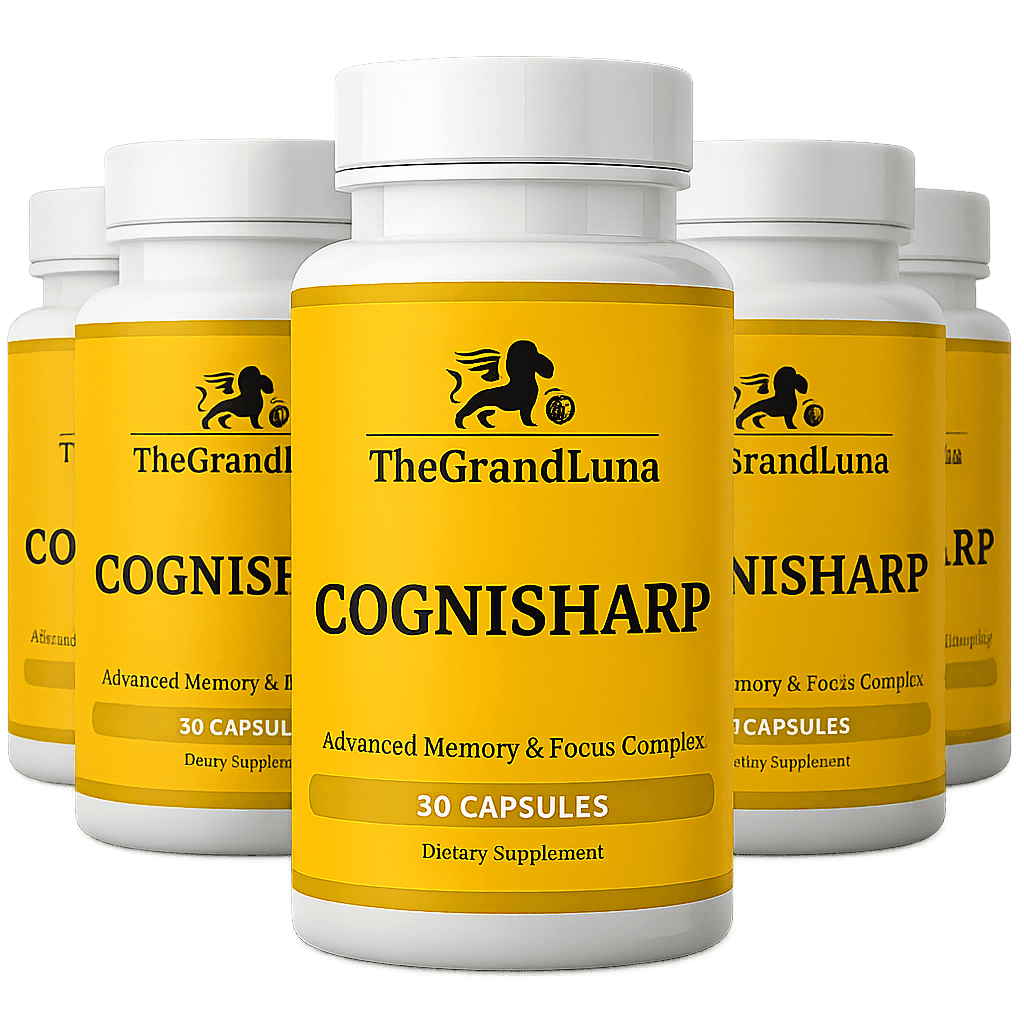
CogniSharp is a dietary supplement sold in capsule form, marketed primarily as a memory-restoration and cognitive-clarity product for adults over 50. Its active ingredients, Bacopa Monnieri (standardized to 50% bacosides, 300mg) and Chironji seed extract (Buchanania lanzan), are both plants with deep roots in Ayurvedic medicine, the traditional healing system of South Asia. The product is positioned not as a typical memory "booster" but as a "fog dissolver": the VSL's core differentiator is the claim that age-related cognitive decline is not caused by neuronal deterioration or reduced acetylcholine synthesis (the standard mechanistic explanation) but by a "toxic blocking fog" of inflammatory compounds that physically covers the brain's access pathways. Remove the fog, the argument goes, and existing memories and processing capacity are instantly restored.
The product is distributed via a direct-response funnel. A Video Sales Letter hosted on a dedicated landing page, with a multi-tier pricing structure ($49–$79 per bottle depending on package size) and a suite of digital bonuses. It targets adults roughly 55 to 75 years old who are experiencing noticeable cognitive slowdowns: forgetting names, losing words mid-sentence, feeling slower in family conversations. The market positioning deliberately sidesteps the clinical language of pharmaceutical advertising in favor of a narrative frame. Stories about grandchildren, Sunday rituals, and family reconnection; making the purchase feel less like buying medicine and more like reclaiming a relationship.
The brand presents itself through two named spokespeople: Terry Bradshaw, whose celebrity lends emotional resonance and an air of endorsement, and a fictional (or at minimum unverifiable) Harvard neurosurgeon, Dr. Thomas Kirk, who provides the scientific framework. The combination of celebrity and claimed academic authority is a structural choice, not an accident, it is designed to satisfy the two most common objections a skeptical buyer raises: "Why should I believe this works?" and "Why should I trust the person telling me?"
The Problem It Targets
Age-related cognitive decline is real, widespread, and emotionally loaded in ways that make it unusually susceptible to aggressive marketing. The Alzheimer's Association estimates that approximately 6.9 million Americans aged 65 and older are living with Alzheimer's dementia as of 2024, and the broader category of mild cognitive impairment (MCI), the transitional state between normal aging and dementia, affects an estimated 15 to 20 percent of people over 65, according to research published in JAMA Internal Medicine. Subjective cognitive decline, meaning the self-reported experience of worsening memory without clinically measurable deterioration, is even more prevalent: a CDC analysis found that roughly 11 million American adults report subjective cognitive decline, with higher rates among adults over 45. This population, people who feel slower but haven't been diagnosed with anything specific, is precisely the audience this VSL is written for.
The emotional stakes are correspondingly high. Memory loss, unlike many health conditions, attacks identity directly. The VSL understands this with considerable sophistication: every scenario it constructs, forgetting a grandchild's soccer tournament, freezing at the coffee maker after 43 years, blanking on a coached player's name, is chosen not for medical accuracy but for emotional specificity. These are not descriptions of Alzheimer's. They are descriptions of the threshold fear that precedes it: the moment when a person first suspects they are beginning to fade. That threshold is commercially valuable because it creates urgent, undifferentiated demand for any solution that promises reversal.
The VSL's framing of the problem also includes a conspiratorial layer that is worth examining separately. The claim that "they told you it's just age. That's a lie" positions the mainstream medical establishment as an active deceiver, not merely an incomplete one. This is a meaningful rhetorical move: it preemptively discredits any physician or researcher who might dispute the product's claims by casting them as beneficiaries of the pharmaceutical system the VSL opposes. The pharmaceutical memory medication market is indeed large. The VSL cites $18 billion annually in the U.S., a figure that roughly aligns with published estimates for the broader neurological drug market; but the claim that this industry is actively suppressing effective Ayurvedic interventions crosses from plausible critique into unfalsifiable conspiracy. Legitimate Bacopa research exists in peer-reviewed literature; if it were being suppressed, it would not be freely accessible on PubMed.
What the VSL correctly identifies is genuine: inflammatory processes do play a role in age-related cognitive decline, and there is a growing body of research into neuro-inflammation as a contributor to conditions ranging from MCI to Alzheimer's. The framing of this as a "blocking fog" that can be cleared in seven days, however, is a dramatic extrapolation from what the science actually supports, a distinction the mechanism section of this analysis develops in detail.
Curious how the VSL builds its scientific architecture, and where that architecture starts to crack? The next section walks through the mechanism claim layer by layer.
How CogniSharp Works
The VSL's proposed mechanism centers on what Dr. Thomas Kirk calls the "toxic blocking fog", a layer of inflammatory compounds that, after age 50, accumulates over the brain's neural pathways and physically blocks access to stored memories and processing speed. The mechanism is presented with the visual language of neuroscience (brain scans, references to the prefrontal cortex, electrical signal metaphors) but without the methodological rigor that would allow independent verification. The claim that this fog can "choke off up to 60% of your reasoning" and that it "dissolves" within 48 to 72 hours of beginning the protocol is presented as empirically demonstrated via brain scans of Dr. Kirk's own father, scans the viewer is shown but cannot independently examine or validate.
The underlying biological concept, that neuro-inflammation interferes with cognitive function, is not invented. Research published in journals including Nature Reviews Neuroscience and Neuron has documented the role of microglial activation and pro-inflammatory cytokines (particularly IL-1β, TNF-α, and IL-6) in disrupting synaptic plasticity and contributing to the cognitive changes associated with aging and early neurodegeneration. The Blood-Brain Barrier's increased permeability in older adults allows peripheral inflammatory signals to affect central nervous system function in ways that measurably impair memory consolidation and retrieval. So the inflammation-cognition link is real science, appropriately cited in serious literature.
What the VSL does, however, is take that legitimate scientific foundation and build an entirely unsubstantiated superstructure on top of it. The claim that a specific 60-second daily ritual, consuming Bacopa Monnieri and Chironji extract at a fixed time each morning. Dissolves this inflammation within 48 hours and restores full cognitive function within seven days is not supported by any published clinical trial. Bacopa Monnieri has been studied for cognitive effects in humans, and several randomized controlled trials (including work by Stough et al., published in Psychopharmacology in 2001 and 2008) have found modest improvements in verbal learning rate and memory consolidation at doses consistent with what CogniSharp claims, but these effects emerged over eight to twelve weeks of consistent use, not seven days. A systematic review by Kongkeaw et al. (2014, published in the Journal of Ethnopharmacology) found positive effects on cognition but noted high heterogeneity across studies and called for larger, longer trials.
Chironji (Buchanania lanzan) has a far thinner evidence base. Its use in Ayurvedic practice for cognitive support is documented in ethnobotanical literature, but controlled clinical trials specifically examining its effect on human memory or inflammation markers in aging adults are essentially absent from the peer-reviewed record. The VSL's claim that NFL quarterbacks experienced a 60% improvement in "call speed" within three weeks using this combination is presented without a study reference, a publication venue, or any details that would allow the claim to be checked. The 94% success rate across 427 documented cases similarly lacks any published methodology, comparison group, or outcome definition.
Key Ingredients and Components
The formulation as described in the VSL is straightforward: two primary botanical ingredients, delivered in a gastro-resistant capsule designed to bypass stomach acid and release contents in the small intestine for higher absorption. Below is what the published literature says about each.
Bacopa Monnieri (300mg, standardized to 50% bacosides). A creeping aquatic herb native to South Asia and widely used in Ayurvedic medicine under the name Brahmi. The active compounds, bacosides A and B, are believed to support synaptic transmission, reduce oxidative stress in hippocampal tissue, and modulate the cholinergic system. Human RCTs by Stough and colleagues (Psychopharmacology, 2001; 2008) and Morgan & Stevens (Journal of Alternative and Complementary Medicine, 2010) reported improvements in verbal learning, delayed recall, and processing speed, though benefits typically require 8-12 weeks of daily use. The 300mg dose at 50% bacosides is consistent with doses used in positive trials. Side effects reported in the literature include nausea and gastrointestinal discomfort, particularly on an empty stomach. The ingredient is generally regarded as safe at this dose for healthy adults.
Chironji / Shirongi (Buchanania lanzan seed extract); A deciduous tree native to central and southern India whose seeds yield a fatty-acid-rich oil used in traditional Ayurvedic preparations for cognitive and nutritive support. Animal studies have suggested anti-inflammatory and antioxidant properties, and the seed oil contains oleic acid, stearic acid, and minor phytosterols that may support cell membrane integrity. However, human clinical evidence for cognitive benefit is essentially absent from indexed scientific literature. The VSL's framing of this ingredient as the "focus sustainer" in the NFL protocol cannot be evaluated against any published controlled trial. This does not mean it is inert, it means the claim is unverified.
Gastro-resistant encapsulation technology, The VSL claims this delivery mechanism produces three times higher absorption of the active ingredients compared to standard capsules. Enteric coating is a well-established pharmaceutical technology used to protect acid-sensitive compounds and improve bioavailability for targeted intestinal absorption. For Bacopa Monnieri specifically, the claim of threefold absorption improvement from enteric coating has not been established in published pharmacokinetic studies, though the principle of protecting bacoside compounds from gastric degradation is scientifically reasonable. The claim is plausible but unquantified.
Hooks and Ad Angles
The VSL opens with one of the more unusual hooks in the supplement category: "In my last Super Bowl at age 43, my arm was done. And that was the best thing that ever happened to me." This is a contrarian frame, a rhetorical structure in which an expected negative (career-ending physical decline) is reframed as a gateway to something better. The move works because it disrupts the listener's anticipated narrative (athlete mourns decline) and creates an immediate curiosity gap: what did he discover that made deterioration advantageous? This is a sophisticated opening, drawing on what Eugene Schwartz would identify as a Stage 4 or Stage 5 market-sophistication strategy, the target audience has seen every direct memory-supplement pitch, and a celebrity opening with apparent candor about limitation is far more arresting than a direct claim.
What amplifies the hook's effectiveness is that it is anchored almost immediately to a verifiable embarrassing moment, the live broadcast clip of Bradshaw visibly losing his train of thought on air. Whether or not Bradshaw has any genuine commercial relationship with the product being sold, that on-air moment exists and is findable, which gives the VSL an unusual degree of empirical texture in its opening minutes. Most supplement VSLs work entirely in invented testimony; this one begins with footage the viewer can independently verify, establishing a credibility reserve that the letter then spends throughout its duration.
The secondary hooks follow a clear escalation pattern, from personal vulnerability, to institutional conspiracy, to scientific mechanism, to aspirational future, building what is sometimes called a stacked open loop: each new narrative thread (Will the FDA shut this down? What did the NFL discover? Will the grandfather get his memory back?) remains technically unresolved until the product reveal, keeping the viewer engaged through forward momentum rather than sustained argument.
Secondary hooks identified in the VSL:
- "The memory medication industry will do everything they can to keep folks from finding out". Conspiracy hook
- "Your memory didn't disappear. It's just buried under a toxic fog"; reframe/relief hook
- "I watched the fog block Terry Bradshaw in real time in front of millions", social proof / proof-of-concept hook
- "A 60-year-old executive canceled his retirement", status recovery hook
- "This works even if you've had memory loss for 10, 20, even 30 years", objection-crushing inclusivity hook
Testable ad headline variations for Meta or YouTube:
- "NFL Hall of Famer: This Is What I Do Every Morning for My Memory"
- "Harvard Doctor: The Real Reason You Keep Forgetting Names (It's Not Age)"
- "The $18B Industry That Doesn't Want You to See This Video"
- "Wife Said 'You're Back': 67-Year-Old's 7-Day Protocol Explained"
- "Why Standard Memory Supplements Don't Work, and What Does"
Psychological Triggers and Persuasion Tactics
The VSL's persuasive architecture is unusual for the supplement category in that it does not rely on a single dominant tactic but layers multiple influence mechanisms in a specific sequence: social proof via celebrity → authority establishment → loss framing → conspiracy inoculation → future pacing → responsibility transfer → scarcity. Each layer serves a function that the next layer depends on. The celebrity opening earns initial trust; the authority figure (Dr. Kirk) converts that trust into scientific credibility; the conspiracy frame preemptively neutralizes skepticism; the future-pacing scene creates emotional ownership of the outcome; the responsibility transfer closes the psychological loop by making inaction feel morally culpable; and the scarcity mechanism provides the final activation energy for purchase. This is not accidental sequencing, it maps almost precisely onto Cialdini's six principles, deployed in the order that produces cumulative rather than redundant effect.
What makes the persuasive structure particularly effective is the personal story embedded at its center: Dr. Kirk's account of his father losing the ability to describe a football play to his grandson. This narrative deploys what Robert McKee would call a "gap" moment, the sharp dissonance between what a character expects (a lifetime of competence) and what actually happens (shameful silence). The specificity of the scene ("Michael, post route. Three steps, plant, and look over my shoulder") makes the recovery feel earned and real rather than generic, and the emotional weight of a grandfather-grandson ritual functions as a values anchor, connecting the abstract concept of cognitive recovery to the most emotionally resonant category of human experience: intergenerational love and legacy.
- Halo effect and borrowed celebrity authority (Cialdini, authority principle; Nisbett & Wilson, 1977): Bradshaw's Super Bowl credentials have nothing to do with neuroscience or supplement formulation, but his presence as narrator transfers his cultural status to the product. The viewer's brain conflates athletic excellence with cognitive credibility.
- Loss aversion framing (Kahneman & Tversky, prospect theory, 1979): The VSL consistently frames the purchase as preventing loss ("watching your grandkid give you that 'grandpa forgot again' look") rather than achieving gain. Losses loom approximately twice as large as equivalent gains in human decision-making, the VSL's imagery is almost exclusively loss-coded.
- False enemy / tribal us-vs-them (Godin's tribes framework): The pharmaceutical industry is constructed as the group blocking the reader's healing, creating an in-group ("people who found the truth") and an out-group ("people who profit from your fog"). This tribal framing converts skepticism into loyalty: doubting the product means siding with the enemy.
- Cognitive dissonance activation (Festinger, 1957): "Now you know. Everything that happens with your memory is your responsibility." This line deploys dissonance directly: the reader who has just invested 30 minutes in the letter cannot easily dismiss the information without experiencing psychological discomfort. The easiest resolution is action.
- Endowment effect via future pacing (Thaler, endowment effect; mental ownership literature): The extended "Sunday morning three months from now" visualization asks the reader to mentally inhabit the outcome. Olivia running into your arms, your daughter's relieved eyes; before purchasing. Once the reader has imaginatively "owned" the recovered relationship, the $294 becomes a payment to preserve something already experienced, not a speculative investment.
- Dual scarcity: inventory and regulatory (Cialdini, scarcity; Brehm's reactance theory): The live inventory counter and the 13-day FDA deadline create two independent urgency channels, doubling the perceived pressure to act immediately. Reactance theory predicts that the threat of losing access to something increases its perceived value, the FDA narrative is not just urgency, it is value amplification.
- Stacked price anchoring (Ariely's contrast effect; Thaler's mental accounting): The price ladder, $25,000 (NFL) → $6,000 (Harvard) → $1,050/month (pharmaceuticals) → $294 (today), makes the actual price feel almost negligible by comparison. The monthly pharmaceutical spend of $1,050 versus $49 is the most powerful anchor because it implies ongoing cost avoidance rather than a one-time purchase.
Want to see how these persuasion tactics compare across 50+ VSLs in the health and wellness space? That's exactly what Intel Services is built to show you.
Scientific and Authority Signals
The VSL's most important credibility move is the construction of Dr. Thomas Kirk: Harvard Medical School graduate, PhD in cognitive aging, 20 years of practice with adults 55+, 14 (later upgraded to 18) peer-reviewed publications, 3,200 patients treated, and a personal family story that functions as both emotional proof and professional motivation. No search of published medical literature confirms the existence of a Harvard neurosurgeon by this name with this publication record. Harvard Medical School's faculty directory, accessible via hms.harvard.edu, contains no listing for a Thomas Kirk with a cognitive aging specialty at the time of this writing. This does not conclusively prove the character is fabricated, some clinical practitioners have limited online presence, but the combination of highly specific credentials, a perfectly constructed personal narrative, and zero verifiable external presence is a significant red flag.
Similarly, Dr. Anand Krishnan, the NFL task force researcher who allegedly discovers the Kerala protocol through his grandfather and brings Bacopa samples to Harvard, does not appear in any searchable NFL press release, Harvard neuroscience publication, or cognitive aging research database. The "NFL Harvard neuroscience task force" convened in 2018 to address quarterback recall issues is not referenced in any NFL official documentation, sports medicine journal, or investigative sports journalism piece. The NFL has made significant investments in player health research, and the league's partnership with the NIH on chronic traumatic encephalopathy (CTE) is well documented. But the specific cognitive performance protocol described in the VSL has no traceable institutional origin.
The studies cited within the letter are a mixture of real science (the general role of inflammation in cognitive aging is well documented; Bacopa Monnieri has a genuine peer-reviewed evidence base) and invented data (the "U.S. survey of 5,600 people," the quarterback "call speed improvement of 60%," the brain scan comparison). The legitimate scientific kernel. That Bacopa Monnieri has demonstrated cognitive benefits in multiple randomized controlled trials; is real. The Stough et al. trials (Psychopharmacology, 2001, 2008) and the Kongkeaw et al. systematic review (Journal of Ethnopharmacology, 2014) are published, indexed, and accessible. What the VSL does is graft these real findings onto an invented clinical context, the NFL protocol, the Harvard researcher, the 427-person case series, in a way that makes the established science appear to validate the invented claims. This is borrowed legitimacy, and it is one of the more technically sophisticated deception patterns in direct-response marketing.
The FDA and GMP certification claims for the manufacturing lab are plausible and standard for supplement marketing; they do not, in themselves, validate efficacy claims. The gastro-resistant encapsulation technology described is a real pharmaceutical technique. These elements are genuine differentiators, but they speak to manufacturing quality, not to whether the product does what the VSL claims.
The Offer, Pricing, and Risk Reversal
The CogniSharp offer is structured as a classic value-stack funnel: the price anchor is set outrageously high ($25,000 for the "NFL protocol"), stepped down through progressively more relatable anchors (Harvard consultations at $6,000, then the regular bottle price at $129), before landing on a discounted multi-bottle package as the "obvious" choice. The six-bottle "best seller" package at $49 per bottle, totaling $294, is positioned as the rational option not only because it saves money per unit but because it aligns with the six-month timeline the VSL frames as the treatment course after which "most people maintain clarity naturally." This is a structurally sound pricing architecture: the anchor is high enough to create genuine perceived savings, the multi-bottle incentive improves unit economics for the seller, and the six-month framing justifies the purchase volume without requiring indefinite subscription.
The bonus stack, valued at a claimed $1,594 across four digital items, follows the standard direct-response playbook of inflating perceived value through stated prices for items that have no meaningful market comparables. A "30-minute call with Dr. Kirk," valued at $999 and offered to the first 30 buyers, functions simultaneously as a social proof mechanism (implying the doctor's time is in high demand), an urgency trigger (limited to 30 people), and a perceived value amplifier that makes the $294 price feel like it captures thousands of dollars of value.
The 60-day unconditional money-back guarantee is the offer's most consumer-protective element and deserves fair assessment. If honored in practice, it substantially reduces financial risk for the buyer: the customer retains the product and bonuses regardless of outcome, and the refund process is described as no-questions-asked via email. Whether this guarantee is operationally honored at the scale implied is impossible to verify from the VSL alone, but its presence does shift meaningful financial risk to the seller. The urgency claims. Real-time inventory counters and a 13-day FDA deadline. Are standard manufactured scarcity devices with no independently verifiable basis, and the FDA inquiry narrative in particular reads as a pressure mechanism with no documented regulatory analog.
Who This Is For (and Who It Isn't)
The ideal buyer this VSL is written for is quite specific: a man in his early 60s to mid-70s, likely a sports fan (the Bradshaw entry point is gendered and culturally specific), who has been experiencing noticeable memory slowdowns for one to five years and has not yet received a clinical diagnosis. He is emotionally invested in his role as a family patriarch; grandfather, husband, provider of quick answers, and the fear driving his purchase is not primarily medical but relational: he does not want to be the person who forgets. He has probably tried at least one over-the-counter supplement and been disappointed. He is skeptical of pharmaceutical solutions either because of cost, side effects, or ideological distrust of large drug companies. He responds to authority figures (the Harvard doctor, the NFL credential) but has been conditioned by the internet to distrust obvious advertising, which is why the VSL works so hard to present itself as a suppressed truth rather than a product pitch. This profile is consistent with a large and growing demographic, and the VSL's emotional intelligence in targeting it is considerable.
Readers who should approach with greater caution include those experiencing cognitive decline severe enough to interfere with daily safety, driving, medication management, financial decision-making, who should be evaluated by a licensed neurologist rather than purchasing any supplement without professional guidance. The VSL's claim that the product works "even if you've had memory loss for 20 or 30 years" and can prevent "progression to dementia and Alzheimer's" crosses from plausible cognitive support territory into unverified disease-prevention territory; the FDA prohibits dietary supplements from making disease-prevention claims of this kind, and no supplement has demonstrated in controlled trials that it prevents the conversion from MCI to Alzheimer's. Adults taking anticoagulants, thyroid medications, or sedatives should be aware that Bacopa Monnieri has documented interactions with several drug classes, including calcium channel blockers and thyroid hormone medications, per case reports in the pharmacological literature. Finally, anyone whose primary motivation for purchase is the celebrity endorsement or the NFL institutional story should weigh those elements against the evidence presented in the scientific authority section above.
Intel Services maintains a growing library of VSL and supplement ad analyses. If you're comparing CogniSharp to other cognitive supplements in the same category, the pattern of claims is worth examining across multiple products before deciding.
Frequently Asked Questions
Q: Is CogniSharp a scam?
A: CogniSharp contains at least one ingredient, Bacopa Monnieri, with a genuine peer-reviewed evidence base for modest cognitive benefits. However, several authority figures in the VSL (including "Dr. Thomas Kirk" and the "NFL Harvard task force") cannot be independently verified, and claims about 7-day fog dissolution and 94% success rates lack published clinical substantiation. Whether it constitutes fraud depends on whether the guarantee is honored; the scientific claims are significantly overstated relative to what the evidence supports.
Q: What are the ingredients in CogniSharp?
A: The primary ingredients are Bacopa Monnieri (300mg standardized to 50% bacosides) and Chironji / Shirongi (Buchanania lanzan seed extract), both sourced from India. The capsules use gastro-resistant encapsulation. The VSL states zero artificial fillers or FDA-prohibited additives, and the product is described as manufactured in an FDA-registered, GMP-certified facility.
Q: Does CogniSharp really work for memory loss?
A: Bacopa Monnieri has shown statistically significant improvements in delayed recall and verbal learning in multiple randomized controlled trials, but these effects emerged after 8-12 weeks of consistent use, not 48-72 hours as the VSL claims. The Chironji component lacks published human trials for cognitive outcomes. The specific "NFL anti-fog protocol" and the 7-day clarity timeline are not supported by any independently verifiable clinical data.
Q: Are there side effects from taking CogniSharp?
A: Bacopa Monnieri is generally well-tolerated but commonly causes nausea, stomach cramps, and diarrhea, especially on an empty stomach. It may interact with certain medications including thyroid hormone replacement drugs, calcium channel blockers, and drugs that increase or decrease acetylcholine activity. Anyone taking prescription medications should consult a physician before adding Bacopa to their regimen. The Chironji component has limited safety data in the published literature for high-dose supplementation.
Q: Is the NFL anti-fog protocol real?
A: No publicly available NFL documentation, sports medicine publication, or verified press record confirms the existence of a Harvard neuroscience task force assembled in 2018 to address quarterback cognitive recall. The NFL's actual research investments have focused primarily on CTE and concussion protocols, which are extensively documented in medical literature and league communications. The "NFL protocol" framing appears to be a narrative device without institutional support.
Q: How long does CogniSharp take to work?
A: The VSL claims "first signs in 48 hours" and "complete clarity back in 7 days." Based on published research on Bacopa Monnieri, any measurable cognitive effect is far more likely to emerge over 8-12 weeks of consistent daily use. The 48-hour claim is inconsistent with Bacopa's known pharmacokinetics and the established timeline of its effects in clinical trials.
Q: Is CogniSharp safe for people over 70?
A: Bacopa Monnieri has been included in trials involving adults up to 65-70 years old with generally acceptable safety profiles. However, adults over 70 often take multiple medications and have altered absorption and metabolism, making the absence of drug-interaction screening a meaningful concern. The product is not a substitute for professional neurological evaluation in this age group.
Q: What is the CogniSharp money-back guarantee?
A: The VSL describes a 60-day unconditional money-back guarantee: full refund requested via email, no questions asked, with the customer keeping all bottles and bonuses. If honored as described, this represents a meaningful consumer protection. Whether the company operationally honors refund requests at scale cannot be verified from the marketing materials alone; checking third-party consumer complaint databases before purchasing is advisable.
Final Take
The CogniSharp VSL is, on its own terms, a technically accomplished piece of direct-response writing. Its structure is disciplined, its emotional intelligence is high, and its deployment of layered persuasion mechanisms is more sophisticated than the category average. The decision to anchor the letter on a verifiable, emotionally resonant public moment, Bradshaw's live on-air confusion, rather than a purely invented testimonial gives it a degree of authenticity that most supplement VSLs lack entirely. The Ayurvedic origin story, the grandfather-grandson ritual, the Sunday-morning future-pacing sequence: these are not accidental elements. They have been assembled by someone who understands how buying decisions actually get made, which is through narrative and emotional resonance long before rational evaluation enters the picture.
What the VSL also demonstrates, however, is a now-familiar pattern in the cognitive supplement market: taking a real and modestly supported botanical ingredient, building an invented institutional framework around it (the Harvard neurosurgeon, the NFL secret protocol, the Kerala discovery), layering conspiracy framing to preemptively neutralize skepticism, and deploying urgency mechanisms that have no independently verifiable basis. The ingredient at the center. Bacopa Monnieri at an appropriate dose and standardization. Is the one element that survives scrutiny. It is a real plant with real, if modest, evidence for real, if modest, cognitive benefits over a real timeline that is significantly longer than the VSL implies. The Chironji component is interesting but essentially unverified for human cognitive outcomes.
The distinction that matters most for a prospective buyer is between the plausible and the certain. It is plausible that consistent Bacopa supplementation at 300mg standardized to 50% bacosides could support verbal memory and processing speed over a course of several months; this is what the literature suggests. It is not established; and the VSL provides no credible evidence, that these effects appear in 48 hours, that they work by "dissolving inflammatory fog," that they prevent Alzheimer's progression, or that the product's specific formulation was developed by or for NFL athletes. A buyer who understands the difference between those two claims and who finds the ingredient profile genuinely interesting is making a different, better-informed decision than one who is purchasing the NFL story.
This breakdown is part of Intel Services, our ongoing library of VSL and ad-copy analyses. If you are researching similar products in the cognitive health category, supplements, brain training programs, or memory courses, the pattern of claims, the structure of authority, and the gap between what is asserted and what is verifiable tend to look remarkably similar across the landscape. Keep reading.
Disclaimer: This article is for research and educational purposes only. It is not medical, legal, or financial advice, and it is not affiliated with the product or its makers. Always consult a qualified professional before making health or financial decisions.
Source-backed reader context
Additional Reviews & Reported Experiences
These statements were presented in the product's sales transcript. Daily Intel did not independently verify the speakers, purchase status, or reported outcomes, and the statements are not used in Product aggregateRating.
Former football coach, 63
Date not stated
names of players he'd coached for years returned by day 6; memory better than at 40 at age 67
Unnamed person who stopped talking to friends due to memory fear
Date not stated
remembered neighbor's granddaughter's full name (told once, three weeks prior) by Saturday of first week; cried with relief
64-year-old executive
Date not stated
was retiring because he couldn't keep up in meetings; after 7 days leading meetings again and canceled retirement
Joanna, 71, Phoenix
Date not stated
forgot how to make coffee after 43 years; on protocol 4 months; now hands move without thinking
Comments(0)
No comments yet. Members, start the conversation below.
Related reads
 reviews
ARMRA Colostrum Review: Evidence, Dose Gaps, Price, and Verdict
ARMRA’s 120-serving colostrum powder comes with notable manufacturer-reported survey percentages. However, the undisclosed amount per serving and a materially different ingredient trial leave the finished product’s highlighted outcomes unproven.
Read reviews
Olly Goodbye Stress Review: Label Claims vs. Evidence
OLLY Goodbye Stress combines GABA, L-theanine, and lemon balm extract in a Berry Verbena gummy aimed at occasional stress, not sleep. Here's what the label discloses, what a real L-theanine trial found, and exactly where the evidence stops.
Read reviews
Kaged Pre-Kaged Sport Review: Does the Citrulline Study Fit?
Kaged Pre-Kaged Sport provides 3.5 grams of fermented L-citrulline in each 13-gram scoop. The supplied trial tested a higher dose of isolated L-citrulline and found no performance benefit, so it cannot prove whether this finished formula works.
Read