Independent Product Evaluation
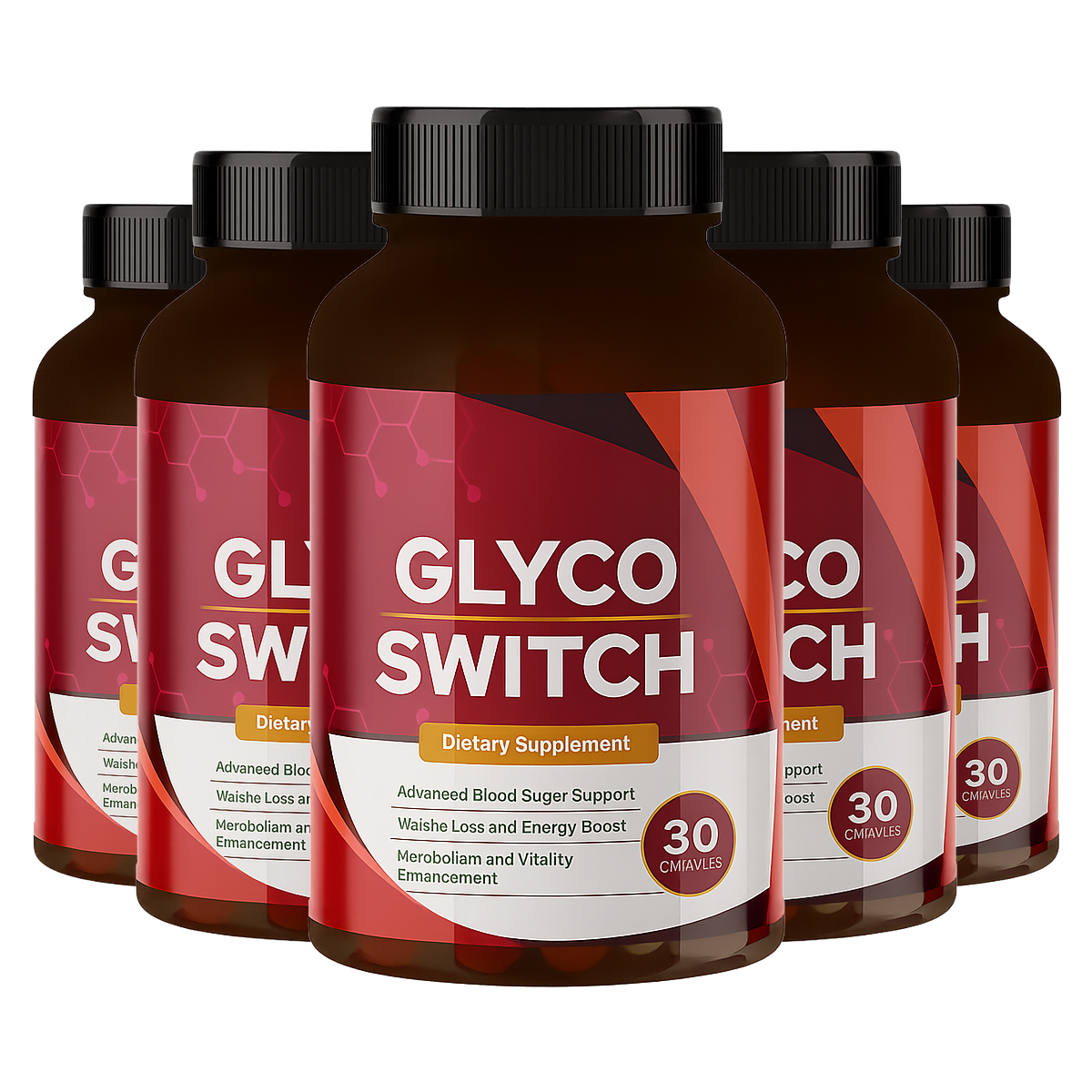
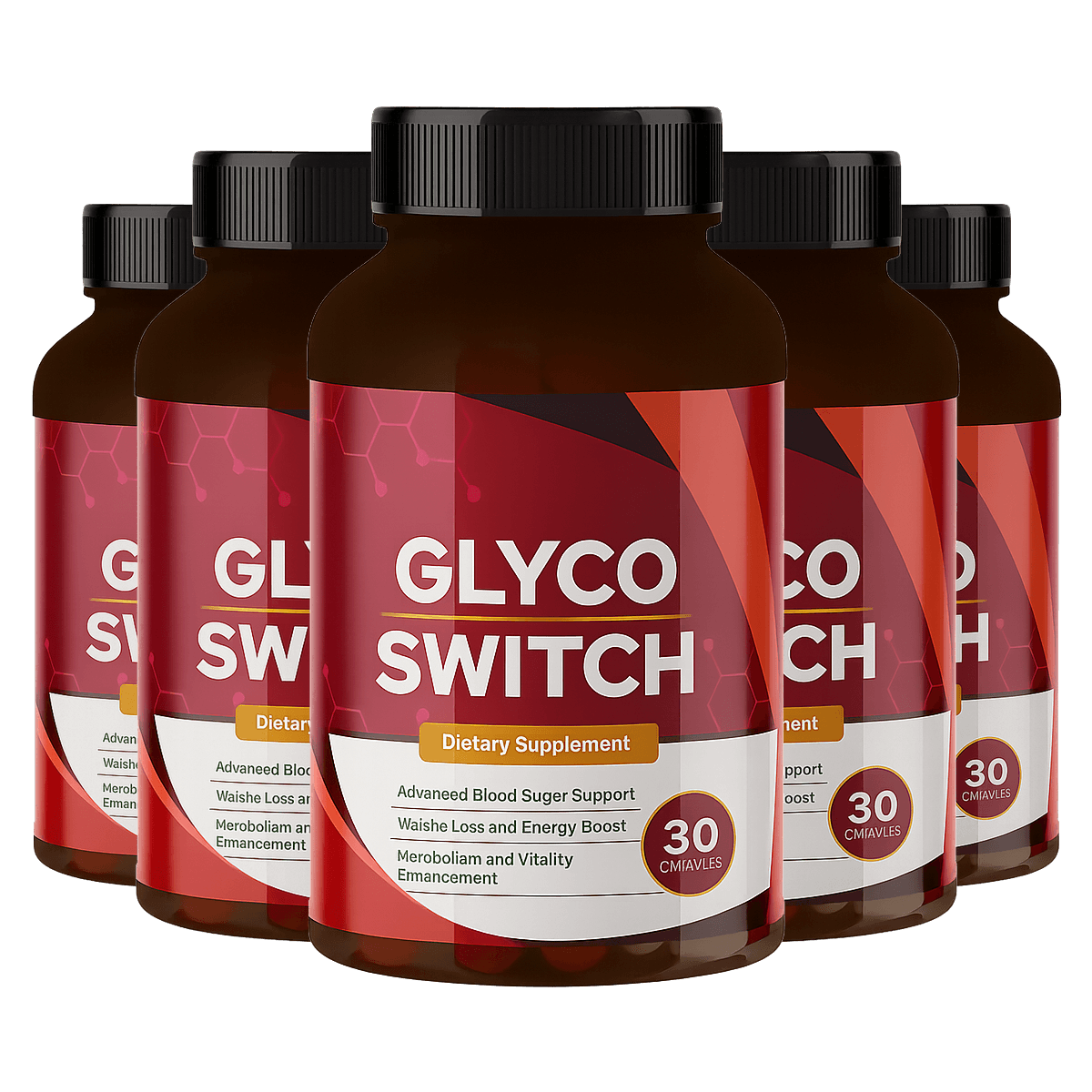
Glycoswitch
Glycoswitch: An Honest, Research-First Review
The maker claims it will the VSL promises that a Navy SEALs salt and herb protocol can eliminate nail fungus quickly at home without doctors, creams, pills, or expensive treatments. We read the presentation closely so you can decide with realistic expectations.
Receive 12 bottles now, pay monthly — plus $269 Cashback (exclusive)
Buy direct from factory partner · Secure payout via Stripe
Only 3 packages left · limited to 1 per customer — ends today.
Official USA supplier representative · Secure payment via Stripe
Key Ingredients
natural herbs
Ingredient referenced in the product's presentation — confirm the exact amount on the official Supplement Facts label.
pink salt
Ingredient referenced in the product's presentation — confirm the exact amount on the official Supplement Facts label.
crystalline halite
Ingredient referenced in the product's presentation — confirm the exact amount on the official Supplement Facts label.
rare species of herbs and salts from the mountains of Vietnam
Ingredient referenced in the product's presentation — confirm the exact amount on the official Supplement Facts label.
How it works
According to the manufacturer, the claimed mechanism is the Navy SEAL's Salt and Herb Protocol, described as a 30-second foot soak using natural herbs and pink salt. It is positioned as a deep nail restorer that eliminates fungus from the inside out by targeting the root cause rather than the visible nail symptoms.
As with most nutrition-based formulas, the idea is that supportive nutrients build up with consistent daily use and work alongside healthy habits like sleep, hydration and activity.
A dietary supplement is not a treatment for any medical condition. The presentation's claims describe general support; individual responses vary, and nothing here is a promise of a specific medical outcome.
Benefits
- Marketed toward the buyer is promised clear, healthy, fungus-free nails, significant improvement within 24 hours or days, and freedom to go barefoot without shame or discomfort.
- A simple, take-as-directed daily routine — no device, procedure or prescription.
- A nutrition-first option for people who prefer to avoid stimulants or invasive routes.
- Backed (per the maker) by a money-back guarantee on official orders — verify the current terms before buying.
- Sold through an official channel, reducing the risk of counterfeit or expired product vs third-party resellers.
- Intended to complement, not replace, foundational habits like sleep, exercise and a balanced diet.
What to expect
Get the Best Verified Deal From the Official Source
- Buy only through the official source to get the genuine, current product — not a counterfeit or expired bottle.
- The best pricing and any multi-bottle/bundle discounts are honored officially; confirm the live price at checkout.
- Orders ship fast from the factory fulfilment partner, with tracking provided after dispatch.
- Buying officially keeps your order covered by the money-back guarantee.
- Fast dispatch — ships within 24h
- Buy direct from factory partner
- Secure payment via Stripe
- Money-back guarantee
Common questions
Does Glycoswitch cure or treat any disease?+
No. It is a dietary supplement, not a medicine, and is not intended to diagnose, treat, cure or prevent any disease. Speak to a healthcare professional about medical concerns.
What's actually in it?+
Confirm the complete, current ingredient list and dosages on the official product page and the Supplement Facts panel before buying.
How long until I might notice results?+
There's no guaranteed timeline. Nutrition-based formulas act gradually; give it consistent daily use over several weeks to a few months before judging. Individual results vary.
Is it safe with my medication?+
Always check with your doctor or pharmacist first, especially if you take medication, have a condition, or are pregnant or nursing. Some botanicals can interact with drugs.
Is there a refund policy?+
The maker typically offers a money-back guarantee on official orders. Confirm the exact window and terms at checkout.
Where should I buy it to avoid fakes?+
Buy only through the official source — third-party listings can be counterfeit, expired, or not covered by the guarantee.
- This offer is verified through direct contact with the manufacturer's official USA supplier representative.
- Limited to 1 package per person. Buying more than one package per customer is not permitted.
- Because the order is placed directly with the factory, only the full 12-bottle package is available — there are no single bottles.
- Your full 12-bottle supply ships right away, spread over 12 monthly payments of $29.90 — and your $269 cashback is included.
- 100% money-back guarantee.If you don't see results, cancel anytime and keep every bottleyou've received — we stand behind the quality.
This evaluation is for informational purposes only and is not medical advice. These statements have not been evaluated by the Food and Drug Administration. This product is not intended to diagnose, treat, cure, or prevent any disease. Claims about benefits reflect the manufacturer's presentation and are not independently verified outcomes. Always consult a qualified healthcare professional before starting any supplement, especially if you are pregnant, nursing, under 18, have a medical condition, or take medication. Individual results vary. Verify ingredients, dosage, price and return policy on the official product page before purchasing.
What customers say
Real buyers, verified purchases.
34 verified reviews
Howard Beck
Savannah, GA
Ralph Thompson
Omaha, NE
Marie Marsh
Spokane, WA
Patricia Stafford
Eugene, OR
Arthur Kim
Naperville, IL
Donald Barron
Tampa, FL
Nancy Briggs
Reno, NV
Thomas Mayer
Salem, OR
Joan Vance
Greenville, SC
Glenn Park
Providence, RI
Diane Caldwell
Stockton, CA
Leonard Hensley
Albuquerque, NM
Wayne Fowler
Pittsburgh, PA
Sandra Mercer
Charlotte, NC
Linda Doyle
Erie, PA
Gloria Frost
Columbus, OH
Michael Foster
Worcester, MA
Joyce Brennan
Des Moines, IA
Cynthia Underwood
Knoxville, TN
Vincent Jennings
Mobile, AL
Stanley Mancini
Bellevue, WA
Steven Conrad
Billings, MT
Raymond Stein
Madison, WI
Robert Reyes
Akron, OH
Janet Petersen
Fargo, ND
Angela Schultz
Tucson, AZ
Larry Pope
Buffalo, NY
Doris Rhodes
Boulder, CO
Eugene Mendez
Lubbock, TX
Beverly Ellison
Sacramento, CA
Karen Holloway
Boise, ID
Ruth Crowley
Topeka, KS
Brian Carter
Portland, OR
Sharon DiMarco
Toledo, OH
Glycoswitch Review: Nail Fungus VSL Marketing Analysis
A yellowish spot on a big toe becomes the VSL’s opening portal into embarrassment, medical fear, and institutional suspicion. Glycoswitch is introduced through that small visual defect, then rapidly enlarged into a story about “yellow, brittle nails,” social avoidance, odor,…
8,226+
Videos & Ads
+50-100
Fresh Daily
$29.90
Per Month
Full Access
12.5 TB database · 72+ niches · 30 min read
A yellowish spot on a big toe becomes the VSL’s opening portal into embarrassment, medical fear, and institutional suspicion. Glycoswitch is introduced through that small visual defect, then rapidly enlarged into a story about “yellow, brittle nails,” social avoidance, odor, spreading infection, and possible amputation. For anyone searching a Glycoswitch review, the important point is not merely whether the product claims to address nail fungus, but how the presentation builds belief before the offer fully appears. The promise is direct: a “Navy SEALs salt and herb protocol” that can help eliminate fungus at home without doctors, creams, pills, or costly procedures. The narrator, Dr. Raymond Prescott, is positioned as physician, military researcher, field operator, husband, and reluctant witness. That is a crowded authority costume.
The sales argument follows a disciplined PAS structure: isolate the pain, intensify the consequences, then present the protocol as the only coherent relief. The VSL first denies a common explanation, saying fungus has “nothing to do with your hygiene,” which creates a pattern interrupt for viewers who feel shame or blame. It then reframes nail fungus as “a deeper problem inside your body,” moving the condition from cosmetic nuisance to hidden systemic threat. That move borrows from Kahneman’s loss-aversion logic: the viewer is asked to weigh not just ugly nails, but social confidence, bodily safety, and in the diabetic subplot, a foot. Cialdini’s authority principle arrives quickly through Johns Hopkins, Walter Reed, Navy SEALs, and the U.S. Armed Forces Medical Division. The implication is clear: skepticism is made to feel less like prudence than disobedience to stacked expertise.
Prescott’s personal story functions as an epiphany bridge, in Brunson’s sense, carrying the viewer from failed creams to insider revelation. He tries pharmacy products, Lamisil, home remedies, stronger medications, and even considers laser treatment before discovering the “30-second foot soak.” This is also Kennedy-style education-based selling: the viewer is taught why existing options supposedly fail before being invited to accept the new mechanism. The VSL’s false enemy is not fungus alone, but the “billion-dollar pharmaceutical industry,” which allegedly profits from recurring failure. Schwartz would recognize the escalation from symptom-aware to solution-aware desire, while Festinger helps explain the relief offered by a new belief system that resolves prior disappointment. Once the viewer accepts the root-cause frame, the product no longer competes with creams. It competes with fear.
This analysis is a close reading of the sales architecture behind the Glycoswitch VSL, written for affiliate marketers, compliance reviewers, media buyers, and consumers trying to separate persuasive construction from substantiated evidence. It treats the transcript as a conversion artifact: a sequence of claims, emotional turns, credibility cues, open loops, and risk amplifiers. The VSL claims more than 54,000 users, “27 clinical studies,” and visible improvement within “the next 24 hours,” but the strategic question is how those numbers are made to feel inevitable inside the story. Cialdini, Kahneman, Schwartz, Brunson, Kennedy, and Festinger are useful here because the pitch is less a list of benefits than a belief-change machine. So the central question is this: does Glycoswitch earn trust through evidence, or manufacture urgency through narrative control?
What Is Glycoswitch?
Glycoswitch is positioned as a Health & Wellness home protocol for nail fungus, not as a conventional topical antifungal. The VSL frames it as a “Navy SEALs salt and herb protocol” that can be performed at home with a short foot soak rather than doctors, pills, lasers, or pharmacy creams. Its category is familiar, but its packaging is not: the pitch recasts toenail fungus from a hygiene or surface problem into a “deeper problem inside your body.” That is classic PAS architecture: yellow nails, odor, itching, embarrassment, then escalation into spread and infection risk. In Schwartz’s terms, the offer appears aimed at a highly sophisticated market, where buyers have already tried creams, Lamisil, home remedies, and prescriptions. The implication is that another antifungal cannot win on efficacy alone. It needs a new mechanism.
The target user is an adult with persistent, visible nail fungus, likely older, treatment-fatigued, and ashamed of exposing their feet in social settings. The VSL speaks to both men and women, but it leans heavily into older adults and people with diabetes through the Margaret amputation story. Psychographically, the buyer is skeptical of standard medicine yet still wants medical authority; frustrated by failed products yet receptive to an insider explanation. The phrase “no more yellow, brittle nails” sells relief, but the deeper appeal is restored normalcy. Cialdini’s authority principle is stacked through Johns Hopkins, Walter Reed, the U.S. Armed Forces Medical Division, and Navy SEALs. Kahneman’s loss aversion appears in the amputation thread. Schwartz would call this a market requiring mechanism escalation, because the prospect no longer believes ordinary promises.
The named creator is Dr. Raymond Prescott, presented as a physician and researcher in military medicine and field biotechnology with 17 years beside Navy SEALs. His role is less inventor than guide: he supplies the epiphany bridge from failed creams and frightening symptoms to the salt-and-herb discovery. The VSL also creates a false enemy in the “billion-dollar pharmaceutical industry,” implying that effective low-cost remedies are suppressed to protect recurring sales. Brunson’s mechanism logic and Kennedy’s education-first selling are both visible in the extended explanation of root cause, biofilm, and “from the inside out” restoration. Key ingredients are described broadly: natural herbs, pink salt, crystalline halite, and rare herbs and salts from Vietnam’s mountains. The product rides several trends at once: military-origin secrets, natural antifungal care, anti-pharma distrust, and at-home protocols that promise control without clinical friction.
The Problem It Targets
Glycoswitch defines the surface problem as ugly, stubborn nail fungus, but its commercial power comes from relocating blame. The VSL opens with a pattern interrupt: “nail fungus has nothing to do with your hygiene,” a line that exonerates the viewer before it sells a remedy. In PAS terms, yellow nails, odor, itching, and beach avoidance are the problem; the threat of spread is the agitation; the Navy SEAL “salt and herb protocol” becomes the solution. NIH’s StatPearls notes that onychomycosis prevalence estimates range from 1% to 8%, and that nearly half of abnormal nails are not fungal, which gives the pitch a real diagnostic backdrop while also creating room for overreach. The interpretation is classic Festinger: the buyer’s failed creams no longer signal poor judgment, only a mistaken model. That lowers shame and raises receptivity.
The deeper diagnostic claim is that nail fungus is only a visible symptom of a concealed internal vulnerability. The VSL borrows from legitimate science when it mentions diabetes, impaired circulation, moisture, biofilm, and delayed foot healing; NIH does identify diabetes, aging, tinea pedis, and immunodeficiency as risk factors. But the extrapolation is where the copy becomes aggressive: “every case of nail fungus shares a single root cause” compresses a heterogeneous infection category into one hidden enemy. Kahneman would recognize the move as loss aversion, especially when the story escalates from brittle nails to “almost led to amputation.” The fear is not invented from nothing. A 2023 JAMA review reports that about 18.6 million people worldwide develop a diabetic foot ulcer each year. The implication is a market where embarrassment can be sold as early detection.
That market is unusually attractive because it sits at the intersection of vanity, chronic discomfort, aging, and diabetes anxiety. WHO-linked Lancet data estimated 830 million people were living with diabetes worldwide in 2022, while consumer interest in at-home protocols has grown alongside distrust of expensive medical routines. The VSL’s false enemy is therefore not fungus alone, but “expensive antifungal creams” and a “billion-dollar pharmaceutical industry,” a Kennedy-style antagonist that makes a cheap ritual feel morally superior. Cialdini’s authority and social proof appear through Johns Hopkins, Walter Reed, Navy SEALs, and “54,000 people,” while Schwartz’s market sophistication explains the need for a new mechanism after creams have become familiar. Brunson’s epiphany bridge carries the viewer from skepticism to revelation through the doctor’s wife narrative. AIDA is completed by the open loop: keep watching, and the hidden protocol appears.
How Glycoswitch Works
Glycoswitch is presented less as a conventional antifungal product than as a ritualized home protocol: a “30-second foot soak” built from “three natural herbs” and “pink salt.” The VSL’s mechanism begins with PAS, making yellow, brittle nails the visible problem, then escalating toward spread, odor, shame, and amputation before offering the soak as relief. Its proposed biology is that salt and herbs penetrate the nail, “breaks the fungus’ protective biofilm,” increase local circulation, and restore the nail “from the inside out.” That sequence borrows real scientific vocabulary, but it compresses several separate processes into one unusually tidy causal chain. Salt can change osmotic conditions, some botanicals have antifungal compounds, and biofilms are a legitimate issue in persistent infections. The leap is scale. A brief soak reaching the nail matrix, disrupting entrenched organisms, and producing visible improvement in 24 hours remains plausible in language, not established in evidence.
The strongest scientific footing is modest: fungi can colonize keratin, warm moist environments can encourage growth, and topical treatments often struggle because nails are dense, slow-growing tissue. Dermatology also recognizes recurrence, incomplete penetration, and poor adherence as reasons nail fungus can persist. But the VSL’s phrasing turns those limitations into a false enemy, where creams, pills, lasers, and pharmaceutical companies become proof that the hidden protocol must be superior. Cialdini’s authority principle is active in the institutional stack of “Johns Hopkins University,” “Walter Reed Medical Center,” and military medicine. Yet named institutions are not the same as a published protocol, and “27 clinical studies” without dates, authors, endpoints, or journals cannot carry the weight assigned to them. Kahneman would note the availability effect: the amputation story makes rare, severe outcomes feel immediate. The science is real at the edges, but the conclusion is doing more work than the premises allow.
The numerical claims deserve separate scrutiny because they function as proof substitutes. The VSL says “more than 54,000 people” use the solution, “about 34,000” restored healthy nails, and that 87% of more than 400 soldiers reported healthier nail appearance “in the first days.” If the soldier claim means roughly 400 participants, 87% implies about 348 early responders, while the remaining 13% would be about 52 people; oddly, the script says that smaller group had “completely eliminated fungus symptoms,” which sounds better than the majority outcome. That inversion weakens the internal logic. It may be a copywriting artifact, but in health marketing, arithmetic slippage matters. Schwartz and Kennedy both understood that specificity increases belief, yet specificity without verifiable denominator, diagnostic method, control group, or follow-up can create only the impression of rigor. The numbers are persuasive before they are evidentiary.
The fairest reading is that the VSL wraps a potentially benign foot-care routine in an epiphany bridge: failed creams, family danger, prayer, wartime knowledge, then sudden clarity. Brunson’s structure is obvious, and Festinger’s cognitive dissonance is managed by telling frustrated buyers their past failures were not their fault because they treated the wrong target. AIDA then moves from “almost overnight” attention to fear, curiosity, and a time-limited action frame. In practical terms, a soak might soften nails, reduce odor temporarily, improve hygiene routines, or help users feel agency around an embarrassing condition. It should not be treated as proven eradication of onychomycosis, especially for diabetics, immunocompromised buyers, or anyone with redness, swelling, pain, drainage, or spreading infection. The VSL’s real mechanism is therefore dual: modest topical plausibility on the body, and highly engineered persuasion on the buyer.
Curious how other VSLs in this niche structure their pitch? Keep reading - the psychological triggers section breaks down the architecture behind every claim above.
Key Ingredients and Components
Glycoswitch presents its formulation less as an ingredient panel than as a conversion story: the buyer is asked to believe in a process, not inspect a label. The VSL says the protocol uses “three natural herbs and a handful of pink salt,” then attaches that sparse disclosure to military field medicine, PAS, and AIDA sequencing. First comes embarrassment and spread risk; then the “Navy SEALs salt and herb protocol” appears as relief. This is classic Kennedy-style education marketing, with Cialdini’s authority layered over Brunson’s epiphany bridge. Yet the ingredient evidence remains thin because the named substances are generic, while the persuasive burden is carried by “27 clinical studies” and “54,000 people” rather than a transparent formula. The implication is direct: for buying decisions, the VSL gives a strong formulation narrative but not enough ingredient specificity for normal supplement-level diligence.
The formulation process is framed through a false enemy: creams, pills, pharmacies, and the “billion-dollar pharmaceutical industry” allegedly fail because they treat symptoms rather than the “root cause.” That creates an open loop around what the herbs actually are, while the “30-second foot soak” functions as a pattern interrupt against slow, unpleasant antifungal regimens. Kahneman would recognize the loss-aversion architecture in the amputation story; Schwartz would note how reduced choice makes the protocol feel cognitively simpler than comparing medical options. Festinger’s cognitive dissonance also appears: if viewers have already tried creams, the VSL lets them reinterpret prior failure as proof that the product’s mechanism must be different. Independent evidence is less cooperative. Reviews in the Cochrane Database of Systematic Reviews and antifungal literature generally evaluate defined agents, doses, endpoints, and pathogens, not unnamed herb-and-salt blends.
Pink salt (sodium chloride, NaCl) - This is ordinary salt with trace minerals, marketed here as part of a “handful of pink salt” soak. The VSL claim is that it helps drive a deep nail-restoring antifungal process. Independent research supports high-salt environments as broadly hostile to some microbes through osmotic stress, but that is not the same as curing onychomycosis through a brief foot soak. Evidence judgment: ambiguous.
Crystalline halite (sodium chloride, NaCl) - Halite is the mineral form of sodium chloride, made more exotic by the VSL’s “crystalline” language. The implied claim is purification, penetration, and military-grade potency. Geological and microbiology literature, including work on halite brine inclusions, does not establish halite as a clinical nail-fungus treatment. Evidence judgment: unverifiable for this use.
Natural herbs (not disclosed; no scientific names provided) - The VSL’s “three natural herbs” are the emotional center of the formula but are not named. That prevents comparison with known antifungal botanicals such as tea tree oil (Melaleuca alternifolia) or garlic derivatives like ajoene from Allium sativum. Journals such as Clinical Microbiology Reviews and the Journal of the American Academy of Dermatology contain evidence for some botanical antifungal activity, but not for this undisclosed blend. Evidence judgment: unverifiable.
Rare herbs and salts from Vietnam (not disclosed; no scientific names provided) - This ingredient category supplies scarcity and origin mystique rather than pharmacological clarity. The VSL claim is that these materials replicate a restricted military protocol. Without botanical identity, standardization, concentration, or trial data, independent databases cannot confirm antifungal relevance. Evidence judgment: unverifiable.
Hooks and Ad Angles
Glycoswitch opens with a high-velocity pattern interrupt: “Navy SEALs salt and herb protocol” for nail fungus. The phrasing makes an ordinary embarrassment feel like classified field medicine, creating what Loewenstein would call an information gap between what the viewer knows and what the pitch says has been hidden. It also compresses the VSL’s central promise into one strange image: elite soldiers, pink salt, herbs, and “eliminate nail fungus almost overnight.” That combination is doing more than attracting attention. It reframes the category away from creams, hygiene, and pharmacy aisles toward insider discovery, which supports Schwartz’s idea that strong copy enters an existing desire and intensifies it. The hook is not merely curious; it is diagnostic, adversarial, and visual.
The main hook also carries social proof before formal proof appears. By tying the protocol to Navy SEALs, “elite soldiers,” and later “more than 54,000 people,” the VSL borrows Cialdini’s authority and consensus cues at the same time. The viewer is invited to infer that if the method worked in extreme military conditions, ordinary home use should feel almost conservative by comparison. This is a classic AIDA opening: attention through strangeness, interest through mechanism, desire through the barefoot-confidence fantasy, and action through vanishing access. The open loop is especially aggressive because the VSL withholds the exact method while promising it can be started “tonight.” Its implication is clear: the buyer is not evaluating a supplement first, but deciding whether to remain outside a restricted circle of knowledge.
A second function of the hook is to install a false enemy. “No cream or traditional treatment” becomes the foil, while the pharmaceutical industry becomes the economic villain. Kennedy would recognize the move as education-based selling: first teach why the old category fails, then present the new mechanism as the only coherent answer. Brunson’s epiphany bridge appears when Dr. Prescott moves from failed remedies and Margaret’s diabetic scare to the rediscovered protocol, letting the audience experience belief through story rather than evidence alone. Kahneman’s loss aversion sharpens the stakes with infection, shame, and amputation risk. Festinger’s cognitive dissonance is then resolved by giving the viewer a simple explanation: the problem was never hygiene, but “root cause.”
“Nail fungus has nothing to do with your hygiene” (shame relief plus contrarian reframe)
“Every case of nail fungus shares a single root cause” (simplifies a messy condition into one solvable mechanism)
“Three natural herbs and a handful of pink salt” (concrete, low-cost, kitchen-table specificity)
“This video won’t be online a few hours from now” (scarcity pressure layered onto conspiracy framing)
“Notice a significant improvement in the next 24 hours” (fast-result promise that compresses decision time)
“The Navy SEAL Foot Soak Claim Behind the Glycoswitch VSL”
“Why This Nail Fungus Pitch Says Creams Miss the Root Cause”
“A 30-Second Salt-and-Herb Ritual for Yellow, Brittle Nails?”
“The Hidden Military Protocol Angle in This Nail Fungus Ad”
“Glycoswitch Review: Pink Salt, Herbs, and the Fungus ‘Root Cause’ Claim”
Psychological Triggers and Persuasion Tactics
Glycoswitch builds persuasion as a compounding system: fear opens the loop, authority narrows the field of acceptable explanations, and story converts skepticism into self-diagnosis. Its load-bearing frame is an epiphany bridge, closer to Brunson’s hero’s journey than to a conventional supplement pitch. The narrator moves from military physician to infected patient to desperate husband, then to discoverer of the “Navy SEALs salt and herb protocol.” That sequence lets the VSL run PAS and AIDA at once: yellow nails and odor create agitation, while the “30-second foot soak” supplies desire and action. The interpretation is clear. The product is not sold as a treatment first, but as privileged knowledge rescued from institutional suppression. For buyers, the implication is that belief in the story becomes almost inseparable from belief in the mechanism.
The VSL’s psychology depends on a repeated transfer of blame away from the viewer. “Nothing to do with your hygiene” is the crucial absolution, because shame is too immobilizing unless it is redirected. The false enemy then absorbs the negative emotion: creams, pills, lasers, and the “billion-dollar pharmaceutical industry” become the real obstacle. Kahneman’s loss aversion intensifies the stakes through images of spread, embarrassment, diabetic infection, and possible amputation. Cialdini’s authority principle is layered across Johns Hopkins, Walter Reed, Navy SEALs, and a military-medicine narrator, while Schwartz’s paradox of choice is resolved by one alleged root cause. The VSL’s open loop is blunt: keep watching for five minutes and the hidden protocol will be revealed. Its implication is commercial as much as emotional: buying becomes framed as escape from confusion, not merely purchase of a fungus protocol.
Fault transfer (Festinger, A Theory of Cognitive Dissonance, 1957): The line “nothing to do with your hygiene” reduces self-blame and resolves dissonance for viewers who have failed with prior remedies. The fungus becomes evidence of a hidden bodily process, not personal neglect.
False enemy (Kennedy, No B.S. Marketing, 1990s): The VSL assigns villainy to “creams and pills month after month” and the pharmaceutical industry. This makes ordinary treatment failure feel orchestrated rather than incidental.
Authority borrowing (Cialdini, Influence, 1984): Johns Hopkins, Walter Reed, Navy SEALs, and the Armed Forces Medical Division are stacked before the mechanism is explained. The borrowed prestige makes “three natural herbs” sound institutional rather than folkloric.
Loss aversion (Kahneman, Thinking, Fast and Slow, 2011): The pitch escalates from embarrassment to “risk of severe infections” and amputation. The viewer is pushed to protect future mobility, dignity, and health.
Specificity as credibility (Brunson, Expert Secrets, 2017): Claims such as 54,000 users, “27 clinical studies,” and “30 seconds” create the texture of verification. Precision substitutes for demonstrated proof.
Scarcity stacking (Cialdini, Influence, 1984): The video “won’t be online a few hours from now” because it was allegedly removed twice. Scarcity turns passive curiosity into immediate compliance.
Endowment effect (Kahneman, Knetsch, Thaler, 1990): The “just imagine” passage lets viewers mentally possess clear nails before purchase. Once pictured, going barefoot without shame feels like something already theirs to lose.
Want to see how these tactics compare across 50+ VSLs? That is exactly what Daily Intel Service is built to show you.
Scientific and Authority Signals
Glycoswitch builds its scientific posture through authority stacking, not through transparent clinical documentation. The central figure, Dr. Raymond Prescott, is presented as “a physician and researcher” with 17 years beside Navy SEALs, but the transcript gives no license number, institutional appointment, publication trail, or clinical affiliation that would make the credential independently auditable. In Cialdini’s terms, the white-coat signal is doing the work before the evidence arrives. The phrase “military medicine and field biotechnology” sounds specialized, yet functions as an open loop: it suggests expertise while withholding the normal markers by which expertise is verified. This makes the claim ambiguous at best. It is not automatically false, but it is commercially convenient, narratively complete, and unusually hard to check.
The institutional citations follow the same pattern. Johns Hopkins, Walter Reed, and the U.S. Armed Forces Medical Division are real authority containers, but the VSL does not name a paper, investigator, date, trial registry, journal, DOI, or PubMed identifier. That is classic authority laundering: borrowed institutional prestige is transferred onto a product-adjacent claim without the burden of traceability. The line “every case of nail fungus shares a single root cause” is especially suspect because onychomycosis is clinically heterogeneous, involving dermatophytes, yeasts, molds, host susceptibility, diabetes, circulation, trauma, and environmental exposure. A PubMed-style evidence standard would require named studies; the transcript supplies only “27 clinical studies” and “clinically proven.” Those claims should be judged fabricated or, more charitably, unverifiable promotional composites.
Some scientific fragments are legitimate in isolation, which makes the whole pitch more persuasive. Fungal biofilms, recurrence, diabetes-related foot risk, and humid shared environments are real topics in medical literature, and the VSL borrows that substrate to support a much larger commercial conclusion. The problem is the bridge. “Breaks the fungus’ protective biofilm,” “dilates the micro vessels,” and “inside out” are not tied to a verifiable Glycoswitch protocol, ingredient dose, comparator arm, or outcome measure. Kahneman would recognize the availability effect here: vivid medical danger makes the proposed mechanism feel more plausible than the evidence warrants. Schwartz’s paradox of choice also appears, as creams, pills, lasers, and home remedies are made to seem exhausting before the simple soak arrives.
Overall, the authority system is best classified as plausibly borrowed rather than scientifically established. The VSL uses Kennedy-style education marketing and Brunson’s epiphany bridge to move from failed treatments to revelation, while Festinger’s cognitive dissonance is relieved by a false enemy: “the billion-dollar pharmaceutical industry.” That villain helps explain why proof is missing and why the viewer must act before “this video won’t be online.” The strongest claims, including 54,000 people, 87% reported improvement, and 90% circulation gains, require external documentation that the transcript does not provide. For a buying decision, the implication is simple: treat the institutional names as credibility cues, not evidence. The science is rhetorically assembled, not clinically demonstrated.
The Offer, Pricing, and Risk Reversal
Glycoswitch frames the offer through price anchoring before it ever behaves like a conventional checkout pitch. The first anchor is not a retail bottle price but the avoided cost of the old world: “hundreds of dollars on treatments,” monthly creams, pills, laser procedures, and the implied medical expense of worsening infection. This creates a phantom price anchor, because the comparison set is expansive but imprecise; the viewer is asked to price the problem against pharmacy waste, doctor visits, and fear rather than against a named competitor. Kahneman’s loss aversion is doing quiet work here. The monetary claim that the homemade protocol can be done for “less than $5” or accessed “without even spending $1.50” compresses perceived risk while preserving the drama of a high-stakes medical alternative. The implication is clear: the target SKU is not sold as a supplement bottle so much as access to a protected home protocol.
The risk reversal is more narrative than contractual. The transcript does not surface a formal money-back guarantee, refund window, or return condition, which means the persuasion burden shifts from policy mechanics to perceived immediacy and low entry cost. In Kennedy’s direct-response logic, that is a different kind of guarantee: the buyer is reassured by the promise of a “30-second foot soak,” “three natural herbs,” and “a handful of pink salt,” not by a written refund clause. Cialdini’s authority and Brunson’s epiphany bridge help fill the missing commercial safeguard, as Dr. Raymond Prescott’s military-medical persona makes the offer feel pre-validated before the price is fully considered. Schwartz would recognize the market sophistication problem: this audience has already tried creams, drugs, and home remedies. The VSL therefore lowers friction by making the next purchase feel like a final correction, not another experiment.
The bonus structure is unusually implicit. There are no discrete bonus modules, checklists, cookbooks, or companion reports in the available transcript; instead, the VSL practices value stacking through clustered outcomes. Clear nails, no embarrassment, no “yellow, brittle nails,” no repeated antifungal spend, and freedom to go barefoot are presented as cumulative benefits of a single protocol. Festinger’s cognitive dissonance theory explains why this works: after hearing that conventional treatments only “treating the symptoms,” the viewer needs a purchase that resolves prior failure without making prior spending feel foolish. The offer also uses scarcity as an accelerant, warning that the presentation “won’t be online” and has been taken down twice. That urgency substitutes for a cart-level discount ladder. It makes the decision feel less like shopping and more like preserving access.
Who This Is For (and Who It Isn't)
Glycoswitch is pitched most directly to adults in midlife and later life who feel trapped between embarrassment and treatment fatigue. The likely buyer is 45-plus, often budget-conscious, and already frustrated by “yellow, brittle nails,” pharmacy creams, home remedies, or recurring infections. Gender is broad, but the creative speaks especially to people who avoid sandals, beaches, gyms, shared bathrooms, intimacy, or family concern because the condition has become socially visible. Its PAS structure is blunt: it names shame, enlarges the medical risk, then offers a “30-second foot soak” as relief. Cialdini’s authority principle appears in the military-medical framing, while Kahneman’s loss aversion shows up in warnings about spread, diabetes, and amputation. If you want a low-cost, private, at-home ritual and respond to root-cause narratives, you are the intended prospect.
The secondary audience is caregivers, spouses, and older buyers worried that a minor-looking nail problem could become a larger health issue. The VSL’s emotional center is not vanity alone; it is fear of deterioration, reinforced through Margaret’s diabetic infection and the claim that “loved ones may start to notice.” This is Schwartz-style market sophistication: the prospect has tried obvious solutions, so the offer must present a new mechanism, a false enemy, and an insider discovery. Brunson’s epiphany bridge moves you from skepticism to belief through Dr. Prescott’s failure with creams, pills, and laser, while Kennedy’s education-first style gives the pitch an advisory tone. The best-fit buyer has disposable income for supplements or protocols, but remains sensitive to wasted spending. The “54,000 people” claim supplies social proof for someone who needs permission to try again.
You should not buy if you expect verified overnight medical resolution from a VSL alone. The phrase “eliminate nail fungus almost overnight” is a classic open loop and pattern interrupt, not a substitute for diagnosis, lab confirmation, or prescription care. If you have diabetes, neuropathy, poor circulation, open sores, cellulitis, immune suppression, liver disease, kidney disease, or spreading redness, heat, pus, fever, or severe pain, medical care comes first. If the protocol contains undisclosed herbs, avoid it when pregnant, breastfeeding, allergic to botanicals, or using anticoagulants, immunosuppressants, oral antifungals such as terbinafine or itraconazole, or diabetes drugs without clinician review. Festinger’s cognitive dissonance is important here: the more you dislike conventional treatments, the easier it becomes to accept the “pharma enemy” frame. Buy only if your expectations are cosmetic-supportive, not emergency-medical.
This analysis is part of Daily Intel Service, our ongoing library of VSL and ad-copy breakdowns. If you are researching similar products in this niche, keep reading.
Frequently Asked Questions
Q: Does Glycoswitch really work for nail fungus?
A: The Glycoswitch VSL claims the protocol can “eliminate nail fungus almost overnight,” but the evidence presented is marketing evidence, not independently verifiable clinical proof. Its strongest persuasive move is PAS, intensifying yellow nails, odor, shame, and infection risk before offering a simple home ritual. Kahneman would recognize the structure as loss aversion: the fear of worsening often does more work than the promise of clearer nails.
Q: Is Glycoswitch a scam or legit?
A: The presentation uses classic direct-response architecture rather than neutral medical education. It names Johns Hopkins, Walter Reed, Navy SEALs, and a physician narrator, creating Cialdini-style authority stacking, while also claiming the “billion-dollar pharmaceutical industry” wants the video removed. That does not prove a scam, but it does signal a high-pressure VSL built around a false enemy.
Q: What are the Glycoswitch ingredients?
A: The transcript repeatedly mentions “three natural herbs,” “pink salt,” crystalline halite, and rare salts and herbs allegedly sourced from Vietnam. It does not provide a transparent supplement-facts style label in the excerpt, which matters for allergy, interaction, and quality-control assessment. Schwartz would call this mechanism-heavy desire creation: the ingredients are made vivid before they are made fully inspectable.
Q: What are Glycoswitch side effects?
A: The VSL focuses more on side effects from competing treatments, citing nausea, dizziness, headaches, burning skin, and possible liver concerns from antifungal drugs. It does not give a balanced adverse-event profile for its own “30-second foot soak.” For buyers, that omission is important: natural positioning does not automatically establish low risk.
Q: Is Glycoswitch safe for diabetics?
A: The VSL specifically dramatizes a diabetic wife whose infection allegedly almost led to amputation, making safety feel urgent and personal. That is an epiphany bridge in Brunson’s sense: the narrator’s family crisis transfers belief to the viewer. Medically, diabetics should treat foot infections conservatively and involve a clinician, because small wounds and fungal complications can become serious quickly.
Q: How does Glycoswitch claim to work?
A: The claimed mechanism is a Navy SEAL “Salt and Herb Protocol” that targets the “true root cause” rather than surface symptoms. The VSL says it improves local blood flow, affects the nail’s germinal matrix, and breaks fungal biofilm. Kennedy would recognize the education-first sequence: teach why creams fail, then make the proprietary method feel inevitable.
Q: How much does Glycoswitch cost?
A: The pitch anchors the home protocol as cheaper than creams, drugs, surgery, or “hundreds of dollars” in recurring treatments. It also teases access for less than $5 and even “without even spending $1.50,” which functions as a price contrast more than a full offer disclosure. The implication is simple: the viewer is nudged to compare against medical frustration, not against verified alternatives.
Q: Who is Dr. Raymond Prescott in the Glycoswitch video?
A: Dr. Raymond Prescott is presented as a physician and military medicine researcher with 17 years beside Navy SEALs. His role is to fuse expertise, patriotism, and personal confession into one authority figure. Festinger’s cognitive dissonance theory helps explain the effect: after hearing institutional names, soldier stories, and family stakes, skepticism begins to feel emotionally costly.
Final Take
Glycoswitch is most persuasive as a fear-to-relief VSL, not as a conventional health education asset. Its opening claim, “eliminate nail fungus almost overnight,” immediately creates a PAS frame: embarrassment, spread, then rescue through a military-coded remedy. The script compounds that pressure with “yellow, brittle nails,” “before it’s too late,” and the amputation story involving the narrator’s diabetic wife. Kahneman would recognize the structure as loss aversion; Cialdini would recognize the stacking of authority, scarcity, and social proof. The result is emotionally coherent. It makes fungus feel urgent, private, and solvable. For marketing, that is disciplined architecture; for health claims, it demands much more verification than the VSL provides.
The scientific architecture is more theatrical than evidentiary, though not wholly implausible at the surface level. It cites Johns Hopkins, Walter Reed, 27 clinical studies, and a “30-second foot soak,” while describing biofilm disruption, circulation, and the nail’s germinal matrix. Those terms give the pitch the texture of mechanism, and some premises are credible: fungal nails can be persistent, topical treatments often disappoint, diabetics do face elevated foot-risk, and moist shared environments can contribute to spread. But the leap from those points to a universal “single root cause” and “from the inside out” cure is where the burden shifts. Schwartz would see a market sophistication problem being solved through a new mechanism. Brunson would call it an epiphany bridge. Kennedy would recognize the education-first selling sequence.
The VSL’s strongest commercial move is its false enemy construction. Creams, pills, lasers, pharmacies, and the “billion-dollar pharmaceutical industry” become one hostile category, allowing the protocol to occupy the clean hero position. That is a classic pattern interrupt: nail fungus is “nothing to do with your hygiene,” then the buyer is moved through shame, danger, secrecy, and discovery. Festinger’s cognitive dissonance theory helps explain the appeal; people who have failed with standard options are offered a story in which prior failure was not their fault. If you are evaluating the offer, the key question is not whether the VSL is compelling. It is. The question is whether its clinical evidence, ingredient disclosure, safety profile, refund terms, and seller identity are strong enough to support a health purchase.
As marketing, this is a high-control VSL built around AIDA, open loop retention, authority borrowing, and a military origin myth. As science, it needs independent substantiation beyond institutional name-dropping and numerical claims such as 54,000 people using the protocol or 87% reporting rapid nail improvement. The credible portion is the problem diagnosis: persistent nail fungus is real, frustrating, and more serious for some buyers than casual cosmetic copy admits. The less credible portion is the speed, universality, and suppression narrative. A prudent buyer should separate the emotional relief promised by the story from the clinical proof required by the condition. Daily Intel Service, our ongoing library of VSL analyses, tracks these patterns so readers can compare offers before treating persuasive structure as evidence.
Disclaimer: This article is for research and educational purposes only. It is not medical, legal, or financial advice, and it is not affiliated with the product or its makers. Always consult a qualified professional before making health or financial decisions.
Comments(0)
No comments yet. Members, start the conversation below.
Related reads
- DISreviews
Drink De Quatro Ingredientes Review and Ads Breakdown
The Drink De Quatro Ingredientes presentation is a direct-response VSL aimed at people dealing with yellow, thick, cracked, itchy, or embarrassing toenails. It positions nail fungus as more than a …
Read - DISreviews
Zepjaro Caps Review and Ads Breakdown
This Zepjaro Caps review is based only on the provided sales presentation and ad transcript. That matters because the VSL does not read like a conventional supplement explanation. It does not open …
Read - DISreviews
Truco del Bicarbonato de Sodio
The Truco del Bicarbonato de Sodio - Vivalis presentation is not subtle. It opens with a claim that a 42-year-old man accidentally discovered a baking soda method that is allegedly creating major i…
Read