iGenics Review and Ads Breakdown: A Research-First Look
Somewhere in the middle of the iGenics Video Sales Letter, a 66-year-old woman named Susan sees her garden clearly for the first time in years. Her doctor. The narrator of this 40-minute pitch. H…
8,226+
Videos & Ads
+50-100
Fresh Daily
$29.90
Per Month
Full Access
12.5 TB database · 72+ niches · 29 min read
Somewhere in the middle of the iGenics Video Sales Letter, a 66-year-old woman named Susan sees her garden clearly for the first time in years. Her doctor, the narrator of this 40-minute pitch, has spent months sourcing obscure Chinese herbs, flying to overseas farms, and praying for divine guidance. By the time Susan takes her first solo drive in years, the viewer has been told she was "at her wits' end," that the eye industry tried to bury the cure, and that God himself may have planted the answer in the Holy Bible. It is a remarkable piece of commercial storytelling, and it raises an equally remarkable question: where does the legitimate nutritional science end and the marketing theater begin?
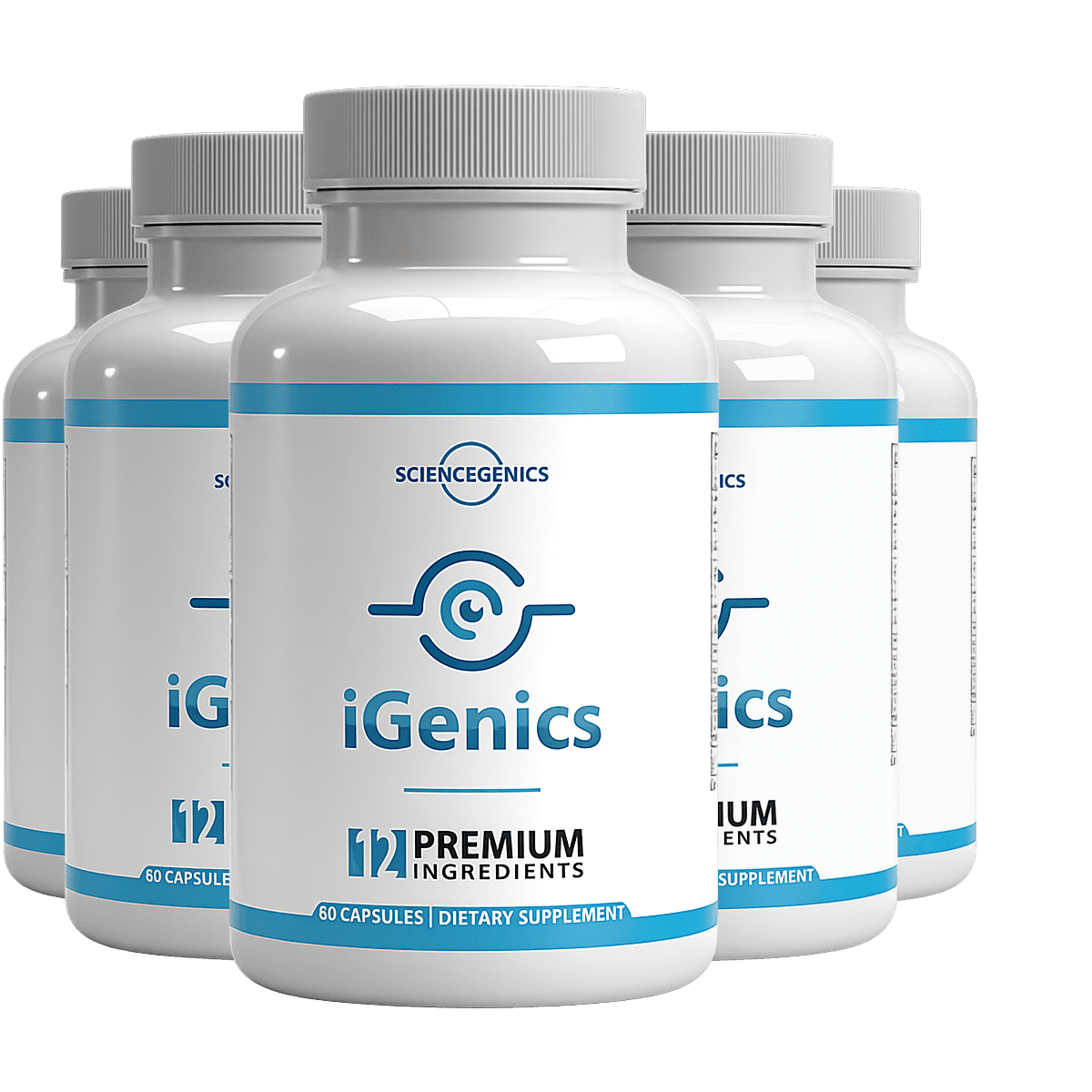
This analysis exists to answer that question precisely. iGenics is a dietary supplement sold by ScienceGenix, positioned as the first and only product combining 12 vision-restoring nutrients at clinically relevant dosages to address the alleged root cause of vision loss, a condition the VSL labels CPE, or Chronic Pro-Inflammatory Environment. The pitch is delivered by a character named Dr. Charles Williams, described variously as a 15-year and 30-year practicing physician (the number shifts across the script) from South Carolina with military service and nonprofit medical leadership behind him. The VSL has been seen by a substantial online audience, its ad variants running on Meta and YouTube targeting the 45-and-older demographic most likely to be experiencing age-related vision changes.
What follows is a structured reading of that sales letter. Its persuasive architecture, its scientific claims, its ingredient science, and its offer mechanics. The piece draws on publicly available research on the named ingredients, established frameworks from persuasion theory, and the conventions of long-form direct-response copywriting to assess what the pitch is doing, how well it does it, and what a careful buyer should understand before reaching for a credit card.
The central question this piece investigates is this: does iGenics represent a genuinely differentiated supplement built on solid nutritional science, or is it a conventional eye-health formulation dressed in an extraordinary marketing narrative. And does the distinction matter to the consumer making a real purchasing decision?
What Is iGenics?
iGenics is an oral dietary supplement marketed primarily to Americans over the age of 40 who are experiencing declining vision. Each bottle contains 60 capsules; the recommended dose is two capsules per day. The product is sold exclusively through its own website; the VSL explicitly states it is not available on Amazon or in retail stores, and is manufactured by a company called ScienceGenix in a facility described as GMP-certified and FDA-registered in the United States. The price structure at the time of the VSL ranges from $59 for a single bottle (discounted from a stated retail price of $149) to $39 per bottle for a six-bottle package.
In categorical terms, iGenics competes in the crowded vision-support supplement space, which includes well-known AREDS-2 formulations from brands like PreserVision (Bausch + Lomb) and Ocuvite, as well as dozens of independent supplement brands on Amazon and direct-to-consumer channels. Its market positioning is aggressive: it claims superiority not just in formulation but in philosophical intent, arguing that every competing product either contains the wrong ingredients, doses them inadequately, or pads the capsule with synthetic fillers that the iGenics team has refused to use. The product's stated target user is the frustrated vision-loss sufferer who has already tried glasses, contacts, and perhaps other supplements, someone the VSL describes as being "at the end of their rope."
The supplement's 12-ingredient formulation includes several components with genuine research profiles, Ginkgo biloba, bilberry, lutein, zeaxanthin, saffron, turmeric, and the AREDS-2 vitamin and mineral complex, alongside black pepper extract (BioPerine) as a bioavailability enhancer. Four ingredients are referenced in the VSL's "12 super nutrients" count but are never named explicitly, which is a meaningful omission for any buyer trying to compare this product against the competition. The product's brand identity blends clinical language ("clinically relevant dosages," "certificate of analysis") with explicitly spiritual framing ("God's green earth," "Tree of Life," biblical citations), a combination that is unusual in the supplement space and deliberate in its audience targeting.
The Problem It Targets
The vision-loss market is large, real, and growing. According to the CDC, approximately 12 million Americans aged 40 and older have some form of vision impairment, and the National Eye Institute projects that the number of Americans with age-related macular degeneration (AMD) will nearly double by 2050, reaching 5.44 million. Globally, the WHO estimates that at least 2.2 billion people live with some form of near or distance vision impairment, with age being the single strongest risk factor. These are not manufactured statistics; they represent a genuine epidemic of age-related ocular decline for which conventional medicine offers management rather than cure.
The VSL frames this problem with considerable sophistication before proposing its solution. The opening minutes establish that the viewer's problem is not their fault, not their genetics, not their screen time, not their age, but the work of a hidden biological villain called the vision killer protein, which the script later reframes as CPE (Chronic Pro-Inflammatory Environment). This rhetorical move is deliberate: by externalizing the cause of the problem to a single, stoppable enemy, the VSL creates the logical precondition for a single, targeted solution. The frustration of spending thousands on glasses and contacts that don't fix the "root cause" is presented as evidence that the medical system has failed the viewer, not as the natural complexity of a multifactorial condition.
In reality, age-related vision decline is indeed driven significantly by oxidative stress and chronic low-grade inflammation, so the VSL is not fabricating its biological premise from whole cloth. Research published in Progress in Retinal and Eye Research and numerous NIH-funded studies confirms that inflammatory cytokines, oxidative damage, and impaired cellular repair mechanisms all contribute to conditions like AMD and glaucoma. The AREDS-2 trials, conducted by the National Eye Institute, represent the gold standard for nutritional intervention in AMD and established that specific combinations of antioxidants and zinc can slow disease progression by roughly 25% in high-risk patients. The VSL's claim that inflammation is the underlying driver of vision loss is, therefore, defensible in broad strokes. But the leap from "inflammation contributes to AMD" to "a specific supplement reverses all vision loss in seven days" is enormous and scientifically unsupported.
The emotional architecture of the problem section is worth noting separately. The VSL catalogues loss in vivid, specific terms: not being able to see a grandchild's face from across the park, stumbling for glasses in the dark, feeling too embarrassed to wear bifocals. These are not abstract fears. They are the precise, daily indignities that drive real purchasing behavior among the 55-to-75 demographic this pitch targets, and the research on emotional decision-making (Damasio, 1994) consistently shows that emotionally resonant problem framing dramatically increases the probability of conversion.
Curious how the psychological architecture of this problem section compares to other health VSLs? Section 7 maps every major persuasion mechanism deployed in this letter.
How iGenics Works
The core mechanism the VSL proposes is built around CPE. Chronic Pro-Inflammatory Environment; a term the script deploys as though it were a recognized clinical diagnosis, though it functions more accurately as a descriptive label for a well-established biological process. The claim is that excess inflammation in the ocular environment triggers the release of pro-inflammatory cytokines, specifically TNF-alpha, which is accurately described as an inflammatory mediator, that kill cells in the retina and optic nerve. These dead cells accumulate as "toxins," disrupting the eye's natural DNA replication cycle (the process by which the body replaces old or damaged cells), and thereby preventing the eye from rebuilding itself every seven days as it was allegedly designed to do.
Parsed carefully, the underlying biology here is partially accurate and partially extrapolated to extraordinary lengths. It is true that TNF-alpha and other inflammatory cytokines are implicated in retinal cell death and the progression of glaucoma and AMD; peer-reviewed research in journals including Investigative Ophthalmology & Visual Science supports this. It is also true that retinal cells undergo continuous renewal and that oxidative stress can impair this process. What is not supported by any peer-reviewed literature is the claim that an oral supplement can "activate a DNA replication mechanism" that allows the eye to generate entirely new cells in seven days, or that any combination of nutraceuticals can "completely reverse" established glaucoma or AMD. The scientific community's most rigorous long-term study on nutritional interventions, the AREDS-2 trial, found that supplementation slowed the progression of AMD in high-risk patients, not that it reversed it.
The "12-second Chinese eyesight fix" framing in the headline deserves particular scrutiny. The 12 seconds refers, presumably, to the time it takes to swallow two capsules, a rhetorical compression that collapses the distinction between taking a pill and experiencing a physiological effect. This is a classic mechanism mislabeling, where the action of consumption is conflated with the action of biological repair. The daily routine the product actually requires, two capsules every day for at least 90 to 180 days, is disclosed in the body of the VSL, which means the headline is not technically false but is constructed to imply immediacy that the product cannot deliver.
To its credit, the formulation's reliance on AREDS-2 dosing standards for lutein, zeaxanthin, and the vitamin-mineral complex represents a legitimate and evidence-based foundation. The claim that competitors underdose these ingredients. Zeaxanthin at 1 mg versus the 10 mg used in major studies. Is verifiable and, in many cases, accurate. The supplement industry's tendency to include token amounts of expensive ingredients to justify label claims without providing therapeutic doses is a well-documented problem, and iGenics' dosage argument is one of the more honest moments in the entire VSL.
Key Ingredients and Components
The formulation draws on a combination of well-researched antioxidants, anti-inflammatory compounds, and established eye-health nutrients. The VSL names eight of its claimed twelve ingredients explicitly; four remain unspecified, which limits independent verification of the full formula. The following assessment draws on publicly available research rather than the VSL's citations, several of which reference journals; the Journal of Natural Eye Health and the Journal of Optic Herbs, that do not appear to exist as recognized peer-reviewed publications.
Ginkgo biloba (Tree of Life), A extract derived from one of the world's oldest tree species, with a long history of use in traditional Chinese medicine. A study published in Ophthalmology (Quaranta et al., 2003) found that Ginkgo biloba extract improved visual field indices in patients with normal-tension glaucoma. Its antioxidant and vasodilatory properties are reasonably well-established. The VSL's claim of a 2020 Yale study specifically on this application is plausible in direction but could not be independently verified from the description given.
Bilberry extract (480 mg), Bilberry (Vaccinium myrtillus) contains anthocyanosides, potent antioxidants with documented effects on retinal capillary integrity. Clinical evidence for bilberry's role in reducing eye fatigue is moderate, with a study in the Journal of Nutrition Health and Aging (2012) supporting improvements in visual acuity and contrast sensitivity. The World War II pilot anecdote is a popular (and largely mythologized) piece of marketing lore with limited documentary evidence, though the underlying anthocyanoside research is legitimate.
Saffron (Crocus sativus), Saffron contains crocin and safranal, carotenoid compounds with demonstrated antioxidant properties. Research published in Investigative Ophthalmology & Visual Science (Falsini et al., 2010) found that saffron supplementation improved retinal function in early AMD patients. This is one of the stronger evidence-based claims in the formulation.
AREDS-2 nutrient complex (Vitamin C, Vitamin E, Vitamin A/Beta-carotene, Zinc, Copper), The Age-Related Eye Disease Study 2, conducted by the National Eye Institute and published in JAMA Internal Medicine (2013), found that a specific combination of these nutrients reduced the risk of AMD progression by approximately 25% in high-risk individuals. This is the most rigorously studied nutritional intervention for age-related vision decline.
Lutein (20 mg) and Zeaxanthin (10 mg), These two carotenoids are the only antioxidants that concentrate naturally in the macula. The AREDS-2 study included them at doses consistent with iGenics' formulation. A randomized controlled trial in Ophthalmology (Ma et al., 2012) confirmed improvements in macular pigment optical density with supplementation. The dosage argument iGenics makes against competitors is scientifically valid.
Turmeric extract / Curcumin (350 mg), Curcumin's anti-inflammatory properties are extensively studied, and a study from University College London and Imperial College London (Rezak et al., 2016) did investigate topical curcumin for retinal ganglion cell protection in glaucoma. The oral bioavailability of curcumin, however, is notoriously poor without specialized formulations. A challenge the VSL does not acknowledge and that BioPerine partially addresses.
Black pepper extract / BioPerine (20 mg). Piperine, the active compound in black pepper extract, is well-documented to increase the bioavailability of curcumin by up to 2,000% (Shoba et al., Planta Medica, 1998) and modestly enhances the absorption of other nutrients. Its inclusion is scientifically justified.
Hooks and Ad Angles
The VSL opens with a direct-address warning; "Warning, over 40 and struggling with poor eyesight or vision loss", followed immediately by the claim of a "12-second Chinese eyesight fix" backed by Yale and Johns Hopkins. This construction operates simultaneously as a pattern interrupt (Cialdini, 2006) and a curiosity gap: the warning stops the scroll, the specificity of "12 seconds" creates an information void the viewer needs filled, and the institutional name-dropping elevates the credibility before a single piece of evidence has been presented. The ethnic framing ("Chinese") is a common device in health VSLs to signal exoticism and ancient authority, a signal that the solution comes from outside the broken medical mainstream.
In copywriting tradition, this hook sits squarely within what Eugene Schwartz would call Stage 4 market sophistication, a market that has already seen hundreds of vision supplements, basic "antioxidant" pitches, and AREDS-style promises, and now requires a genuinely new mechanism claim (CPE, the vision killer protein, the DNA replication angle) to re-engage. The "Chinese monks" discovery narrative and the Tree of Life biblical frame are both strategic responses to a skeptical audience that has heard the standard pitch before. The hook does not promise a better supplement; it promises a discovery that the medical establishment doesn't want the viewer to know about. That is a meaningfully different value proposition, and a more psychologically durable one for a fatigued market.
The VSL is also notable for its open-loop architecture: the "vision killer protein" is named before it is explained, the Tree of Life herb is teased before it is identified as Ginkgo biloba, and the eye industry's conspiracy to suppress the video is introduced early and reinforced throughout. Each of these open loops gives the viewer a reason to keep watching before the emotional investment in Susan's story has had time to fully develop. It is sophisticated structural engineering.
Secondary hooks observed in the VSL:
- "A vision killer protein is causing 99% of today's eye issues, and your doctor has never heard of it"
- "Your eyes rebuild themselves every 7 days, here's why yours aren't getting better"
- "An herb so powerful some believe it is the Tree of Life referenced in the Holy Bible"
- "The eye industry is trying to shut this video down, watch before it's gone"
- "I flew to China myself to meet the distributor face to face"
Ad headline variations for Meta and YouTube media buyers:
- "Doctors are baffled: a 200-million-year-old plant is reversing vision loss, here's why"
- "Over 55 and losing your sight? The real cause has nothing to do with your age"
- "She hadn't driven in 3 years. Then her doctor gave her this 12-ingredient formula"
- "Why your vision supplement isn't working (and what the dosage should actually say)"
- "26,000 people have already tried this. Is your vision next?"
Psychological Triggers and Persuasion Tactics
The persuasive architecture of this VSL is unusually layered even by the standards of long-form direct-response copy. Rather than deploying authority, scarcity, and social proof in parallel. The standard move; this letter stacks them sequentially and compounds each with a theological register that functions as a separate persuasion layer. By the time the viewer reaches the offer, they have been addressed as a patient, a believer, an insider who now knows what the industry has suppressed, and a person whose hesitation is reframed as fear rather than skepticism. Each identity layer makes the next one stickier. Cialdini would recognize the commitment-and-consistency trap; Schwartz would call it advanced-stage mechanism marketing; Robert Godin would identify it as the construction of a tightly defined tribe.
The letter also uses cognitive load management with considerable skill. The CPE mechanism is genuinely complex, cytokines, TNF-alpha, DNA replication, but the VSL immediately follows each technical passage with a plain-language analogy (the polluted river). This rhythm of complexity-then-simplification gives the viewer the feeling of having learned something scientifically rigorous, without requiring the cognitive effort that actual rigor demands. The result is a perception of credibility that functions independently of whether the underlying claims are verifiable.
False enemy / conspiracy framing (Cialdini's in-group/out-group dynamics): The "eye industry billionaires" are presented as actively suppressing this natural solution, creating an adversarial identity frame in which buying iGenics becomes an act of resistance. The threat that the website may be "shut down" introduces artificial urgency rooted in persecution narrative rather than genuine scarcity.
Pattern interrupt with loss aversion (Kahneman & Tversky, Prospect Theory, 1979): The opening "Warning" signal and the repeated imagery of not being able to see a grandchild's face deploy loss framing far more than gain framing, consistent with the finding that losses loom approximately twice as large as equivalent gains in human decision-making.
Authority borrowing via institutional halo (Cialdini's authority principle; Thorndike's halo effect): Yale, Johns Hopkins, Harvard, and the NIH are cited so frequently and in such close proximity to product claims that a casual viewer could reasonably conclude these institutions have reviewed or endorsed iGenics. They have not. The research cited may be real; the implied institutional endorsement is not.
Epiphany bridge / origin story (Russell Brunson's framework; narrative transportation theory, Green & Brock, 2000): The Susan storyline is the structural backbone of the letter's second half. Narrative transportation, the psychological state in which a person becomes immersed in a story, measurably reduces counterarguing and increases persuasion. The Susan story is crafted to maximize this effect: the stakes are high, the doctor is emotionally invested, and the resolution is miraculous.
Divine authority frame (identity-based persuasion; Godin's Tribes, 2008): The Tree of Life biblical framing, the closing "God bless," and the repeated attribution of the discovery to divine providence serve to embed the product within a spiritual identity. For the target audience, older, religiously identified Americans, questioning the product can be made to feel like questioning faith.
Social proof stacking (Cialdini's social proof; bandwagon effect): Ten named testimonials with ages, cities, and specific, quantified improvements are distributed throughout the letter rather than clustered at the end. This distribution strategy prevents the viewer from mentally segmenting the testimonials as the "sales pitch" portion of the video.
Risk reversal via endowment effect (Thaler's endowment effect; Kahneman's loss aversion): The 180-day guarantee with no return requirement means the buyer physically possesses the product from day one. Thaler's research on the endowment effect demonstrates that ownership. Even of an item just received. Substantially increases its perceived value and reduces the psychological likelihood of return.
Want to see how these psychological tactics compare across fifty or more VSLs in the health supplement space? That is exactly what Intel Services is built to show you.
Scientific and Authority Signals
The iGenics VSL makes extensive use of institutional name-dropping; Yale, Johns Hopkins, Harvard Medical School, the University of London, the National Eye Institute, and UCLA are all cited within the first fifteen minutes of the presentation. The sheer volume of these references creates what might be called a credibility density effect: no single institution is cited for a specific, verifiable claim in enough detail for the viewer to check it, but the accumulation of prestigious names produces an overall sense that the science is overwhelming and authoritative. This is a form of borrowed authority, real institutions are referenced in ways that imply an endorsement they never gave to this product or its manufacturer.
Several of the specific studies cited are worth examining independently. The AREDS-2 study is real, well-conducted, and frequently cited in the vision supplement space; the NIH's National Eye Institute ran it, and its findings are publicly available. The reference to lutein and zeaxanthin research in the Journal of the American Medical Association and in Ophthalmology is consistent with actual published literature. The curcumin/retinal ganglion cell research attributed to University College London and Imperial College London aligns with work by researchers including Francesca Cordeiro, whose team has published on this subject. These are legitimate citations.
However, two journals named in the VSL, the Journal of Natural Eye Health and the Journal of Optic Herbs, do not appear in standard academic databases, including PubMed. A study from the Journal of Medicinal Food involving 322 glaucoma patients given Ginkgo biloba is cited; the Journal of Medicinal Food is a real publication, and Ginkgo research has appeared there, but the specific study as described could not be independently verified from the transcript's description alone. The 2020 Yale study on Ginkgo biloba and glaucoma visual field indices is directionally consistent with research conducted at institutions including Yale (the laboratory of Jeffrey Bhatt has published on neuroprotection in glaucoma), but cannot be confirmed as described without a proper citation.
Dr. Charles Williams is presented with professional credentials, 15 or 30 years of practice, military service, nonprofit medical leadership, but no institutional affiliation, hospital credential, or license number is provided. This is standard in direct-response health marketing (providing such details would invite verification), but it is also the reason the viewer cannot independently confirm the authority figure at the center of the narrative. The inconsistency in his stated years of experience (15 in one passage, 22 in another, 30 in a third) is either a production error or a sign that the character's biography was not carefully integrated across the script's multiple versions. Either way, it is worth noting.
The Offer, Pricing, and Risk Reversal
The iGenics offer is structured with professional competence. The price anchor, a stated retail value of $149 per bottle, establishes a reference point that makes the discounted price of $59 feel like a significant saving, regardless of whether the $149 retail price is ever actually charged anywhere. This is a standard contrast principle deployment (Cialdini), and it functions precisely as intended: the $59 price feels like a bargain because the $149 price has already been internalized as the baseline. The six-bottle package at $39 per bottle is then positioned as the obvious smart-buyer choice, with the stated savings of $660 creating an additional anchoring effect.
The bonus stack. A free bottle of the "Intelligent" brain supplement (valued at $59), two eBooks on vision improvement (valued at $129 combined), and free shipping. Is a conventional direct-response value escalation designed to make the six-bottle package feel overwhelmingly generous relative to the single-bottle option. Each bonus is assigned a specific dollar value, which serves to increase the perceived deal quality without actually changing the fundamental economics of the transaction. Whether those valuations reflect real market prices for comparable products is never substantiated.
The 180-day money-back guarantee is the offer's most substantively consumer-protective element. At six months, it is longer than the industry standard and is paired with an explicit "no return required" provision; the buyer keeps the bottles regardless of whether they request a refund. This is a legitimate risk-reduction mechanism, and for a buyer genuinely uncertain about the product's efficacy, it meaningfully lowers the barrier to trial. The "first 50 customers" scarcity framing is almost certainly artificial, a standard conversion tactic rather than a genuine inventory constraint, but the guarantee itself is a real commitment that a consumer could hold the company to.
Who This Is For (and Who It Isn't)
The ideal buyer for iGenics is quite specific: an American over 55, likely between 60 and 75, experiencing measurable but not yet severe age-related vision decline, who has already spent money on prescription glasses or contacts and is frustrated that their vision continues to worsen despite those interventions. This person is likely to be spiritually oriented, the biblical framing is not incidental, and to have a moderate distrust of large medical institutions combined with a desire for a natural solution that feels personally discovered rather than commercially marketed. The moment this pitch lands is when the viewer has just returned from a prescription update appointment feeling dismissed by their optometrist, or when they've noticed they can no longer read a menu without squinting. The pitch is calibrated precisely to that moment of frustrated vulnerability.
For this buyer, several elements of the iGenics formulation are genuinely worth considering. The AREDS-2 dosing framework is the single most evidence-based approach to nutritional support for AMD risk reduction available in supplement form, and many commercial vision supplements do, in fact, underdose their active ingredients. If the product's label claims are accurately reflected in the capsule contents, which the company's stated third-party testing process is designed to verify, then a buyer getting clinically relevant doses of lutein, zeaxanthin, and the AREDS-2 vitamin-mineral complex is getting something of real nutritional value, at a price that is competitive with brand-name AREDS-2 supplements from major retailers.
Who should probably pass: anyone with acute vision loss, sudden changes in vision, or newly diagnosed eye disease should consult an ophthalmologist before pursuing any supplement-based intervention, including this one. The VSL's claim that iGenics can reverse established glaucoma, cataracts, or macular degeneration is not supported by any peer-reviewed evidence, and acting on that claim in lieu of professional medical evaluation could delay necessary treatment. Additionally, buyers who are primarily motivated by the "12 seconds" and "7 days" promises should understand that the actual evidence base for these ingredients, where it exists. Supports slow, modest improvements over months, not dramatic reversal of vision loss in days. Finally, anyone uncomfortable with the gap between the marketing claims and the scientific evidence. A gap this piece has attempted to map honestly; may find more confidence in a straightforward AREDS-2 supplement from a brand with verifiable clinical data behind it.
If you're comparing vision supplements before making a decision, Intel Services' library of VSL breakdowns covers several competing products in this category, keep reading for context.
Frequently Asked Questions
Q: Is iGenics a scam or a legitimate vision supplement?
A: iGenics is a real supplement product with a formulation that includes several ingredients with legitimate research support, including lutein, zeaxanthin, bilberry, saffron, and the AREDS-2 nutrient complex. The VSL makes claims about vision reversal that significantly exceed what the science supports, but the underlying formulation is not fraudulent. The meaningful question is whether the product delivers what the marketing promises, and the honest answer is: probably not the 7-day dramatic vision restoration, but possibly incremental support for eye health over months of consistent use.
Q: Does iGenics really restore 20/20 vision in 7 days?
A: No peer-reviewed evidence supports the claim that any oral supplement restores 20/20 vision in 7 days. The AREDS-2 study, the gold standard for nutritional intervention in AMD, showed a 25% reduction in disease progression risk over several years of supplementation, not reversal of existing vision loss. Some users may notice subjective improvements in eye comfort or fatigue within weeks, but the "7-day" claim is a marketing frame, not a clinical finding.
Q: Are there any side effects from taking iGenics?
A: The named ingredients in iGenics are generally considered safe at the stated doses for most adults. Ginkgo biloba can interact with blood-thinning medications such as warfarin. High-dose zinc (as included in AREDS-2 formulations) may cause gastrointestinal discomfort in some individuals. Curcumin can interfere with certain drug metabolisms. Anyone taking prescription medications should consult a physician before starting this or any supplement.
Q: Is the CPE (Chronic Pro-Inflammatory Environment) theory behind iGenics real?
A: The underlying biology, that chronic inflammation and oxidative stress contribute to retinal cell damage and progressive vision loss, is well-supported in peer-reviewed literature. "CPE" as a named clinical entity is the VSL's own framing rather than a recognized medical diagnosis, but the concept it describes is scientifically legitimate. The leap from "inflammation causes vision damage" to "this supplement reverses vision loss" is where the evidence becomes much thinner.
Q: How does iGenics compare to AREDS-2 supplements already on the market?
A: The AREDS-2 core nutrient complex (lutein, zeaxanthin, vitamins C and E, zinc, copper) is also the foundation of mainstream products like PreserVision AREDS-2. The iGenics formulation adds Ginkgo biloba, bilberry, saffron, turmeric, and BioPerine, ingredients with some independent research support that are not part of the AREDS-2 protocol. Whether these additions produce meaningfully better outcomes than a standard AREDS-2 supplement has not been tested in a clinical trial.
Q: Is Dr. Charles Williams a real doctor?
A: The VSL does not provide a medical license number, hospital affiliation, or verifiable institutional credentials for Dr. Charles Williams. His stated years of experience vary across the script (15, 22, and 30 years at different points). This does not prove the character is fictional, but it does mean the authority claim cannot be independently verified. Buyers should not rely on the presenter's credentials as a primary reason for purchasing.
Q: Is it safe to take iGenics instead of seeing an eye doctor?
A: No. The VSL's framing. That iGenics can address the root cause of all vision loss without doctors, surgery, or prescriptions. Is not medically responsible guidance. Sudden or progressive vision changes should always be evaluated by a qualified ophthalmologist or optometrist, as some conditions (retinal detachment, acute angle-closure glaucoma, macular disease) require prompt clinical intervention that no supplement can replace.
Q: How long does it take for iGenics to work?
A: The VSL frames results as beginning within 7 days, with the strongest effects from consistent daily use over 90 to 180 days. This is roughly consistent with the research timeline on some of the named ingredients; lutein and zeaxanthin studies typically measure outcomes at 12 to 24 weeks, though individual results will vary considerably. The 180-day money-back guarantee implicitly acknowledges that meaningful results may take the full six months.
Final Take
The iGenics VSL is, by the standards of its genre, a technically accomplished piece of long-form direct-response copy. It demonstrates a sophisticated understanding of its target audience, older, spiritually identified, medically frustrated Americans who have exhausted conventional options, and constructs a persuasive architecture that layers medical authority, conspiracy narrative, divine providence, and genuine nutritional science into a single, tonally consistent argument. The open-loop sequencing, the Susan origin story, the institutional name-dropping, and the theological frame are all deployed with evident craft. That the marketing exceeds the science is not unusual in the supplement space; the degree to which it does so in the vision-reversal claims is, however, significant enough that any prospective buyer deserves to understand the gap.
The formulation itself occupies an interesting middle position. Several of its core ingredients, the AREDS-2 complex, lutein, zeaxanthin, saffron, have genuine, peer-reviewed evidence supporting their role in slowing age-related macular disease progression. The dosage argument iGenics makes against competitors (zeaxanthin at 10 mg versus the 1-2 mg found in many competitors) is verifiable and represents an honest critique of a real industry problem. If the product's manufacturing and testing claims are accurate, the buyer is getting a more comprehensively dosed eye-health supplement than most of what is available on Amazon. The additional ingredients, Ginkgo biloba, bilberry, turmeric, BioPerine, add theoretical synergistic value and are supported by independent research, even if that research does not extend to the reversal of established eye disease.
The elements of the pitch that a careful buyer should treat with skepticism are specific and important: the 7-day vision restoration claim, the complete reversal of glaucoma and AMD, the "vision killer protein" as a discrete entity that a supplement can neutralize, and the framing that iGenics represents a suppressed cure that the eye industry is actively trying to eliminate. These claims are not substantiated by the evidence the VSL itself cites, and some of the journals it references appear not to exist as legitimate peer-reviewed publications. The testimonials are unverifiable, the "26,000 customers" figure is self-reported, and Dr. Charles Williams' credentials cannot be confirmed from publicly available information.
For a buyer who would benefit from a comprehensive, correctly dosed AREDS-2-adjacent supplement and who is comfortable with the significant distance between the marketing narrative and the available evidence, iGenics may offer genuine nutritional value. Particularly given the 180-day money-back guarantee that provides a real safety net. For a buyer expecting dramatic vision reversal in a week, the product will almost certainly disappoint. That gap between the expectation the marketing creates and the outcome the science supports is, ultimately, the most important thing this analysis can offer.
This breakdown is part of Intel Services, our ongoing library of VSL and ad-copy analyses. If you're researching similar products in the vision health or supplement space, keep reading.
Disclaimer: This article is for research and educational purposes only. It is not medical, legal, or financial advice, and it is not affiliated with the product or its makers. Always consult a qualified professional before making health or financial decisions.
Source-backed reader context
Additional Reviews & Reported Experiences
These statements were presented in the product's sales transcript. Daily Intel did not independently verify the speakers, purchase status, or reported outcomes, and the statements are not used in Product aggregateRating.
Patty
Date not stated
vision so sharp she forgets to wear glasses, improved night vision
Caroline
Date not stated
can now read small print and recognize people at distance
Bradley H., 53
Date not stated
improved night driving, sharper vision after first week
Leonard, 61
Date not stated
better than new eyeglasses, can read cell phone after 11 days
Janice M., 64 (Baltimore, MD)
Date not stated
ophthalmologist confirmed no stronger prescription needed, macular degeneration stabilized
Robert K., 71 (Garden Grove, CA)
Date not stated
eye floaters almost disappeared after two months
Sarah V. (Connecticut)
Date not stated
eyes less tired, sees details more clearly
Andrew M. (Washington)
Date not stated
tailoring professional, no longer needs two pairs of reading glasses
Yozi B. (Buenos Aires, Argentina)
Date not stated
eyes feel awake, less strain and fatigue
Susan (66-year-old patient)
Date not stated
3% visual field improvement in 7 days, drove independently after 6 months
Comments(0)
No comments yet. Members, start the conversation below.
Related reads
 reviews
ARMRA Colostrum Review: Evidence, Dose Gaps, Price, and Verdict
ARMRA’s 120-serving colostrum powder comes with notable manufacturer-reported survey percentages. However, the undisclosed amount per serving and a materially different ingredient trial leave the finished product’s highlighted outcomes unproven.
Read reviews
Olly Goodbye Stress Review: Label Claims vs. Evidence
OLLY Goodbye Stress combines GABA, L-theanine, and lemon balm extract in a Berry Verbena gummy aimed at occasional stress, not sleep. Here's what the label discloses, what a real L-theanine trial found, and exactly where the evidence stops.
Read reviews
Kaged Pre-Kaged Sport Review: Does the Citrulline Study Fit?
Kaged Pre-Kaged Sport provides 3.5 grams of fermented L-citrulline in each 13-gram scoop. The supplied trial tested a higher dose of isolated L-citrulline and found no performance benefit, so it cannot prove whether this finished formula works.
Read