Neotonics Review and Ads Breakdown: A Research-First Look
The video opens with a question designed to stop a scrolling thumb cold: "If the cells of our skin are replaced every single week, then why do wrinkles still exist?" It is a well-constructed parado…
8,226+
Videos & Ads
+50-100
Fresh Daily
$29.90
Per Month
Full Access
12.5 TB database · 72+ niches · 28 min read
Introduction
The video opens with a question designed to stop a scrolling thumb cold: "If the cells of our skin are replaced every single week, then why do wrinkles still exist?" It is a well-constructed paradox, one that sounds like it belongs in a science lecture and arrives, instead, in a paid media slot on YouTube or Facebook. The product being sold is Neotonics, a probiotic gummy that claims to reverse visible skin aging not through any topical application but through the gut. The pitch runs for well over thirty minutes, weaves together personal trauma, a whistleblower scientist, multiple cited research institutions, and a multi-tiered discount offer. Whether you found it via a targeted ad or an affiliate site, the experience is the same: immersive, emotionally escalating, and strategically constructed at every turn.
Neotonics sits in one of the most crowded corners of the direct-response supplement market, the anti-aging category, and it competes in that space by rejecting the category's own premises. Rather than promising better collagen delivery or a more potent retinol alternative, it argues that every topical product the viewer has ever used was addressing the wrong organ. The gut, not the skin's surface, is the engine of skin regeneration, and the entire $500 billion global beauty industry has, according to the VSL narrator, known this since the 1930s and chosen to suppress it. That framing, the industry as a knowing villain, the buyer as a victim who deserves the truth, is the structural spine of the entire sales argument.
What follows in this analysis is a close reading of both the product and the pitch. The goal is not to debunk or to endorse but to place both the science and the persuasion architecture under the kind of scrutiny a careful buyer would want before spending money, and before trusting a thirty-minute video more than a doctor. The questions worth asking are these: How much of the underlying mechanism is supported by independent research? How is the pitch engineered to bypass skepticism? And for whom, realistically, does a product like this make sense?
Those are the questions this piece investigates, and the answers, as is usually the case with sophisticated direct-response marketing, are neither entirely flattering nor entirely damning.
What Is Neotonics?
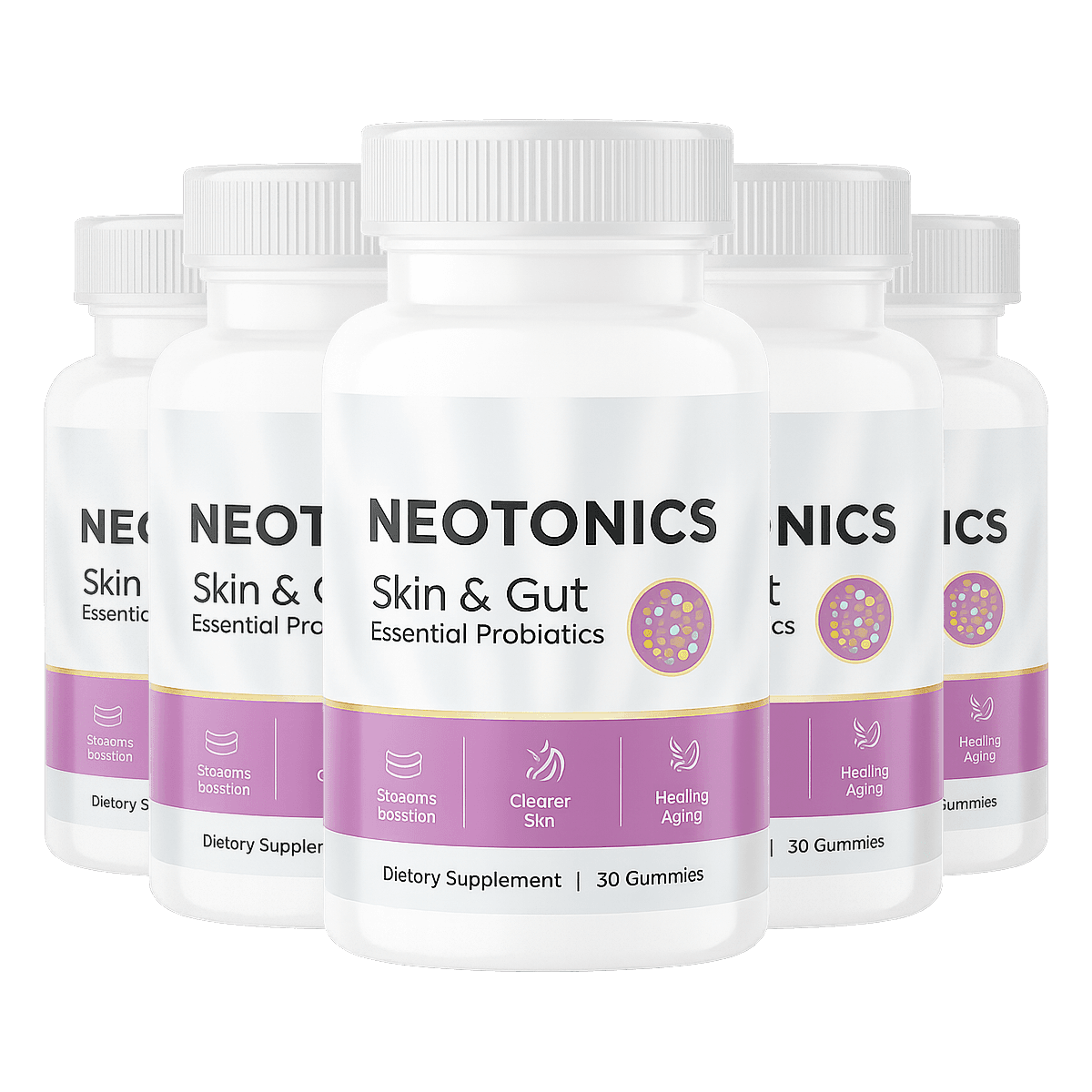
Neotonics is a dietary supplement formulated as a daily probiotic gummy. Each gummy, according to the VSL, contains 500 million colony-forming units of Bacillus coagulans, a spore-forming probiotic strain, along with nine additional natural ingredients that the product's creators describe as prebiotics, plant extracts, and botanicals. The product is manufactured in the United States in what the VSL describes as an FDA-approved, GMP-certified facility. It is positioned as a non-GMO, stimulant-free, and non-habit-forming supplement appropriate for adults of any age.
The market category Neotonics occupies is technically the gut-health supplement space, but its go-to-market positioning is firmly in the anti-aging beauty segment. This dual-category play is deliberate and commercially significant: it allows the product to attract buyers motivated by skin concerns (a larger, more emotionally driven audience) while also appealing to the growing wellness segment of consumers interested in the gut microbiome. The product's stated target user is women between roughly 35 and 65 who are experiencing visible skin aging alongside at least one digestive complaint. Bloating, gas, irregular digestion. And who have already tried and been disappointed by conventional skincare solutions.
The format; a gummy rather than a capsule or powder, is itself a positioning choice. Gummies carry associations of palatability, accessibility, and daily habit formation, as opposed to the clinical or pharmaceutical connotations of a capsule. The VSL explicitly argues that the gummy format improves absorption speed relative to capsules, though no pharmacokinetic data is offered to support this specific claim.
The Problem It Targets
The problem Neotonics addresses is real, widespread, and genuinely distressing for the women it targets. Skin aging is not a vanity concern in any trivial sense. The American Academy of Dermatology estimates that spending on anti-aging skincare and procedures in the United States alone exceeds $17 billion annually, which is one proxy measure for how urgently consumers want a solution. The VSL's narrator, Sarah Miller, narrates her own experience of rapid-onset skin aging at 32 with enough specificity, "fine lines between my eyebrows, deep wrinkles in the corners of my mouth, crepey skin under my eyes", to resonate with any woman who has had a similar moment of startled recognition in a mirror.
The secondary problem the VSL layers onto skin aging is digestive dysfunction and weight gain. This broadening is structurally important: by claiming that the same root cause (an aging gut microbiome) explains skin decline, bloating, and weight gain simultaneously, the pitch multiplies the number of potential buyers who can self-identify as targets. A woman who is troubled primarily by her weight but only mildly bothered by skin aging is still addressed. The VSL's diagnostic question, "Do you experience at least one skin issue and one gut issue that don't seem to go away no matter what you do?", is designed to cast the widest possible net while still feeling personally specific.
The connection between gut health and skin condition, sometimes called the gut-skin axis, is a legitimate and active area of biomedical research. A 2018 review published in Frontiers in Microbiology documented associations between gut dysbiosis and skin conditions including acne, psoriasis, atopic dermatitis, and rosacea. The NIH's National Institute of Arthritis and Musculoskeletal and Skin Diseases has similarly acknowledged the inflammatory pathways linking intestinal microbiome disruption to skin manifestations. What the VSL does with this legitimate science, however, is extrapolate significantly, claiming not just that gut health influences skin condition but that gut bacteria directly and precisely control the speed of cellular turnover, a much stronger and more specific claim than what current published literature supports as established fact.
The problem framing also deploys a specific emotional architecture worth noting: it names an invisible enemy (an aging microbiome), validates the buyer's past failures (topical products cannot work if the gut is broken), and positions the buyer as blameless. This is not accidental. The absolution frame, you did not fail, the products failed you. Is one of the most powerful entry points in direct-response copy because it dissolves the resistance that comes from prior disappointment.
Curious how other VSLs in this niche structure their pitch? Keep reading. Section 7 breaks down the psychology behind every claim above.
How Neotonics Works
The mechanism the VSL proposes is built on a real biological concept: skin cell turnover, the process by which the epidermis continuously sheds dead cells and generates new ones. This is not disputed science. The stratum corneum does cycle, with full epidermal renewal taking approximately 40 to 56 days in younger adults and slowing with age, according to research published in the Journal of Investigative Dermatology. The VSL frames the slowing of this process as the proximate cause of wrinkles, dark spots, and sagging skin; a simplification, but not an inaccurate one.
Where the mechanism becomes more speculative is in the causal chain connecting gut bacteria to the rate of skin cell turnover. The VSL claims this relationship was definitively established by a 2021 study from University College Cork, published in Nature Aging, and described as "the mind-blowing link between age reversal and gut health." A 2021 paper in Nature Aging by Ghosh et al. did study gut microbiome changes in centenarians and aging populations, and it did find associations between specific bacterial profiles and health outcomes, but the paper does not establish that modifying the gut microbiome with a probiotic supplement will directly accelerate epidermal cell turnover in the way the VSL implies. The jump from "gut bacteria are associated with biological aging markers" to "taking B. coagulans in a gummy will speed up your skin's renewal cycle" is a meaningful extrapolation that the cited research does not directly support.
The VSL also claims that the gut-skin axis mechanism explains why topical treatments cannot work: "When you apply an expensive serum on your skin, you're just taking care of the dead skin cells." This is presented as categorical, but dermatologists and cosmetic chemists would contest it. Certain actives, retinoids, niacinamide, alpha-hydroxy acids, have well-documented, peer-reviewed evidence of penetrating the epidermis and influencing cellular behavior. The claim that all topical products are ineffective is a rhetorical overcorrection that serves the sales argument rather than an accurate account of dermatological science.
What can be said fairly is this: the gut-skin axis is a plausible and increasingly studied pathway, B. coagulans has a reasonable evidence base for digestive health, and several of the botanical ingredients have some independent research support. The mechanism as presented in the VSL is not fabricated from nothing, but it is presented with a confidence and precision that outpaces what the current literature actually demonstrates.
Key Ingredients and Components
The formulation is structured across four narrative "steps" in the VSL, each grouping of ingredients assigned a role in a sequential protocol: wake the gut, feed the bacteria, amplify the colony, and sustain the results. This stepwise framing is itself a persuasion device, giving the ingredient list the feeling of an engineered protocol rather than a generic blend. The core components are as follows:
Babchi (Psoralea corylifolia): The VSL's headline botanical, described as a blue-rooted Egyptian plant. A study conducted by researchers at UC Davis, the University of Michigan, and Drexel University did compare 0.5% Babchi oil to 0.5% retinol on 44 participants over 12 weeks, finding Babchi produced greater reductions in wrinkle surface area and hyperpigmentation with fewer side effects including peeling and redness. This study is real and was cited in the dermatological literature. Babchi contains bakuchiol, a compound that has received growing clinical attention as a retinol alternative; a 2018 study by Dhaliwal et al. in the British Journal of Dermatology confirmed bakuchiol's comparable efficacy to retinol with lower irritation. The VSL's claim that it is "45 times better" than retinol, however, is not substantiated by the cited or any known published study.
Inulin: A well-established prebiotic fiber derived from chicory root and other plants. Inulin selectively feeds Bifidobacterium and Lactobacillus species in the colon and is classified as a GRAS (generally recognized as safe) ingredient by the FDA. A 2017 randomized controlled trial published in the Journal of Nutrition (Dahl et al.) found inulin supplementation associated with modest reductions in body weight and BMI in overweight adults, consistent with the VSL's claims. Its direct effects on skin microbiome, however, are less established.
Dandelion (Taraxacum officinale): Cited as both prebiotic and UV-protective. A 2011 study published in Evidence-Based Complementary and Alternative Medicine found dandelion extract demonstrated photoprotective effects in cell culture, lending some support to the UV-protection claim. Its diuretic properties are reasonably well established. The claim that drinking dandelion tea can produce 4.5 pounds of weight loss per week is not supported by any peer-reviewed human trial known to this analysis.
Bacillus coagulans: The product's primary probiotic strain. B. coagulans is spore-forming, which gives it meaningful acid resistance, a genuine differentiator from many Lactobacillus strains that do not survive gastric transit well. Multiple trials have found B. coagulans effective for IBS symptom relief and digestive comfort. Its specific effects on epidermal cell turnover or skin appearance are not established in the independent literature.
Fenugreek (Trigonella foenum-graecum): Contains antioxidants and steroidal saponins. Some preliminary research suggests anti-inflammatory and skin-moisturizing properties, but large-scale, peer-reviewed human trials specifically on skin aging are limited.
Lemon Balm (Melissa officinalis): Has documented anxiolytic and gut-motility effects in small trials. The VSL references "a study from the Journal of Medicine" showing lemon balm speeds gut motility, this is plausible but the specific citation is too vague to verify.
Organic Ceylon Ginger (Zingiber officinale): Well-studied anti-inflammatory and antioxidant properties. Ginger's gingerols and shogaols have demonstrated activity against oxidative stress in the skin in cell-culture studies. The claim of reducing cellulite specifically is extrapolated rather than directly evidenced.
Slippery Elm Bark (Ulmus rubra): A demulcent with traditional use for GI irritation. The VSL references a study on psoriasis improvement with slippery elm consumption; small-scale evidence exists but robust clinical trials are lacking.
Organic Lion's Mane (Hericium erinaceus): A medicinal mushroom with growing research interest. A 2022 study in Nutrients found lion's mane extract increased collagen synthesis and antioxidant enzyme activity in aged mouse skin, supporting the VSL's collagen claim, though human trial replication remains limited.
Fennel (Foeniculum vulgare): Contains flavonoids and volatile oils with antioxidant properties. Its inclusion in anti-cellulite formulations is documented in cosmetic literature, though evidence for systemic fat-flushing effects via oral consumption is thin.
Hooks and Ad Angles
The VSL's opening hook. "If the cells of our skin are replaced every single week, then why do wrinkles still exist?". Is a textbook curiosity gap (Loewenstein, 1994), structured as a paradox that the viewer's existing knowledge cannot resolve. It works because it does not attack a belief the viewer holds; it reveals a contradiction within a belief they have never examined. This is meaningfully different from a simple contrarian claim like "wrinkle creams don't work," which a skeptical viewer can dismiss. A genuine paradox, by contrast, creates cognitive dissonance that can only be resolved by listening further. The hook is well-suited to the target audience; women who have consumed significant skincare content and still feel their knowledge has not helped them, because it addresses exactly the gap between information and results that characterizes their experience.
This belongs to what Eugene Schwartz, in Breakthrough Advertising, would classify as a Stage 4 or 5 market sophistication move: the audience has heard every direct promise ("fewer wrinkles in 30 days") and every mechanism claim ("boosts collagen," "contains retinol"), and now only responds to a genuinely new mechanism frame, in this case, the gut as the previously hidden cause. The VSL does not lead with "Neotonics fights wrinkles." It leads with a question that suggests the entire category of solutions the viewer knows about is addressing the wrong organ. That is a sophisticated market entry for a supplement sold to a fatigued buyer.
Secondary hooks observed in the VSL:
- "An off-the-record interview with the most headhunted cosmetic scientist in America"
- "23 times cheaper than retinol and 45 times better at reducing signs of aging"
- "The 15-second belly test that reveals the speed at which you are aging"
- "The gut-skin connection was discovered in the 1930s, and beauty companies buried it"
- "96% of the live probiotics are being killed by your saliva and stomach acid"
Ad headline variations a media buyer could test on Meta or YouTube:
- "Dermatologists Don't Tell You This: Your Wrinkles Come From Your Gut, Not Your Skin"
- "I Looked Like My Husband's Mother. A Microbiologist Fixed It With One Gummy"
- "The Egyptian Plant That Outperformed Retinol In a 44-Person Clinical Study"
- "Why 170,000 Women Threw Out Their Skincare Routines in 2024"
- "Forget Serums: The Real Reason Your Skin Ages Faster After 35"
Psychological Triggers and Persuasion Tactics
The persuasive architecture of this VSL is more layered than most in its category. Rather than stacking social proof and then discounting, the standard short-form infomercial structure, this letter builds in a sequential, compounding pattern: first it destabilizes existing beliefs (the paradox hook), then it establishes a new explanatory framework (the gut-skin axis), then it validates past failures through that framework (topicals cannot work if the gut is broken), then it introduces a villainous conspiracy (beauty companies suppressed this), and only then does it introduce the product as the resolution. Cialdini would recognize this as authority + social proof + scarcity assembled in a carefully choreographed order rather than deployed in parallel, which is what makes this a more sophisticated piece of copy than the average supplement pitch.
Festinger's cognitive dissonance is also at work throughout: the viewer who has spent hundreds on serums faces the uncomfortable fact that she may have been systematically misled. The VSL does not let her resolve that discomfort by dismissing the claim, it keeps adding institutional names, testimonial specifics, and narrative detail until the discomfort of believing in a cover-up is lower than the discomfort of dismissing it.
Specific tactics deployed:
Pattern interrupt / curiosity gap (Loewenstein, 1994): The opening paradox disrupts the viewer's expected category experience, she arrived expecting a skin cream ad and instead encounters a science question. Increases attention and perceived credibility in the first thirty seconds.
Epiphany bridge (Brunson): Sarah Miller's journey from humiliated party guest to glowing investigative journalist mirrors the viewer's own hoped-for arc. The listener experiences the revelation vicariously and emotionally, which is more persuasive than a direct product claim.
False enemy framing (Schwartz; Godin's tribal psychology): By naming Big Beauty as a knowing villain, the VSL creates an in-group (women who now know the truth) and an out-group (corporations and their products). Buying Neotonics becomes an act of tribal identity and defiance, not merely a purchase decision.
Authority borrowing (Cialdini's authority principle): University College Cork, Nature Aging, UC Davis, the University of Michigan, the Medical University of Pennsylvania. These are real institutions, and their names are real. What they did not do is endorse Neotonics or validate the specific mechanistic claims the VSL attributes to their research. The gap between "institution whose research exists" and "institution that supports this product" is never acknowledged.
Loss aversion / negative future pacing (Kahneman & Tversky, 1979): The closing section forces a vivid mental simulation of continued deterioration. More wrinkles, more weight, more social rejection; framing inaction not as "passing" on a product but as accepting a guaranteed bad outcome. Loss frames consistently outperform gain frames in direct-response conversion.
Social proof cascading (Cialdini): The 170,000-customer figure is deployed nine times across the VSL at escalating moments of doubt. Named testimonials are geographically anchored (El Paso, Cincinnati, Mesa, Rexburg), a specificity technique that increases perceived authenticity.
Scarcity and supply-chain anxiety (Thaler's endowment effect + urgency framing): The 6-to-9-month production cycle claim, rising ingredient prices, and the warning about going out of stock work together to make delay feel costly. Once a buyer has mentally committed to the multi-bottle package, the endowment effect makes abandoning that mental ownership uncomfortable.
Want to see how these tactics compare across 50+ VSLs? That's exactly what Intel Services is built to show you.
Scientific and Authority Signals
The VSL's scientific apparatus is extensive and strategically assembled. Five academic or medical institutions are named, University College Cork, UC Davis, the University of Michigan School of Medicine, Drexel University College of Medicine, and the Medical University of Pennsylvania, alongside two peer-reviewed journals: Nature Aging and the Journal of Investigative Dermatology. For a supplement VSL, this is an unusually heavy citation load, and it serves a specific purpose: the target audience for this product is educated enough to be skeptical of baseless claims but not necessarily in a position to cross-reference citations in real time during a video.
The Babchi-versus-retinol study is the most credible citation in the letter. A clinical comparison of bakuchiol and retinol was indeed conducted by researchers affiliated with UC Davis and the University of Michigan, and the results, bakuchiol produced comparable efficacy with fewer side effects, have been reported in legitimate peer-reviewed literature, including Dhaliwal et al. (2019) in the British Journal of Dermatology. The VSL's characterization of Babchi as "45 times better" than retinol, however, appears to be a marketing claim that does not correspond to the reported data in any known study. The study showed comparable efficacy with better tolerability, a meaningful finding, but not the same as 45x superiority.
The Nature Aging citation is the more problematic one. A 2021 paper in Nature Aging by Ghosh et al. did study gut microbiome signatures in aging populations, but the paper's conclusions concern associations between bacterial composition and longevity markers in centenarian cohorts, it does not propose or test the specific claim that supplementing with B. coagulans will accelerate skin cell turnover in middle-aged women. The VSL's attribution. That this paper established how to "control the speed with which older skin is replaced with younger skin" through gut intervention. Is a substantive extrapolation from the paper's actual findings. This falls into the category of borrowed authority: real institution, real paper, real journal, but framed in a way that implies an endorsement or conclusion the research does not contain.
Dr. Joanne, the primary expert figure, presents the most significant credibility question. She is identified only by a first name, described as a microbiologist for "some of the world's most famous Korean skincare brands," and said to have prepared the original formula in secret under non-disclosure agreements. No last name, no institution, no publication record, and no verifiable professional identity are provided. In the context of a narrative-driven VSL, this is not necessarily surprising; but it means the most important authority signal in the entire letter is completely unverifiable. The story of her discovery functions as emotional testimony, not as scientific evidence.
The Offer, Pricing, and Risk Reversal
The pricing structure follows a standard direct-response stacking model. The VSL anchors against a stated retail value of $175 per bottle, then against a future price of $99, then against the cost of a dermatologist visit, then against neck-lift surgery ($7,500 to $20,000), before revealing a current price of $49 per bottle on the six-bottle package. This descending anchor sequence is designed to make $49 feel dramatically inexpensive by comparison, a legitimate technique when the benchmarks are real, but less legitimate when the $175 retail figure is a notional price the seller set rather than a market rate derived from comparable products. There is no evidence Neotonics was ever sold at $175; the figure exists primarily to inflate perceived savings.
The guarantee structure, 60-day, full refund, including on empty bottles, no questions asked, is one of the stronger risk-reversal offers in the supplement category. It shifts a meaningful amount of financial risk back to the seller and signals a degree of confidence in the product's ability to produce at least some perceptible result within two months. Whether the guarantee is honored as described is a customer-service question this analysis cannot answer from the VSL alone, but the terms as stated are generous relative to category norms.
The scarcity and urgency framing, production batches take six to nine months, prices are rising, stock may not be available if you leave the page, is theatrical rather than operationally transparent. Neotonics is a digital-era supplement sold through a continuously running paid media campaign; the claim that leaving the page might mean the product is unavailable is a standard direct-response urgency device, not a reflection of actual inventory constraints for a product with this level of advertising spend.
Who This Is For (and Who It Isn't)
The ideal buyer for Neotonics, based on the VSL's avatar construction, is a woman in her late thirties to late fifties who has been experiencing accelerating skin aging, particularly wrinkles, dark spots, and sagging, alongside digestive complaints like bloating or irregularity, and who has already spent money on skin care products and possibly cosmetic procedures without achieving lasting results. She is open to the idea that the gut influences overall health, and she has likely encountered some version of the gut-microbiome conversation in popular media. She is motivated by a desire to feel attractive and confident, not merely by vanity in any superficial sense, and the emotional weight of feeling older than her age carries real social and relational consequences in her life. For this buyer, a $49-per-month investment in a daily gummy that might improve both digestion and skin texture. Backed by a 60-day money-back guarantee. Is a rational, low-risk experiment.
The product is considerably less appropriate for buyers whose skin concerns are primarily driven by sun damage, genetic predisposition to conditions like rosacea or psoriasis, or hormonal changes that require clinical intervention. Neotonics makes no clinically validated claim that it treats any specific skin condition, and the VSL's broad promises about eliminating dark spots, tightening turkey necks, and erasing a decade of aging should be read as aspirational copy, not as documented therapeutic outcomes. Similarly, anyone expecting the "14 pounds lost" outcome described in the narrator's personal story should approach that figure as an individual anecdote rather than a representative result; weight loss at that scale from a probiotic supplement alone is not supported by the peer-reviewed literature.
If you are currently managing a diagnosed gastrointestinal condition, taking immunosuppressants, or are pregnant or breastfeeding, the standard advice applies: consult a physician before beginning any probiotic regimen, regardless of how a VSL characterizes the product's safety profile.
Want to see how these tactics compare across 50+ VSLs? That's exactly what Intel Services is built to show you.
Frequently Asked Questions
Q: Is Neotonics a scam?
A: Neotonics is a commercially produced supplement with real ingredients, a real manufacturing facility, and a 60-day refund policy, criteria that distinguish it from outright fraudulent products. Whether it delivers the specific anti-aging outcomes the VSL describes is a separate question: the mechanism claims are extrapolated beyond current peer-reviewed evidence, and results will vary significantly by individual. It is not a scam in the sense of delivering nothing, but it is aggressively marketed with claims that outpace what the science directly supports.
Q: Does Neotonics really work for wrinkles and skin aging?
A: Some of its ingredients, particularly bakuchiol (from Babchi), inulin, and B. coagulans, have independent research support for skin and gut health benefits. However, the VSL's specific claims, such as wiping out "10-plus years of aging" or being "45 times better than retinol," are not substantiated by the cited studies. Users may notice improvements in skin texture and digestive comfort, particularly if gut dysbiosis is contributing to their skin issues, but dramatic visual transformation is not a guaranteed outcome.
Q: Are there any side effects of Neotonics?
A: Probiotic supplements like Neotonics are generally well-tolerated, but some users experience mild digestive adjustment symptoms, gas, bloating, or loose stools, in the first one to two weeks as the gut microbiome shifts. These typically resolve without intervention. The VSL reports no notable side effects across 170,000 customers, though this figure is self-reported and not independently verified. As with any supplement, individuals with compromised immune systems or serious GI conditions should consult a doctor first.
Q: Is Neotonics safe to take every day?
A: The individual ingredients, B. coagulans, inulin, dandelion, ginger, lion's mane, are each considered safe for daily use at standard dosages by most regulatory and scientific bodies. The product is manufactured in a GMP-certified facility, which provides a baseline quality assurance. That said, long-term safety data specific to this particular combination of ingredients at these dosages has not been published in peer-reviewed literature.
Q: How long does it take Neotonics to show results?
A: The VSL suggests "noticeable changes in as little as a couple of weeks" but recommends 90 to 180 days for full microbiome regeneration. This timeline is consistent with what microbiome researchers generally observe: measurable shifts in gut bacterial composition can occur within weeks of probiotic supplementation, but structural changes in skin cell turnover, if driven by microbiome changes, would likely take longer to manifest visibly.
Q: What exactly is the gut-skin axis, and is the science real?
A: The gut-skin axis refers to the bidirectional communication network between the intestinal microbiome and the skin's immune and barrier functions. It is a legitimate and growing area of research, with peer-reviewed studies in journals including Frontiers in Microbiology and the Journal of Dermatological Science documenting associations between gut dysbiosis and conditions like acne, atopic dermatitis, and psoriasis. The VSL's claim that gut bacteria directly control the rate of skin cell turnover is a stronger and more specific assertion than current published research supports.
Q: Is Babchi really better than retinol?
A: Bakuchiol, the active compound in Babchi, has demonstrated comparable efficacy to retinol for wrinkle reduction and hyperpigmentation with significantly fewer side effects in at least two peer-reviewed studies, including one published in the British Journal of Dermatology in 2019. The claim that it is "45 times better" than retinol does not appear in any published study this analysis could identify and should be treated as marketing hyperbole rather than a clinical finding.
Q: Where can I buy real Neotonics and avoid counterfeits?
A: The VSL explicitly states that Neotonics is available only through its official website and that products appearing on Amazon, Etsy, or third-party sites should be treated as counterfeit. This is standard direct-to-consumer supplement distribution language and serves both as a brand-protection claim and as a persuasion device to capture the sale on the current page. If you choose to purchase, doing so through the official site is the only way to access the stated 60-day money-back guarantee.
Final Take
Neotonics is a well-engineered direct-response product operating at the intersection of two genuinely powerful market trends: the explosion of consumer interest in the gut microbiome, and the perennial, emotionally charged market for anti-aging solutions. The VSL that sells it is among the more sophisticated pieces of supplement copy currently running in the space. Not because it lies about everything, but because it takes real science and real ingredients and frames them within a persuasive architecture that consistently claims more certainty than the evidence warrants. The gut-skin axis is real. B. coagulans is a legitimate probiotic strain. Bakuchiol has credible clinical backing. None of that makes the promise of wiping out a decade of aging in weeks a documented outcome.
The VSL's most significant weakness is its treatment of authority. Dr. Joanne, the product's scientific origin story, is entirely unverifiable. The institutional citations. Cork, UC Davis, Nature Aging; are real but consistently attributed conclusions they do not contain. A buyer who pauses the video and searches the cited 2021 Nature Aging paper will find genuine research about gut microbiome and aging, but not the specific mechanistic claim the VSL builds its entire argument on. That gap between "real research exists in this area" and "this research proves this product works" is where the marketing story does its most aggressive work.
The offer mechanics are competent and the guarantee is genuinely consumer-friendly. For a buyer who has been struggling with both digestive issues and accelerating skin aging, trying Neotonics for 60 days at roughly $49 per bottle with a full-refund backstop is a low-risk experiment, provided the expectation is "possible improvement in gut comfort and skin texture" rather than "guaranteed reversal of visible aging." The mismatch between what the VSL promises and what the science supports is wide enough that some buyers will be disappointed; the 60-day guarantee exists precisely to manage that disappointment before it becomes a chargeback.
What this VSL reveals most clearly about its category is the degree to which the gut-health narrative has become the new frontier of anti-aging marketing. For two decades, the dominant mechanism story was collagen and antioxidants. For the decade after that, it was cellular inflammation. The current wave, of which Neotonics is a prime example, runs through the microbiome, and it runs there because the science is legitimately interesting, the mechanism is not yet well enough understood by the general public to be easily challenged, and the emotional promise (fix something hidden and invisible to fix everything visible) is deeply resonant. Whether the microbiome-to-skin-aging pipeline will eventually be supported by the kind of robust clinical evidence that makes product claims credible is an open and genuinely interesting scientific question. For now, Neotonics is selling a sophisticated and emotionally compelling story about that question, not an answer to it.
This breakdown is part of Intel Services, our ongoing library of VSL and ad-copy analyses. If you're researching similar products in the gut health, anti-aging, or beauty supplement categories, keep reading.
Disclaimer: This article is for research and educational purposes only. It is not medical, legal, or financial advice, and it is not affiliated with the product or its makers. Always consult a qualified professional before making health or financial decisions.
Source-backed reader context
Additional Reviews & Reported Experiences
These statements were presented in the product's sales transcript. Daily Intel did not independently verify the speakers, purchase status, or reported outcomes, and the statements are not used in Product aggregateRating.
Sarah Flake, El Paso TX
Date not stated
dark spots and fine wrinkles disappeared in two months
Alexa M., Cincinnati OH
Date not stated
quit Botox after three weeks, loves her reflection
Kathy Myers, Mesa AZ
Date not stated
lost three dress sizes, skin cleared, ditching cosmetics
Cassie Darwin, Rexburg ID
Date not stated
saved thousands in makeup, no longer needs foundation
Jesse T., Santa Ana CA
Date not stated
happy with skin and weight for the first time, friends suspect cosmetic procedure
56 internal beta-test volunteers
Date not stated
all reported dramatic skin improvements, weight loss, and digestive relief
Comments(0)
No comments yet. Members, start the conversation below.
Related reads
 reviews
ARMRA Colostrum Review: Evidence, Dose Gaps, Price, and Verdict
ARMRA’s 120-serving colostrum powder comes with notable manufacturer-reported survey percentages. However, the undisclosed amount per serving and a materially different ingredient trial leave the finished product’s highlighted outcomes unproven.
Read reviews
Olly Goodbye Stress Review: Label Claims vs. Evidence
OLLY Goodbye Stress combines GABA, L-theanine, and lemon balm extract in a Berry Verbena gummy aimed at occasional stress, not sleep. Here's what the label discloses, what a real L-theanine trial found, and exactly where the evidence stops.
Read reviews
Kaged Pre-Kaged Sport Review: Does the Citrulline Study Fit?
Kaged Pre-Kaged Sport provides 3.5 grams of fermented L-citrulline in each 13-gram scoop. The supplied trial tested a higher dose of isolated L-citrulline and found no performance benefit, so it cannot prove whether this finished formula works.
Read